

If you are a tomato farmer in India, you know the nightmare of seeing your lush green field suddenly turn yellow and spotted. One of the most effective solutions gaining popularity recently is Conika. But what exactly is it, and how do you use it correctly?
In this guide, we break down Conika fungicide uses in tomato crop, the exact dosage you need, and which diseases it actually kills.
What is Conika Fungicide?
Before we spray, we must know what is in the tank. Conika is a specialized product manufactured by Dhanuka Agritech. It is unique because it is not just a fungicide; it is a Bactericide + Fungicide combo.
- Technical Name: Kasugamycin 5% + Copper Oxychloride 45% WP
- Why it works: It combines an antibiotic (Kasugamycin) with a copper-based contact fungicide. This “dual action” makes it perfect for complex infections where both fungus and bacteria are attacking the tomato plant at the same time.
Primary Uses of Conika in Tomato Crop
Conika is a “Sniper” for specific problems. Do not spray it for simple yellowing caused by nutrient deficiency. Use Conika specifically for:
1. Bacterial Leaf Spot (The Main Target)
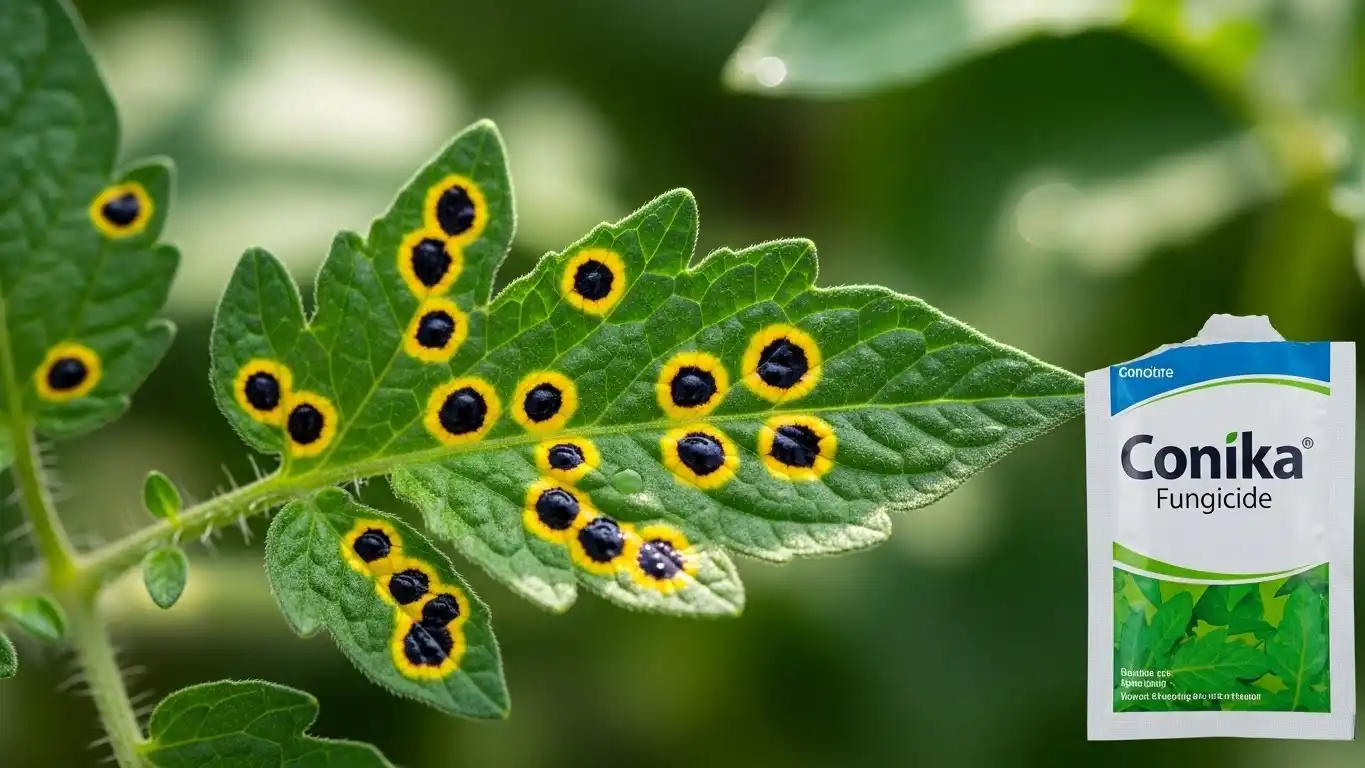
This is the #1 reason farmers buy Conika. If you see small, water-soaked spots on leaves that turn black with a yellow ring (halo), it is likely Bacterial Spot. Normal fungicides won’t cure this—you need the Kasugamycin in Conika to kill the bacteria.
2. Early Blight
While primarily for bacteria, the Copper Oxychloride component provides a strong shield against fungal Early Blight, which causes “bullseye” rings on older leaves. For a quick, photo-backed checklist to tell early blight, septoria and other leaf spots apart — and the exact cultural controls to use before you spray — see our guide on solving tomato leaf problems.
3. Anthracnose
This affects the fruit, causing sunken, dark spots on ripe tomatoes. Conika helps dry up these lesions.
Conika Fungicide Dosage per Liter
Using the wrong dose can either burn your plants or fail to stop the disease. Here is the standard recommended dosage for tomatoes:
| Method of Application | Dosage |
|---|---|
| Foliar Spray (Pump) | 1.5 to 2 grams per liter of water |
| Per Acre Dose | 300 to 400 grams in 200 liters of water |
| Timing | Apply preventively or at the very first sign of disease |
Farmer’s Tip: Always mix Conika with a small amount of water in a bucket first to make a smooth paste (slurry) before adding it to your main sprayer tank. This prevents clogging.
When Should You NOT Use Conika?
- High Temperatures: Avoid spraying during the hot afternoon (above 35°C) as copper can sometimes cause leaf burn. Spray in the early morning or late evening.
- Flowering Stage: Be cautious during peak flowering. Copper products can sometimes cause flower drop if sprayed too heavily. A lower dose (1.5g/L) is safer during this time.
Price of Conika Fungicide in India
Prices may vary by state and dealer.
- 100g Pack: Approx ₹300 – ₹350
- 250g Pack: Approx ₹700 – ₹800
- 500g Pack: Approx ₹1300 – ₹1400
Conclusion
Using Conika fungicide in tomato crop is one of the best decisions you can make when facing “Bacterio-Fungal” complexes. It saves you from buying two separate medicines (one for fungus, one for bacteria).
For best results, start spraying 30 days after transplanting if the weather is cloudy and humid, as this is when bacteria thrive.
Have you used Conika in your field? Let us know your results in the comments below!




Leave a Comment