
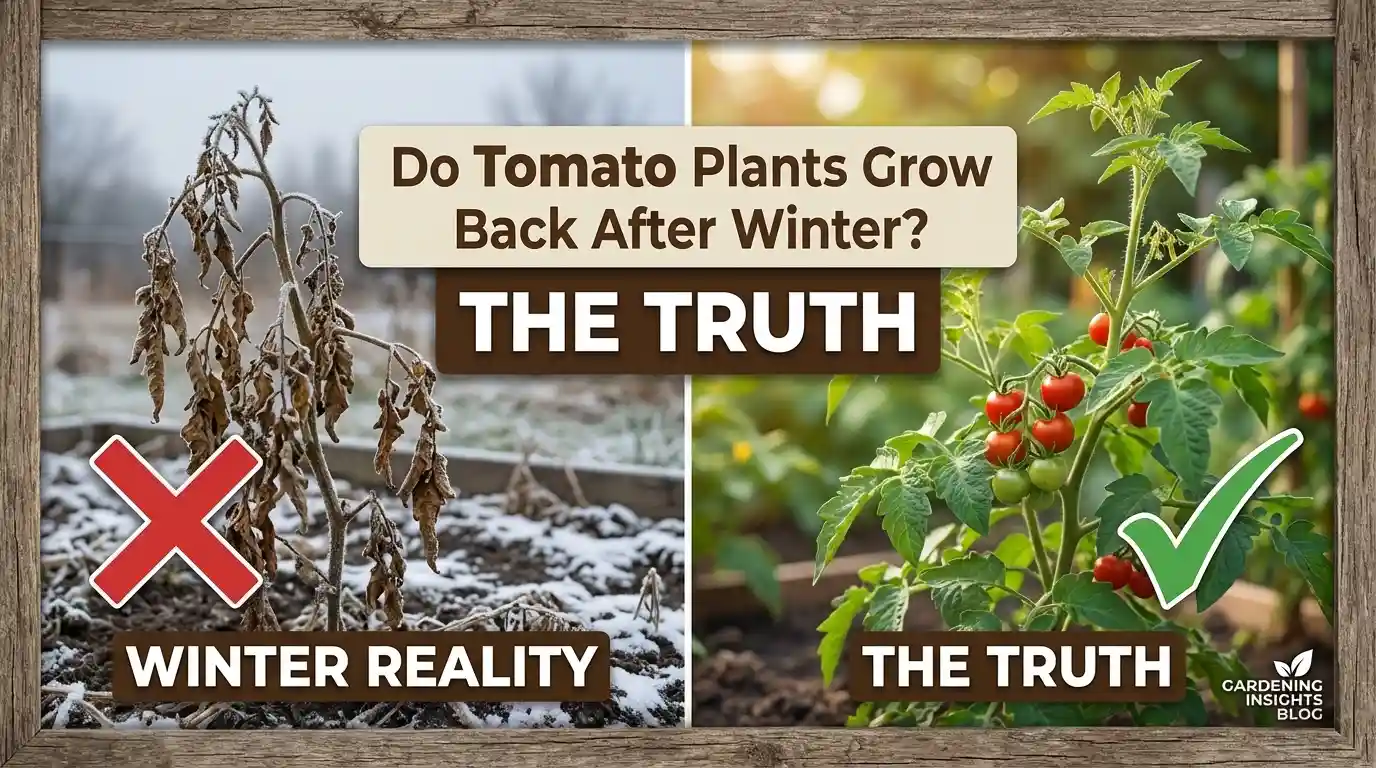

You put months of effort into your tomato plants — watering, pruning, staking — and then autumn arrives. The big question hits: do tomato plants grow back?
The short answer is no, not on their own in most climates. But the full picture is more interesting than that, and knowing it could save you time, money, and a lot of effort next season.
Are Tomato Plants Annual or Perennial?
Here’s something most gardeners don’t realise: tomatoes (Solanum lycopersicum) are naturally perennial plants in their native South American habitat. In the wild, they grow as woody shrubs that live and fruit for several years.
The problem is that our temperate climates simply don’t match those conditions. Tomato plants are extremely sensitive to cold – temperatures below 10°C slow their growth significantly, and anything at or below 0°C will kill them outright.
Because of this, gardeners in the UK, US, and most of Europe grow them as annuals, sowing fresh each spring and discarding the plant after the first frost.
So, tomatoes don’t grow back every year by nature — the climate makes that decision for them.
Can Tomato Plants Grow Back Under the Right Conditions?
Yes, and this is where it gets interesting. If you protect your tomato plants from frost and cold, they can survive into a second or even third year. This process is called perennialising, and it’s more achievable than most gardeners think.
There are three main routes to keeping tomato plants alive over winter:
- USDA zones 10–12 (or equivalent frost-free climates): Plants can stay outdoors year-round with no special intervention.
- Indoor overwintering: Potted plants brought inside before temperatures drop below 10°C can continue growing through winter.
- Overwintering cuttings: A space-saving method where 10–15 cm shoot tips are rooted in water or compost and grown on through the colder months.
Not every variety is equally suited to this, though. Determinate (bush) varieties like ‘Tiny Tim’ or ‘Vilma’ overwinter far better as whole plants. Indeterminate varieties grow too tall and leggy — for these, taking cuttings is the smarter approach.
How to Help Your Tomato Plants Grow Back Next Year
If you want to give your tomatoes a second season, here’s what to do before the first frost hits:
- Choose the right plant. Only attempt overwintering with healthy, disease-free plants. A plant already struggling with blight won’t survive.
- Move containers indoors by mid-October. Place them in the brightest spot available — a south-facing window or conservatory works well.
- Keep temperatures above 15°C. Growth slows dramatically below this, and cold damage sets in quickly.
- Prune back by up to half. This reduces the plant’s energy demands and encourages strong new growth in spring.
- Water sparingly until March. Resume regular watering and feeding as daylight hours increase.
- Watch for pests. Whitefly and spider mites thrive indoors. Check plants weekly, especially from February onwards.
From mid-May, plants can go back outside — and because they’ve had a head start, expect an earlier and often heavier harvest than you’d get from seeds.
Common Mistakes When Trying to Regrow Tomatoes
Overwintering a diseased plant is the most common error. Late blight is rampant by October — if your leaves show dark patches or the stems are rotting, composting the plant is a better decision than trying to save it.
Expecting self-seeding to work reliably is another trap. Tomatoes can drop seeds that germinate the following spring, but the resulting plants are unlikely to match the parent in flavour or yield, and in cold climates the seeds rarely survive winter in the soil anyway.
Cutting a plant to the ground won’t result in regrowth either. Unlike some shrubs, tomatoes have no dormant buds on old wood. If you’re pruning hard, always leave a few nodes above soil level.
Frequently Asked Questions
Do tomato plants come back every year on their own?
No. In freezing climates, the plant dies after the first hard frost and will not regrow from its roots. It may self-seed, but results are unreliable.
What is the lifespan of a tomato plant?
In a typical garden, six to eight months. With careful indoor overwintering, two to three years is achievable. Under optimal greenhouse conditions, some plants have exceeded four years.
Is it worth overwintering tomatoes?
For healthy determinate varieties or when taking cuttings, yes — you’ll get an earlier harvest and skip the cost of new seeds or seedlings. For large indeterminate plants already showing disease, it’s usually not worth the effort.
Final Thoughts
Tomato plants don’t grow back on their own in most climates — but with the right approach, you can absolutely give them a second life.
The key is starting with a healthy plant, bringing it indoors before the cold arrives, and matching your method to your variety. Do that, and your tomatoes might just outlast the season you planted them for.
Also Read: Top Desi Tomato Varieties



Leave a Comment