
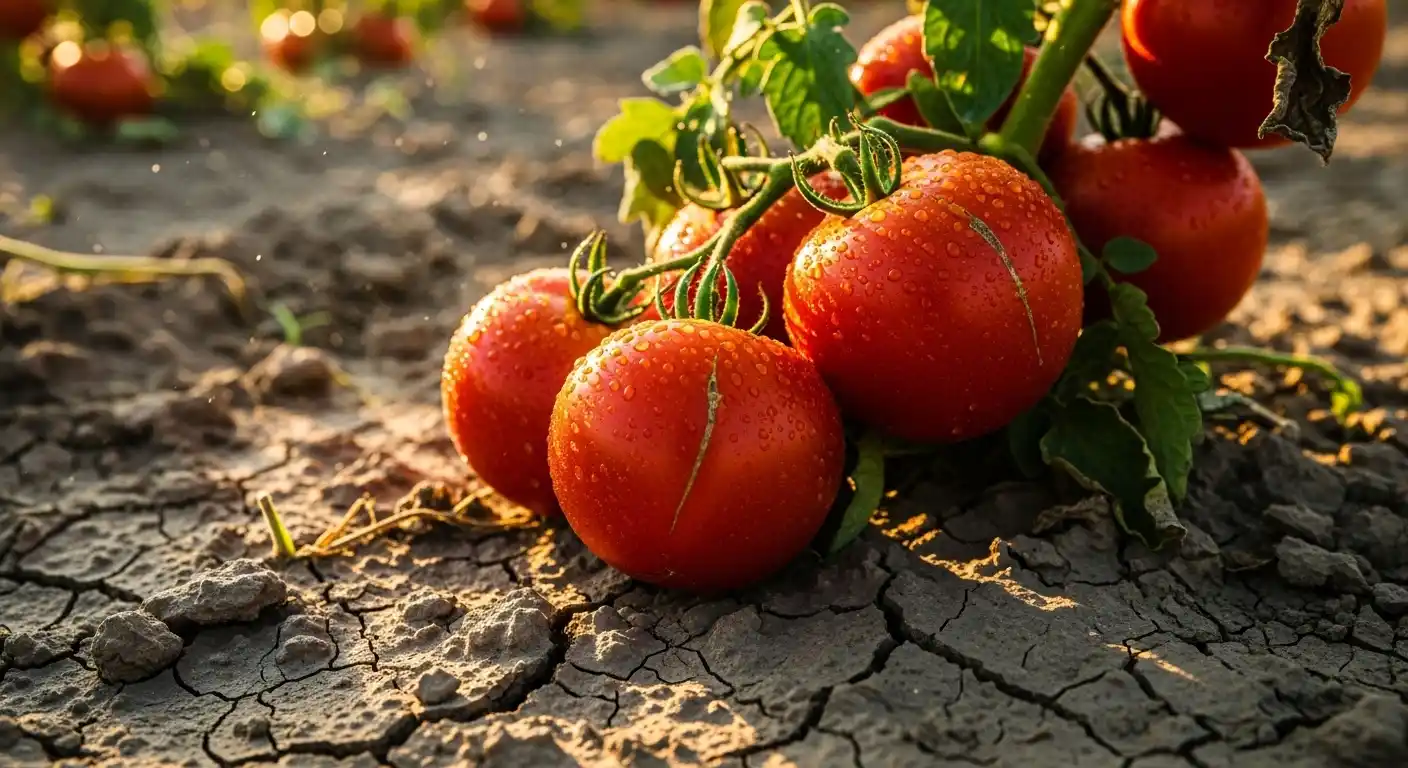

Imagine biting into a tomato that explodes with a savory, sweet intensity unlike anything you have ever tasted from a grocery store.
Dry farming concentrates sugars and acids to create a flavor profile so robust it feels like an entirely different fruit.
What Are Dry Farm Tomatoes Exactly?
This technique involves restricting irrigation after the plant becomes established to force roots deep into the soil in search of moisture.
Dry farming is not simply neglecting your garden; it is a deliberate, calculated method of growing produce without supplemental water during the dry season. By withholding water, you stress the plant in a controlled manner.
This stress prevents the fruit from becoming diluted with excess water, resulting in smaller, firmer tomatoes with significantly higher Brix levels (sugar content).
The result is a nutrient-dense fruit with a thick skin and a flesh that is meaty rather than watery.
While the yield per plant may be lower compared to conventionally irrigated crops, the culinary quality is vastly superior.
This method relies on residual soil moisture stored from winter rains or initial heavy watering, utilizing the earth’s natural sponge capabilities.
The Science of Flavor Concentration
Understanding how water stress alters the chemical composition of the fruit is key to mastering this cultivation style.
When a tomato plant faces a water deficit, it undergoes physiological changes to survive, prioritizing seed production and fruit quality over vegetative bulk.
Agricultural research on deficit irrigation confirms that this controlled stress forces the plant to reduce water content in the fruit, which naturally concentrates the dissolved solids—sugars, organic acids, and minerals.
Key Flavor Contributors:
- Sugars: Glucose and fructose levels spike, creating a candy-like sweetness.
- Acids: Citric and malic acids remain concentrated, providing a “zing” that balances the sugar.
- Volatiles: Aromatic compounds responsible for the classic tomato scent become more potent.
Best Varieties for Dry Farming Success
Not every tomato type can withstand the rigors of water deprivation, so selecting the right genetics is half the battle.
You need vigorous, indeterminate varieties with aggressive root systems capable of mining the soil for deep water pockets.
Thin-skinned or weak-rooted varieties will likely perish or succumb to blossom end rot before producing a harvest.
Top Recommended Cultivars
| Variety | Type | Characteristics | Best For |
| Early Girl | Indeterminate | The industry standard for dry farming; incredibly resilient and flavorful. | First-time dry farmers |
| Chianti Rose | Indeterminate | An heirloom beefsteak type that offers a rich, complex flavor profile. | Slicing and salads |
| San Marzano | Indeterminate | Paste tomato that becomes incredibly dense and meaty when dry farmed. | Sauces and canning |
| Carmello | Indeterminate | French hybrid known for productivity and crack resistance under stress. | All-purpose eating |
Preparing Soil for Maximum Moisture Retention
Your soil acts as a water battery, and you must charge it fully before the growing season begins.
Success in dry farming depends entirely on the soil’s ability to hold moisture deep down where evaporation cannot reach it.
Clay and loam soils are naturally better at this than sandy soils. If you are starting with poor ground, refer to our comprehensive guide on organic soil preparation techniques to build the necessary water-holding capacity before you plant.
Soil Prep Checklist:
- Double Digging: Loosen soil to a depth of 24 inches to allow easy root penetration.
- Organic Matter: Incorporate high-quality compost to act as a sponge.
- Pre-saturation: In spring, water the soil deeply and repeatedly until it is saturated to a significant depth.
Planting Techniques to Establish Deep Roots
How you put the plant in the ground dictates whether it will survive the drought to come.
You must encourage the plant to look down for water immediately rather than spreading roots laterally near the surface.
To achieve this, you will plant significantly deeper than you would with conventional gardening.
The Deep Planting Method:
- Remove the lower leaves of the transplant, leaving only the top two sets of true leaves.
- Dig a deep hole or trench.
- Bury the stem vertically or horizontally (if the plant is tall), covering it with soil up to the remaining leaves.
- Adventitious roots will grow from the buried stem, instantly doubling the root mass.
The Critical Watering Schedule
There is a specific window where you must provide water before cutting the supply off completely.
You cannot simply plant a seedling and walk away; you must transition the plant from a nursery environment to a dry farm environment. The goal is to support the plant until it sets its first flowers, then force it to rely on the soil bank.
The Weaning Process:
- Weeks 1-3: Water deeply once a week to settle the soil and encourage initial growth.
- Week 4: Monitor the plant; if it looks vigorous, skip watering.
- The Cut-off: Once the plant blooms or sets its first small fruit, stop watering entirely. Do not water again for the rest of the season.
Managing the “Dust Mulch” Barrier
Locking moisture into the ground requires a specific surface cultivation technique known as dust mulching.
A dust mulch effectively caps the soil capillaries, preventing moisture from wicking up to the surface and evaporating into the air. By breaking the top layer of soil, you create an insulating barrier of dry earth.
Creating the Barrier:
- Cultivate the top 2-3 inches of soil with a hoe or cultivator.
- Keep this top layer loose and dry; do not allow a crust to form.
- Repeat this cultivation every few weeks or after any rare summer rain events.
- Ensure you do not dig deep enough to damage the feeder roots established below.
Recognizing Stress vs. Failure
You must learn to distinguish between a plant that is working hard and a plant that is dying.
Dry farmed plants will look different than irrigated ones; they may be smaller, and the leaves might curl (physiological leaf roll) to conserve moisture.
This is a natural defense mechanism and not necessarily a sign that you need to rescue them with a hose.
Signs of Acceptable Stress:
- Inward curling of older leaves.
- Slower vertical growth.
- Slight wilting during the hottest part of the day, followed by recovery at night.
Signs of Failure (Intervention Needed):
- Permanent wilting that does not recover by morning.
- Yellowing or browning of the entire plant structure.
- Blossom drop where flowers fall off without setting fruit.
Preventing Blossom End Rot
Calcium deficiency caused by inconsistent water uptake is a major risk in dry farming.
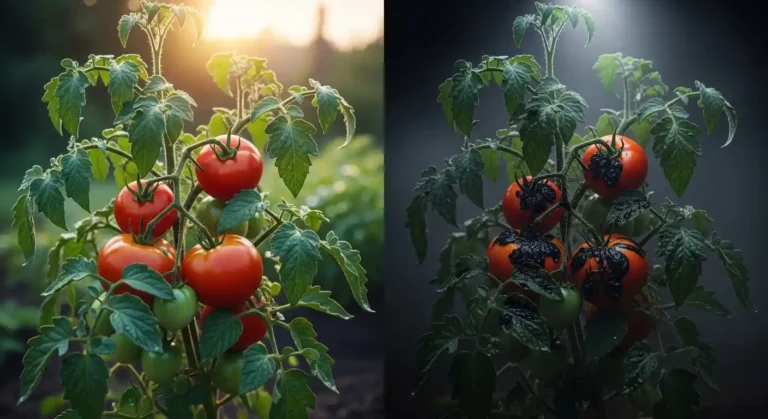
Blossom End Rot (BER) manifests as a black, sunken scab on the bottom of the fruit. While often attributed to a lack of calcium in the soil, in dry farming, it is usually due to the plant’s inability to transport calcium because of low water flow.
Mitigation Strategies:
- Gypsum Application: Add agricultural gypsum to the soil before planting to ensure calcium is readily available.
- Foliar Sprays: Use a calcium spray on the leaves to bypass the root system if you suspect a deficiency.
- Mulching: If you choose not to dust mulch, use straw to keep the soil temperature cool, reducing transpiration rates.
Harvesting Your Nutrient-Dense Bounty
The harvest window for dry farmed tomatoes is often slightly earlier and more concentrated than irrigated crops.
Because the fruit is lower in water content, it ripens faster and stores significantly better.
The texture will be firm, and the skin may be slightly tougher, which actually protects the fruit from bruising.
Harvesting Tips:
- Pick when the fruit is fully colored for maximum sugar development.
- Test the firmness; a ripe dry farm tomato feels heavier than it looks due to density.
- Store at room temperature; never refrigerate, as the cold kills the volatile flavor compounds you worked so hard to produce.
Troubleshooting Common Dry Farm Issues
Even expert growers face challenges when relying solely on soil moisture.
Pests and environmental factors can attack a stressed plant more aggressively. Spider mites, for example, thrive in dusty, dry conditions and can decimate a crop if left unchecked.
Quick Fixes:
- Spider Mites: Introduce predatory mites or wipe leaves; avoid spraying water as it defeats the purpose.
- Sunscald: Since foliage may be sparse, use shade cloth to protect developing fruit from direct scorching sun.
- Cracking: Rare in dry farming, but if a sudden rain occurs, harvest immediately to prevent skin splits.
FAQ
How much space do dry farm tomatoes need?
Dry farmed tomatoes require significantly more space than irrigated ones to prevent root competition for limited water.
You should space plants at least 4 to 6 feet apart in all directions. This generous spacing ensures that each plant has a large enough “soil reservoir” to draw moisture from throughout the season.
Can I dry farm in sandy soil?
Dry farming in pure sandy soil is extremely difficult and often impossible because sand drains water too rapidly to hold a reserve for the summer.
To attempt it, you must amend the soil heavily with organic matter and compost to improve water retention.
In many cases, a semi-dry method (watering once a month) is a safer approach for sandy profiles.
Will dry farming work in containers?
No, true dry farming does not work in containers because the soil volume is too small to hold enough moisture for the entire season.
A container plant will die quickly without water. However, you can mimic the effect by practicing “deficit irrigation,” where you water the container sparingly only when the plant shows severe signs of wilt.
Do dry farmed tomatoes have thicker skins?
Yes, dry farmed tomatoes typically develop thicker skins as a protective measure against dehydration and intense sun.
While some may find the skin tougher, it contributes to the fruit’s ability to store well and resist damage.
The intense flavor of the flesh usually outweighs the texture of the skin for most enthusiasts.
Why are my dry farm tomatoes so small?
Small fruit size is a hallmark of dry farming and indicates that the technique is working correctly.
Without excess water to pump up the cells, the fruit remains compact, which is exactly what concentrates the flavor.
Do not mistake small size for failure; judge the success by the density and taste of the fruit.
Is dry farming the same as drought tolerance?
Not exactly; drought tolerance refers to a plant’s genetic ability to survive without water, while dry farming is a specific cultivation method.
You are manipulating the environment and the plant’s physiology to produce a crop. While you need drought-tolerant varieties to succeed, the method involves active soil management like dust mulching and timing the water cut-off.
Can I use raised beds for dry farming?
Raised beds are generally not recommended for true dry farming because they drain faster and warm up quicker than the ground, leading to moisture loss.
If you must use raised beds, they should be directly connected to the native soil beneath (no bottom barrier) so roots can travel deep into the earth.
What regions are best for dry farming?
Dry farming thrives in regions with a Mediterranean climate, characterized by wet winters and dry summers, such as California or parts of Italy.
The technique relies on the soil being fully saturated by winter rains. In areas with frequent summer rain, dry farming is impossible because you cannot control the water supply to stress the plants.




Leave a Comment