
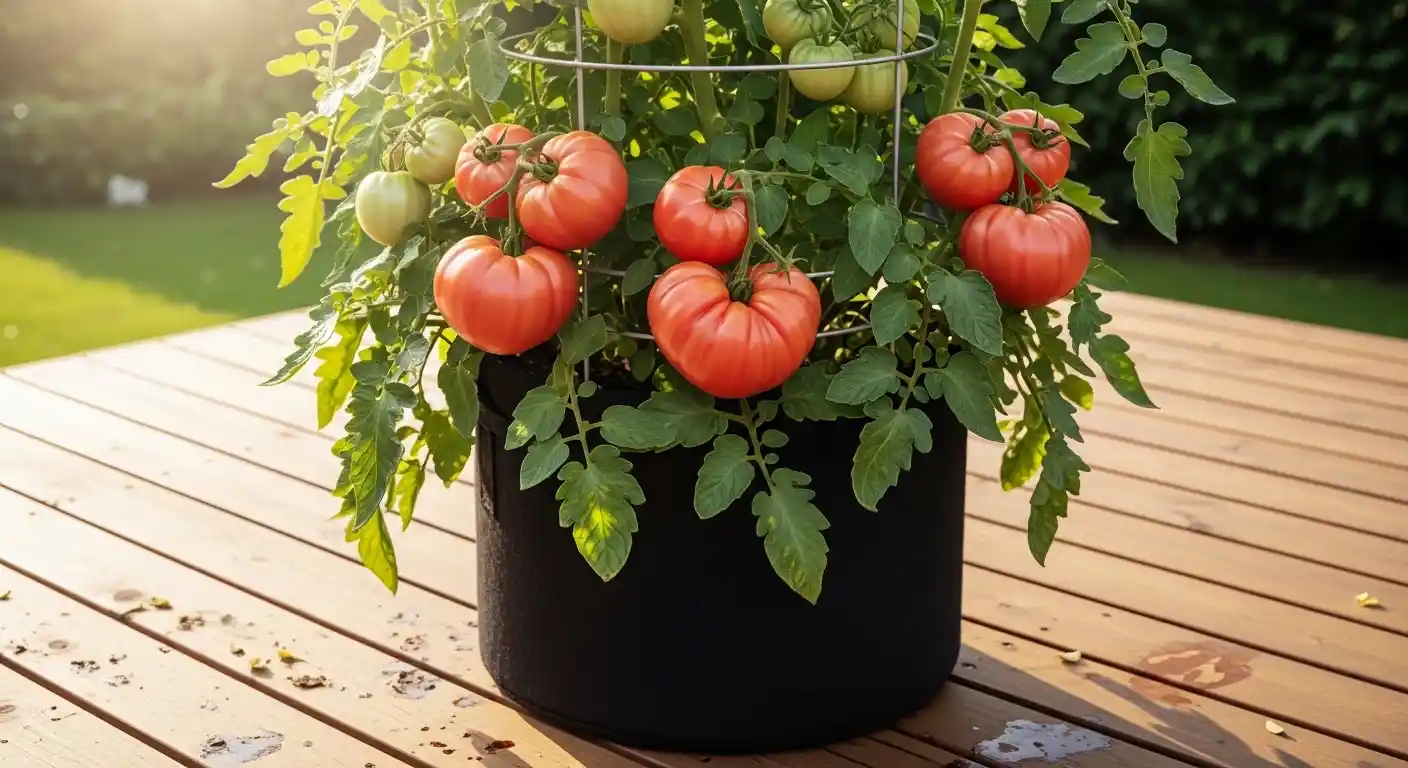

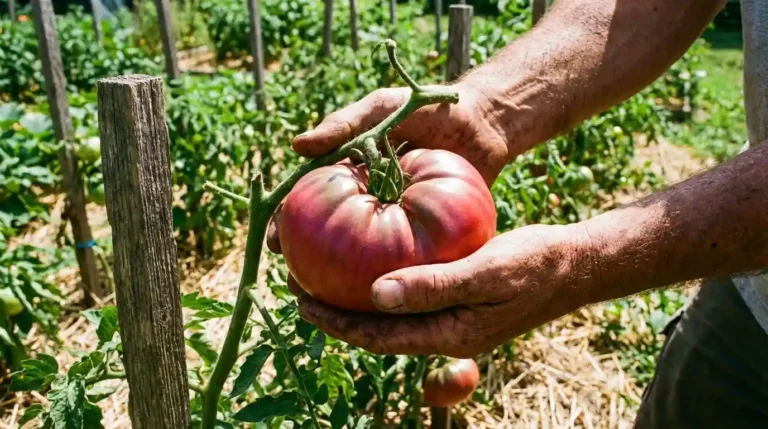
The Oxheart tomato is a legendary heirloom variety dating back to the 1920s. Appropriately named for its unique shape, this plant produces massive, pinkish-red, heart-shaped tomatoes that can easily weigh between 2.5 and 3 pounds each.
Because they are dense, meaty, and nearly seedless, they are considered one of the ultimate slicing and sauce-making tomatoes in the gardening world.
But their massive fruit size presents a major challenge for patio gardeners: Can you actually grow a giant Oxheart tomato plant in a container?
For in-depth variety-specific advice on growth and pot suitability, check out Plantura’s Oxheart Tomato Guide.
The short answer is yes. However, because these plants are vigorous, indeterminate growers that can reach up to 10 feet tall, treating them like a standard patio tomato is a recipe for disaster.
If you want to successfully grow these giants without putting them in the ground, you have to nail your container size, support structure, and feeding schedule from day one.
Here is exactly what you need to know about choosing the right oxheart tomato container size and setting your plant up for a heavy harvest.
The Ideal Oxheart Tomato Container Size
When it comes to indeterminate heirlooms like the Oxheart, size is everything. The biggest mistake container gardeners make is severely underestimating the root space required to support a 10-foot vining plant that is producing 3-pound fruits.
The Absolute Minimum: A 5-gallon bucket is the absolute bare minimum size you can use. If you use a 5-gallon bucket, you must drill adequate drainage holes in the bottom.
However, in a pot this small, your plant will likely become rootbound, requiring constant, daily watering and highly aggressive fertilizing to survive. For a full breakdown on why larger pots outperform buckets for big yields, see our Tomato Container Size Guide.
The Recommended Size: For maximum yield and plant health, you should use a 15-gallon to 25-gallon container. Large fabric grow bags are highly recommended over plastic pots.
A 20-gallon fabric grow bag provides immense growing power, offering plenty of room for a sprawling root system while ensuring excellent drainage and root aeration.
If you attempt to put an Oxheart into a standard 1-gallon or 3-gallon nursery pot, the plant’s growth will be severely stunted, and it is highly unlikely to produce fruit.
The “Wispy Leaf” Warning
If this is your first time growing an Oxheart tomato, you need to be prepared for its highly unusual foliage. Container gardeners frequently panic a few weeks after transplanting, assuming their potted plant is dying of a disease or lack of water.
Unlike standard, robust tomato plants, Oxheart varieties naturally have wispy, fern-like, or drooping “potato-leaf” foliage. It is entirely normal for the plant to look a little sad or wimpy as it grows.
Do not make the mistake of overwatering your container just because the leaves look naturally wilted; always check the soil moisture first.
Watering and Feeding Your Potted Giant
Because the Oxheart will continue to grow and produce fruit until the first hard frost kills it, it is incredibly hungry and thirsty.
- Watering Strategy: Plants grown in outdoor containers dry out significantly faster than plants grown directly in the ground. During the peak heat of summer, a large Oxheart in a fabric grow bag may require daily, deep watering. Ensure the container is placed in a location that receives full sun (8+ hours a day), but monitor the soil closely so it never completely dries out to dust.
- Fertilizing Schedule: The nutrients in potting soil wash out of containers quickly due to frequent watering. To keep the plant fueled, you must fertilize it regularly. Use a balanced liquid tomato fertilizer often, or apply a granular feed every 4 to 6 weeks throughout the entire growing season. Adding bone meal to the planting hole when you first transplant the seedling can also help encourage deep root growth.
Pruning and Heavy-Duty Support
You cannot let an indeterminate Oxheart sprawl across a patio; it requires serious structural support.
Flimsy wire cone cages will be instantly crushed by the weight of the vines and the 3-pound tomatoes. You will need a heavy-duty, tall tomato cage or a sturdy 6-foot aluminum stake to train the central vine upward.
When it comes to pruning, container gardeners should take a hybrid approach:
- Bottom Pruning: Always prune off the bottom leaves and branches that sit close to the soil. This creates air circulation at the base of the plant and prevents soil-borne diseases from splashing up onto the foliage when you water.
- Sucker Management: While many gardeners heavily prune suckers on indeterminate plants, if you want a larger yield of fruit, you should avoid aggressive sucker pruning. Allow a few main leaders to develop, ensuring you tie them securely to your stake or cage as they grow.
By providing a massive 20-gallon container, heavy-duty staking, and consistent moisture, you can successfully turn your patio into a micro-farm and harvest giant, heart-shaped heirlooms all summer long.

Leave a Comment