

The Great Gardening Debate: Baking Soda and Tomatoes
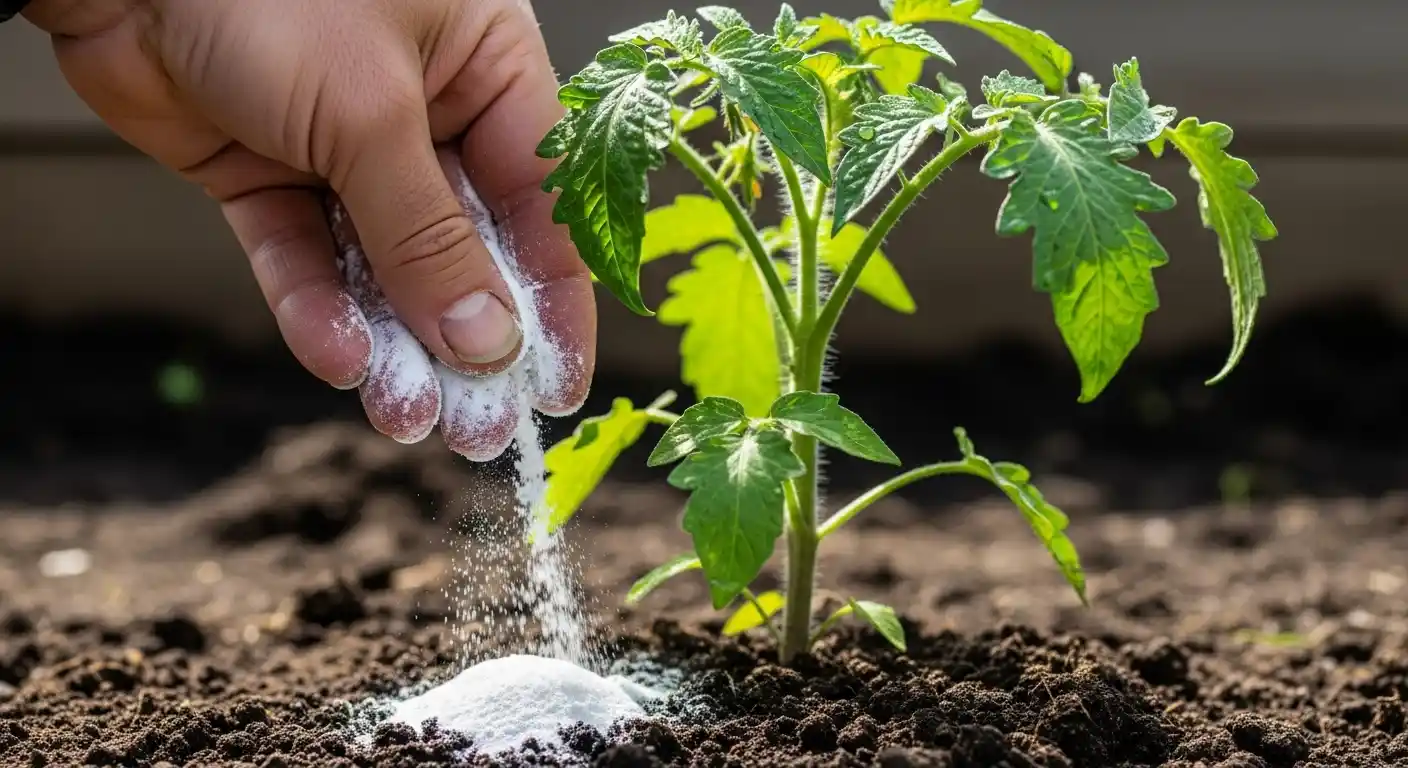
If you spend enough time in online gardening groups or speaking with veteran farmers, you will eventually hear a peculiar piece of advice: “Sprinkle a little baking soda around the base of your tomato plants.”
But why sprinkle baking soda around tomato plants? Does it actually work, or is it just another old wives’ tale that could end up harming your precious crop?
In this guide, we break down the science behind baking soda (sodium bicarbonate) in the garden, separating the sweet myths from the fungal facts.
Myth #1: It Makes Your Tomatoes Sweeter
The most common reason people sprinkle baking soda on their soil is the belief that it will yield sweeter tomatoes. The theory is that baking soda, being alkaline, lowers the acidity of the soil. Lower soil acidity supposedly translates to lower acidity in the fruit, resulting in a sweeter-tasting tomato.
The Reality: While baking soda is alkaline, lightly sprinkling it on the soil surface barely makes a dent in your overall soil pH. Furthermore, a tomato’s sweetness is primarily determined by its genetics (the variety you planted) and the amount of sunlight it receives, not minor shifts in soil pH.
In fact, aggressively sprinkling baking soda can cause sodium toxicity in the soil, which will stunt your plant’s growth and burn the roots. Do not use it as a soil fertilizer!
The Real Benefit: A DIY Fungicide
While sprinkling baking soda on the dirt doesn’t do much for sweetness, baking soda is actually a fantastic tool for tomato plants when used correctly—as a foliar spray, not a soil sprinkle.
Baking soda changes the pH level on the surface of the tomato leaves, creating an alkaline environment where fungal spores simply cannot survive. It is highly effective against mild fungal issues such as:
- Powdery Mildew: The white, dusty coating that suffocates leaves.
- Early Blight: Mild cases of leaf spotting.
A mixture of baking soda and horticultural oil is a proven, eco-friendly way to manage powdery mildew on vegetable crops.
How to Make a Baking Soda Tomato Spray
Instead of sprinkling it on the ground, mix it into a liquid shield for your leaves. Here is the safest recipe to avoid burning your plants:
- Water: 1 Gallon
- Baking Soda: 1 Tablespoon
- Dish Soap or Neem Oil: 1/2 Teaspoon (This acts as a “sticker” so the baking soda clings to the leaves).
Application Tips: Spray your plants early in the morning before the sun gets too hot. Thoroughly coat the top and bottom of the leaves. Test it on a single leaf first and wait 24 hours to ensure it doesn’t cause leaf burn.
When Baking Soda Isn’t Enough
Baking soda is a great, cheap preventive measure for mild, dry-weather fungi. However, it acts only as a mild deterrent.
If your region has experienced heavy rainfall and your tomato crop is suffering from a severe outbreak of Early Blight or Bacterial Leaf Spot, a DIY kitchen remedy won’t save your harvest.
For serious commercial farming or severe backyard outbreaks, you need a stronger, dedicated solution.
We highly recommend reading our complete guide on using Copper Fungicide for tomatoes to learn how to properly eradicate aggressive blight before it destroys your crop.
Conclusion
So, should you sprinkle baking soda around tomato plants? No. Keep it off the soil to protect your roots from salt buildup. Instead, mix it with water and spray it directly on the leaves to create an invisible, alkaline shield against powdery mildew.

Leave a Comment