
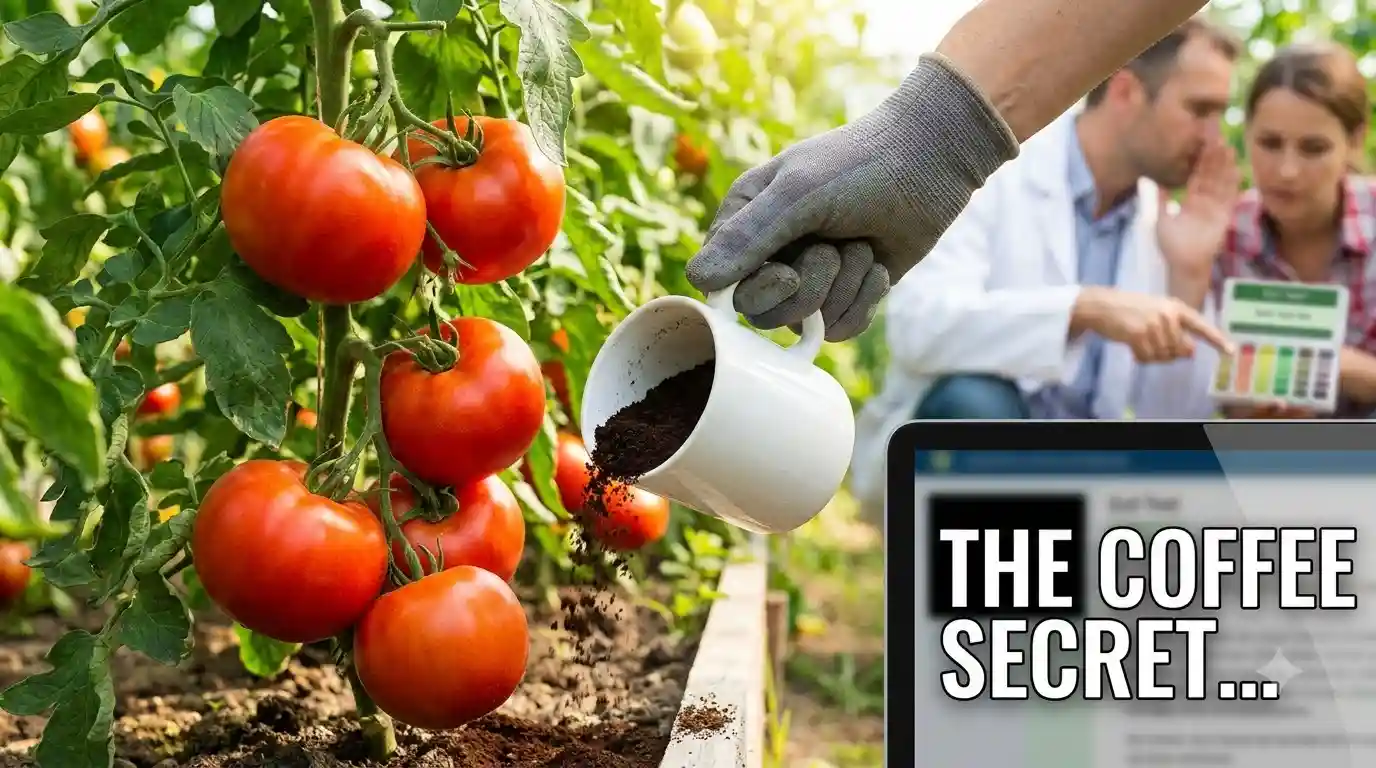
Stop dumping spent coffee grounds on your tomato plants.
You think you’re feeding them.
You’re actually starving them.
Over 80% of home gardeners make this exact mistake every summer.
It sounds like a genius hack. Free organic fertilizer right from your morning espresso. You sprinkle those dark, damp grounds around your prize tomato vines, expecting dark green leaves and massive yields.
Instead, your plant turns pale yellow. Growth freezes. You panic and add more.
Here is what soil scientists know that TikTok influencers won’t tell you.
1. The Nitrogen Trap
Fresh coffee grounds don’t feed your soil with instant nitrogen. They steal it.
Picture this. You dump two cups of wet espresso pucks around your heavy-fruiting Brandywine vine. Soil microbes rush in to break down those carbon-rich grounds. But to digest all that carbon, the microbes need nitrogen. So they gobble up every molecule of available nitrogen in the topsoil.
According to Oregon State University Extension research, soil microbes temporarily immobilize nitrogen while breaking down raw grounds, leaving your tomato plant with zero.
(yes, really)
Microbes win. Tomatoes starve.
Yellow leaves. Stunted growth.
2. Fresh Grounds vs. Composted Grounds
Most people do it the wrong way: dumping raw, wet grounds straight onto garden soil. With composted grounds, it’s the exact opposite: rich, stable organic matter that builds soil structure without touching plant roots.
Raw grounds create a hydrophobic crust on top of your dirt. Water glides right off.
Composted grounds absorb moisture like a sponge.
Night and day.
3. How to Use Coffee Grounds Correctly
If you have buckets of free grounds, don’t throw them away. Just change where they go.
- Add them to compost. Keep coffee grounds under 20% of your total compost pile volume.
- Mix with brown materials. Balance grounds with dry leaves, shredded cardboard, or straw.
- Wait 60 days. Let soil bacteria fully digest the grounds until dark and crumbly.
- Apply as mulch. Spread a thin half-inch layer around established plants.
That’s it.
4. Where Coffee Grounds Actually Work
Used correctly, coffee grounds are genuinely fantastic.
They attract earthworms into your bed within days. Worms love the gritty texture and leave behind nitrogen-rich worm castings. They also improve sandy soil water retention and suppress minor soil-borne fungal pathogens.
(it’s free)
Solid results.
5. What Coffee Grounds SUCK At
Let’s be completely honest.
Coffee grounds will never fix blossom-end rot. They don’t contain accessible calcium.
They will not drastically lower soil pH. Despite popular belief, most acid washes out into your brewed cup, leaving spent grounds nearly neutral. Similar to other popular home remedies like baking soda, raw coffee grounds often do more to confuse soil chemistry than help it.
And if you pile them thick around plant stems, they trap moisture against the bark and rot the main trunk.
ew…
Not a miracle fix.
6. Your Next Move
Clear those fresh grounds away from your tomato roots today.
Throw them straight into your compost bin with dry leaves. Give it two months. Let biology do the heavy lifting before feeding your garden.
Feed the soil first. The tomatoes will follow.