
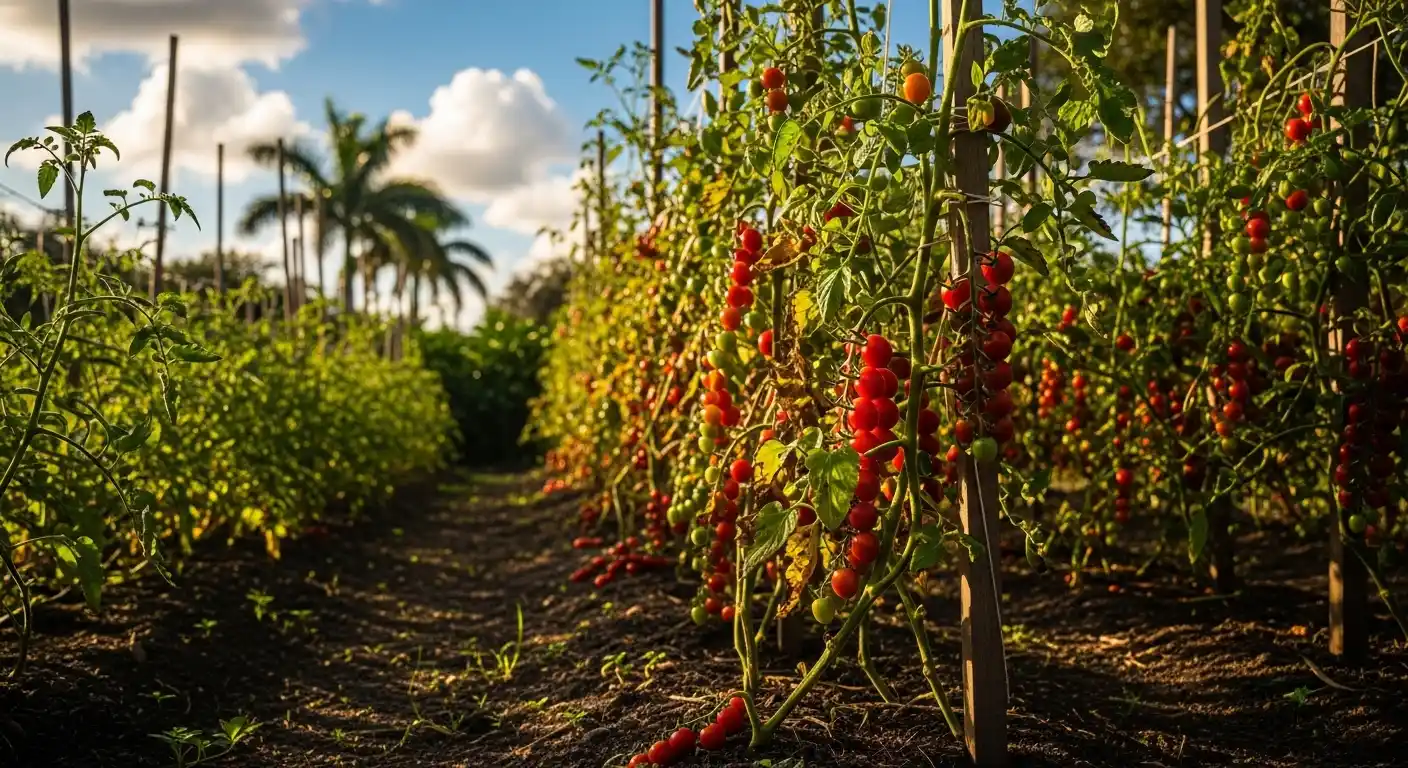

Most of the country is watching their gardens go dormant right now — but in South Florida, winter is your season. While frost blankets backyard gardens up north, you have a narrow but golden window to grow the best cherry tomatoes of your life.
The catch? Not every variety can handle our sandy soils, subtropical quirks, and the pest pressure that never fully disappears.
Grow the wrong cherry tomato and you’ll fight nematodes, blossom drop, and disease all season long. Grow the right one, and you’ll be snacking off the vine from November through March.
Here are the best cherry tomatoes for South Florida winter gardening — plus exactly when to plant them and what to watch out for.
Why Winter is the Sweet Spot for South Florida Tomato Growers
This surprises most newcomers to Florida gardening: tomatoes don’t thrive in our summer. The scorching heat (consistently above 90°F) causes blossom drop, fruit cracking, and rampant disease. Summer is the enemy of a great tomato crop here.
Winter, on the other hand, gives you temperatures that hover in the ideal 60–85°F range, lower humidity, and a dramatic drop in pest pressure.
Cherry tomatoes especially love this window. They’re more forgiving than large-fruited varieties, they produce faster, and they handle the occasional cold snap far better than a big beefsteak ever would.
For South Florida, your planting window for cherry tomatoes runs from late September through early February. The earlier you get plants in the ground, the more time they have to produce before spring heat shuts everything down.
[INTERNAL LINK: South Florida vegetable garden planting calendar]
The 5 Best Cherry Tomatoes for South Florida Winter Gardens
1. Everglades Tomato — The Native Powerhouse
If you want one variety that was born for South Florida, it’s the Everglades tomato. This small-fruited, heirloom variety is a true Florida native and grows more like a wild vine than a pampered garden plant.
The dime-sized fruits are sweet with a slightly citrusy kick, and the plant is remarkably resistant to nematodes — the soil pest that destroys most tomatoes in our sandy, tropical ground.
Everglades tomatoes are indeterminate (meaning they keep growing and producing all season), practically drought-tolerant once established, and will often reseed themselves year after year. They’re the closest thing to a “set it and forget it” tomato you’ll find.
Best for: Low-maintenance gardeners, container growing, anyone battling nematode pressure.
Note: If you plan to grow Everglades or other cherry tomatoes in pots instead of the ground, match each plant to the right container so roots never feel cramped – this tomato container size guide shows the ideal pot size for cherry, determinate, and indeterminate varieties, with a simple chart to stop guessing.
2. Super Sweet 100 VF — The Prolific Classic
The Super Sweet 100 is one of the most recommended cherry tomatoes for Florida gardeners, and for good reason. It produces long, grape-like clusters of 1-inch tomatoes that just keep coming all season.
The “VF” designation is key — it means the variety carries resistance to both Verticillium wilt and Fusarium wilt, two of the most common tomato killers in Florida’s warm soil.
This indeterminate vine grows tall and strong, so plan on a sturdy cage or trellis. In South Florida’s frost-free winters, a well-supported Super Sweet 100 plant will produce well past the point where northern gardeners have forgotten what a fresh tomato tastes like.
Best for: High-volume harvests, salads, snacking, and sauce-making.
3. Sun Gold — The Flavor Champion
If sheer flavor is the goal, Sun Gold takes the crown. These golden-orange cherry tomatoes are famously sweet — almost candy-like — and they ripen earlier than most varieties, which means you’ll be harvesting while neighbors are still waiting for their plants to establish.
Sun Gold is an indeterminate hybrid that responds well to regular harvesting (the more you pick, the more it produces). It does need consistent staking and benefits from a little pruning to keep airflow healthy. But the flavor payoff is well worth the extra care.
Best for: Flavor-first gardeners, kids’ snacking, farm-stand appeal.
4. Black Cherry — The Heirloom Statement
For gardeners who want variety in the garden and on the plate, Black Cherry is a standout. This open-pollinated heirloom produces clusters of deep purple-red, 1-inch tomatoes with a rich, complex flavor that’s more “grown-up” than your typical sweet cherry. The color alone makes it a conversation piece at any dinner table.
Black Cherry is indeterminate and a vigorous grower. It handles South Florida’s winter conditions well and is particularly popular among home gardeners who save seeds from season to season — since it’s open-pollinated, the seeds will grow true to the parent plant.
Best for: Flavor complexity, seed-savers, gourmet cooking.
5. Yellow Pear — The Fun, Low-Key Producer
Yellow Pear tomatoes won’t blow you away with volume or jaw-dropping flavor, but they bring something the others don’t: personality.
The teardrop-shaped, pale yellow fruits are mild and low-acid — a great choice for anyone who finds regular tomatoes too sharp — and they produce steadily over a long stretch of the winter season.
They’re also a fantastic choice if you’re gardening with kids, since the unique shape sparks curiosity and the mild flavor wins over picky eaters. Plant a few Yellow Pear alongside a Super Sweet 100 and you’ll have a colorful, productive winter garden.
Best for: Mixed-variety gardens, low-acid preferences, family gardening.
Common Mistakes to Avoid in South Florida Winter Tomato Gardening
Planting too late. Cherry tomatoes planted after early February in South Florida simply run out of runway.
The spring heat arrives fast, and your plants need time to flower, set fruit, and produce before temperatures spike. Aim to have transplants in the ground no later than mid-January.
Ignoring nematodes. Root-knot nematodes are rampant in Florida’s sandy soils and will stunt or kill tomato plants without warning.
Choose nematode-resistant varieties (labeled with “N”), grow in containers with fresh potting mix, or amend your beds with compost to build soil health before planting.
And remember that nematodes are only one part of the problem — hornworms, aphids, whiteflies, and stink bugs can still show up even in winter, so use this complete tomato pest guide to identify damage quickly and step in before a small issue wipes out your cherry tomato crop.
Skipping disease-resistant varieties. South Florida’s lingering warmth and humidity — even in winter — creates conditions where Fusarium wilt and other fungal diseases spread quickly. Always check seed labels for resistance abbreviations: V (Verticillium), F (Fusarium), N (Nematodes), and T (Tobacco Mosaic Virus).
Planting in shade. Winter sun in South Florida sits lower in the sky than summer. A spot that got full sun in July might receive partial shade by December. Confirm your planting site gets a minimum of 6 hours of direct sunlight during winter months before committing.
Quick Planting Tips for a Successful Winter Harvest
South Florida’s winter tomato season rewards gardeners who plan ahead. A few final tips to set yourself up for success:
- Water deeply but infrequently. Aim for 1–2 inches per week, with thorough soakings rather than frequent light sprinkles. This encourages deeper root growth and reduces fungal pressure.
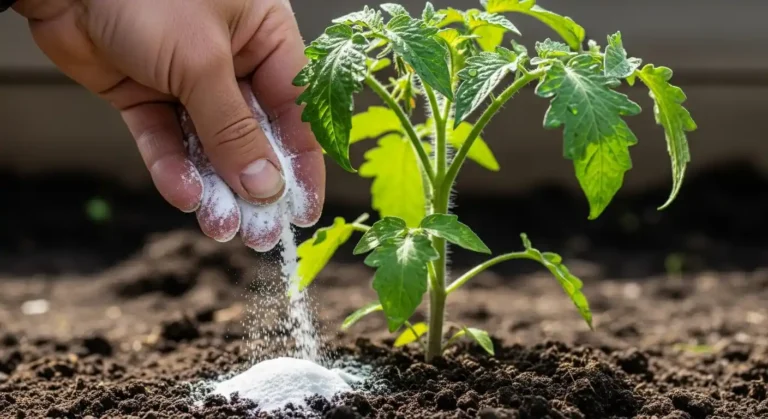
- Fertilize smart. Use a 6-8-8 balanced fertilizer at planting and every few weeks during the growing season. Avoid over-fertilizing with nitrogen, which pushes leafy growth at the expense of fruit.
- Mulch generously. A 2–3 inch layer of mulch around the base of your plants conserves moisture, regulates soil temperature, and suppresses the weeds that compete with your tomatoes.
- Stake or cage early. Do it at planting time, not after the plant has already started to flop. Indeterminate varieties especially will need strong support before you realize it.
The Bottom Line
South Florida winter gardening is one of the best-kept secrets in American home gardening. When the rest of the country is dreaming of spring, you can be pulling clusters of ripe cherry tomatoes off the vine.
Stick with proven performers — Everglades for resilience, Super Sweet 100 for volume, Sun Gold for flavor, Black Cherry for character, and Yellow Pear for variety — and you’ll have a winter harvest worth bragging about.
Ready to get started? Head to your local South Florida nursery or check UF/IFAS Extension resources for Florida-adapted seeds and transplants. Your winter garden is waiting.

Leave a Comment