
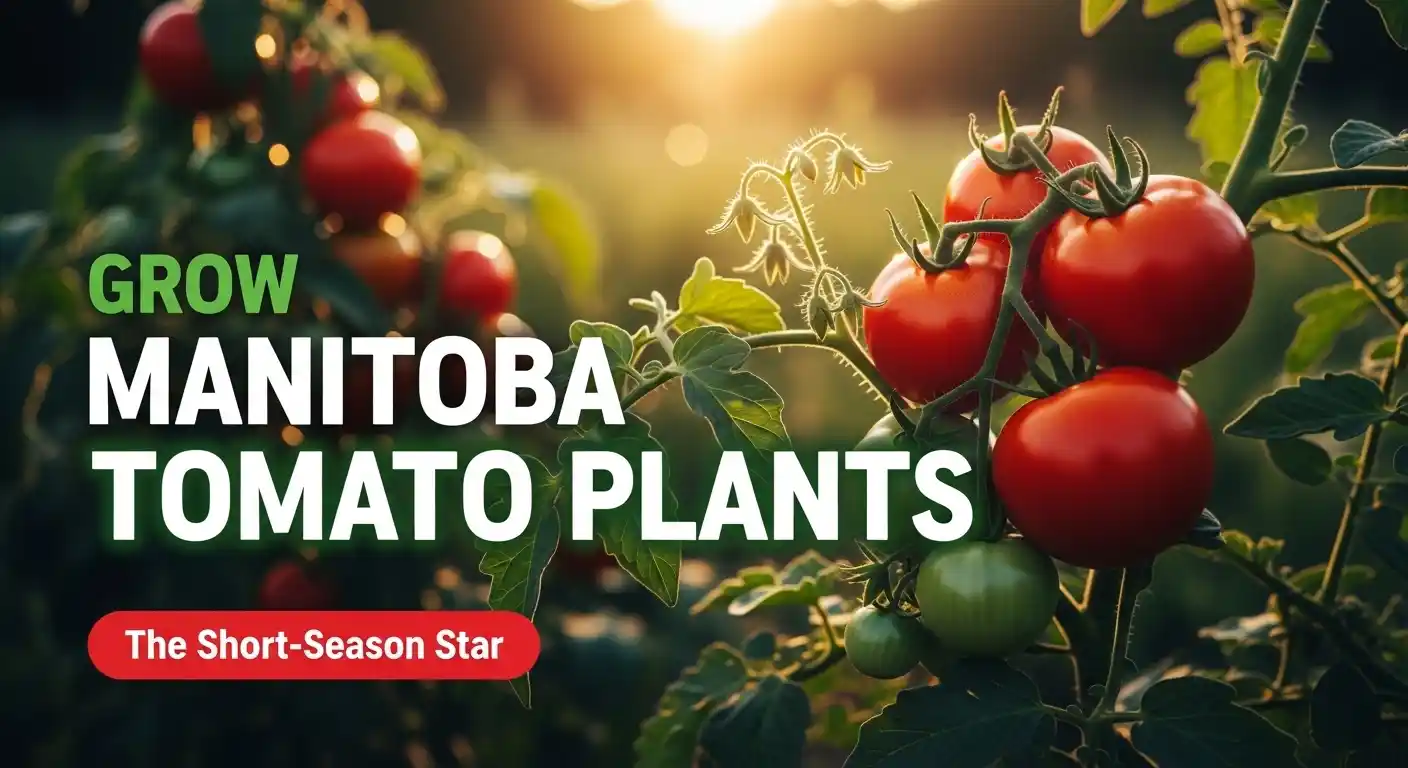

Growing Manitoba tomato plants sounds like a gamble — and plenty of gardeners have lost that bet.
The Prairies hand you a frost in late May, another in early September, and a whole lot of heat in between. That doesn’t leave much runway for a plant that loves a long, lazy summer.
But here’s the thing: with the right variety and a few well-timed moves, you can pull basketfuls of ripe tomatoes out of a Manitoba garden every single year.
This guide walks you through exactly how to do it – from choosing short-season varieties to protecting your plants when the temperature turns mean.
Also Read: Ultimate Guide to Growing Bush Goliath Tomatoes Successfully
Why Manitoba Is Actually Great for Tomatoes (If You Play It Smart)
Most gardening content is written for gardeners in Ontario or the Pacific Northwest. Manitoba gets lumped in with “difficult” and left there. That’s too bad, because the Prairies have a secret weapon: intense summer sun.
Manitoba sits far enough north that summer days stretch long — up to 16 hours of daylight in June and July.
Tomatoes are solar-powered, and that extended light exposure drives explosive fruit development once conditions are right. You’re not fighting the sun here; you’re riding it.
The real enemy is the short frost-free window. Most of Manitoba averages 100–120 frost-free days depending on your zone (Zone 2b to 3b across most of the province). That means variety selection and timing aren’t optional — they’re everything.
Choosing the Best Tomato Varieties for Manitoba’s Short Season
This is where most Prairie gardeners go wrong. They pick up whatever looks good at the nursery – a big, juicy Beefsteak or a San Marzano – and wonder why it’s still green when frost hits in September.
For Manitoba tomato plants, you need varieties that reach full ripeness in 60–75 days from transplant. Here are the ones that consistently deliver:
Sub-Arctic Plenty – A true Prairie legend. Developed in Canada specifically for short seasons, it produces clusters of small-to-medium tomatoes in under 60 days. It even sets fruit in cool weather, which is rare.
Stupice – A Czech heirloom that’s become a favourite across the Prairies. It tops out at 60–65 days, handles cold nights better than most, and delivers complex, rich flavour for a small tomato.
Early Girl – The classic early producer. At around 52–60 days, it gives you medium-sized fruit with good flavour and consistent results in Manitoba conditions.
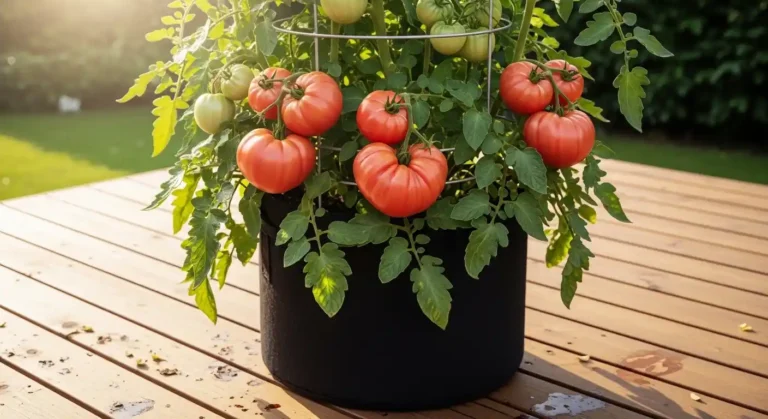
Tumbling Tom (Yellow or Red) — Ideal if you’re gardening in containers on a balcony or patio. Cascading habit, 50–60 days to ripe fruit, and genuinely productive in a pot.
Bush Early Girl – A compact, determinate version of Early Girl that works well in raised beds and smaller spaces without staking.
Avoid anything that says “80+ days” on the tag unless you’re very far south in Manitoba or willing to do serious season extension work.
Starting Manitoba Tomato Plants Indoors: Timing is Everything
The golden rule: start your tomato seeds 6–8 weeks before your last expected frost date. For most of Manitoba, that last frost falls somewhere between May 20 and June 1, depending on your location.
Winnipeg gardeners can generally target May 24 as a rough benchmark, but you can always check the provincial agricultural climate data to find the exact historical frost-free window for your specific rural municipality. Northern communities should push that closer to June 1 or even June 7.
Work backwards from there:
- Last frost date: May 24
- Count back 6–8 weeks: Start seeds between March 29 and April 12
Starting too early is a real problem in Manitoba. If you seed in February hoping for a head start, you’ll end up with leggy, root-bound transplants by May — and they struggle to bounce back in the garden.
What You’ll Need to Start Seeds
- Seed-starting mix (not regular potting soil — it’s too dense for germination)
- Small cells or peat pots
- A heat mat (tomato seeds want soil temps of 21–27°C to germinate)
- A grow light or a very sunny south-facing window
- Liquid kelp or diluted fish fertilizer for seedlings once they hit their second set of leaves
Bury seeds about 6mm (¼ inch) deep, keep them warm and moist, and you’ll see sprouts in 5–10 days.
Transplanting Manitoba Tomato Plants Outdoors
Here’s where patience pays off. Even if your last frost has technically passed, Manitoba soil stays cold into late May. Tomatoes planted in cold, wet ground stall out and sulk — they won’t start growing until soil temps reach at least 15°C, and they thrive above 18°C.
A soil thermometer is one of the cheapest, most useful tools a Manitoba gardener can own.
Harden off your seedlings first. Starting about 10 days before transplanting, bring your starts outside for progressively longer periods each day — starting with an hour of shade, working up to full sun and overnight exposure. Skipping this step shocks the plants and sets them back by weeks.
Plant deep. Tomatoes grow roots along any buried stem. Dig a deep hole or trench, strip off the lower leaves, and bury the stem up to the lowest set of leaves. This gives you a bigger, more drought-resistant root system — a big deal in Manitoba summers that can flip from wet to bone-dry fast.
Space matters. Indeterminate varieties need at least 60–90 cm between plants. Determinate (bush) types can go closer at 45–60 cm.
Protecting Your Manitoba Tomato Plants from Frost
A surprise early or late frost can wipe out months of work in one night. Manitoba gardeners who succeed with tomatoes plan for this — they don’t hope for the best.
Row covers and floating frost cloth are your first line of defence. Drape them over plants on nights when the forecast dips near 0°C. They can buy you 2–4 degrees of protection, which is often all you need.
Wall-O-Waters (Season Extenders) are plastic teepees filled with water that act as a thermal buffer. They’re particularly useful in spring — you can put tomato transplants outside 2–3 weeks earlier than you normally would when they’re inside a Wall-O-Water.
At the end of the season, when frost threatens in late August or early September, pick any tomatoes that have started to blush (turned even slightly orange or pink).
They’ll finish ripening on your kitchen counter. Green tomatoes can be ripened indoors too — wrap them individually in newspaper and store them in a cool, dark spot.
Don’t try to ripen green tomatoes by putting them in a sunny window. It sounds logical but actually degrades flavour. A cool, dark space is what works.
Common Mistakes Manitoba Tomato Growers Make
Planting out too early. The urge to get going after a long winter is real. But a tomato planted in cold soil on May 10th will often be outpaced by one planted correctly on June 1st. Cold soil stunts root development in ways the plant never fully recovers from.
Choosing the wrong variety. We covered this above, but it deserves repeating. A “70-day tomato” at a southern U.S. nursery might assume a different start date than yours. Always check the days-to-maturity and count backward from your realistic last frost.
Overwatering. Prairie clay soils hold moisture well. Watering deeply once or twice a week is almost always better than light daily watering. Inconsistent moisture — feast then drought — leads to blossom end rot and cracked fruit.
Skipping the mulch. A 5–8 cm layer of straw or wood chip mulch around your tomatoes does three things: holds moisture, moderates soil temperature, and suppresses weeds. In Manitoba’s variable summer weather, that moisture retention alone is worth the effort.
Not staking early enough. Tomatoes grow fast in Manitoba’s long summer days. If you wait until the plant is flopping to put in a cage or stake, you’re already dealing with broken branches and disturbed roots. Put your supports in at planting time.
FAQ: Manitoba Tomato Plants
Can you grow tomatoes year-round in Manitoba?
Not outdoors — the winters make that impossible. But with a greenhouse or a well-lit indoor setup, you can extend into the shoulder seasons or grow year-round indoors with sufficient lighting.
If you want to try keeping a fresh harvest going while it snows outside, check out this guide on how to grow tomatoes indoors during winter without needing a fancy, expensive setup.
What’s the best soil for tomatoes in Manitoba?
Aim for a slightly acidic, well-draining soil with lots of organic matter. Manitoba’s native clay is nutrient-rich but compacts easily — work in compost generously each spring to improve drainage and structure.
Do I need to fertilize Manitoba tomato plants?
Yes, but don’t overdo the nitrogen or you’ll get huge plants with little fruit. Use a balanced fertilizer at planting, then switch to a phosphorus-heavy formula once flowers appear to encourage fruit set.
When should I start tomato seeds in Winnipeg?
For Winnipeg, target late March to early April — roughly 6–8 weeks before your May 24 last frost date.
Conclusion: Short Season, Big Harvest
Manitoba tomato plants aren’t a long shot — they’re a short-season star waiting for the right conditions.
Give them an early indoor start, pick the right variety, protect them at the margins, and you’ll be pulling ripe, garden-fresh tomatoes off the vine by mid-August.
The Prairies demand a bit more planning than growing in milder climates, but that’s part of what makes the harvest feel earned.
Ready to get started? Grab a packet of Stupice or Sub-Arctic Plenty seeds, mark your start date on the calendar, and put this guide to work. Your best Manitoba tomato season is ahead of you.

Leave a Comment