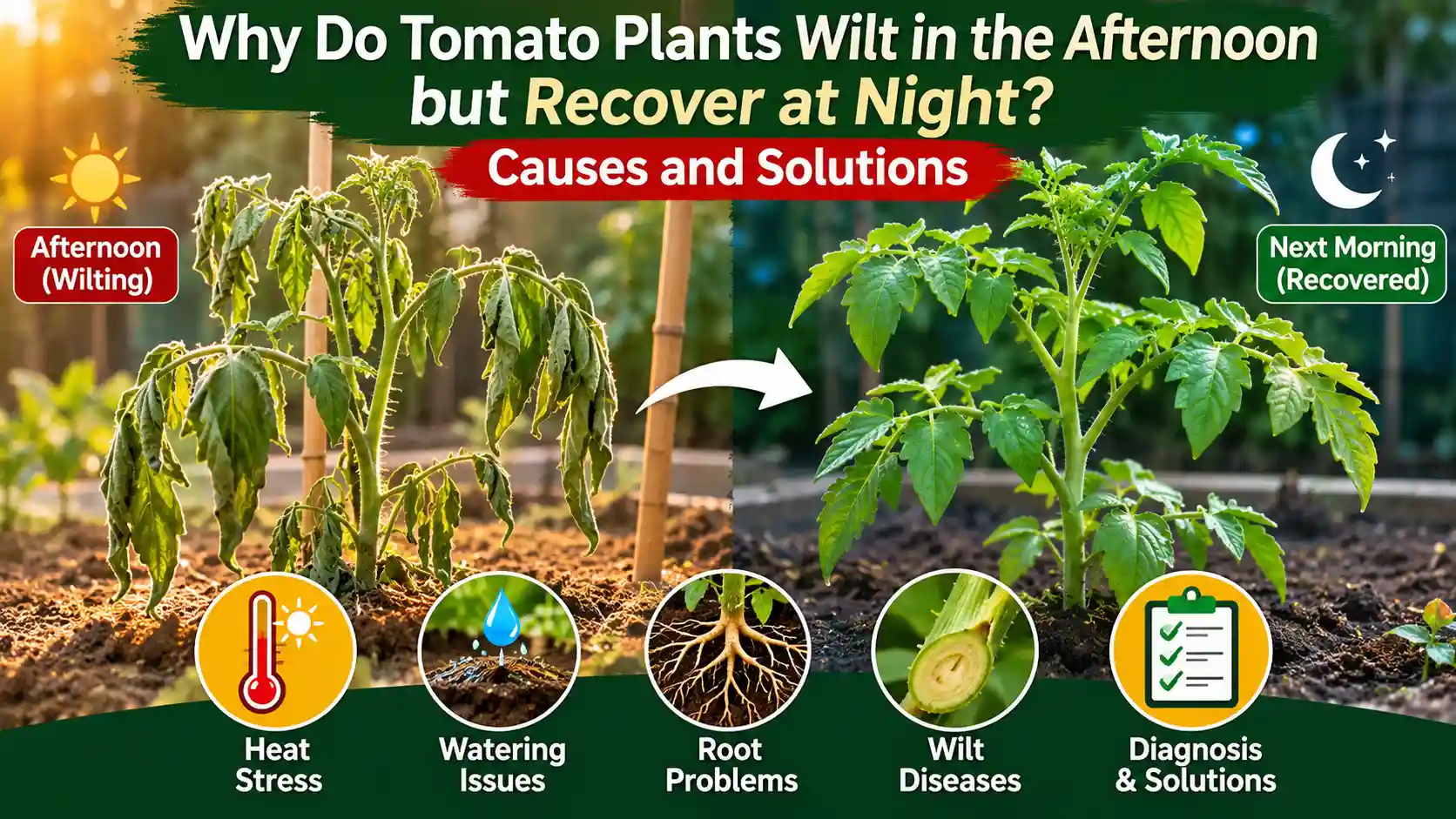
Quick Answer: Tomato plants typically wilt in the afternoon because transpiration outpaces water uptake during peak heat, and the plant rehydrates overnight once temperatures drop. This pattern is usually heat stress, not disease.
However, if wilting becomes progressive, one-sided, or paired with yellowing and stem discoloration, it may signal an early-stage vascular or bacterial wilt disease that requires closer inspection.
Every tomato grower has seen it: lush, upright plants in the morning that look defeated by 3 p.m., only to bounce back by sunrise. It’s an unsettling sight, especially when you’ve been watering diligently.
The question that keeps gardeners up at night is simple – is this just how tomatoes handle heat, or is it the first whisper of a disease that could wipe out the whole bed?
The honest answer is that it depends. Afternoon wilting is often a normal, temporary response to heat and sunlight. But nighttime recovery alone doesn’t guarantee your plant is in the clear. Some of the most destructive tomato diseases, including bacterial wilt, can mimic this exact daily rhythm before the damage becomes irreversible.
This guide walks through how to tell the difference using three simple checks: soil moisture at root depth, leaf symptom patterns, and a close look at the lower stem. By the end, you’ll have a practical framework for diagnosing your plant instead of guessing.
Is It Normal for Tomato Plants to Wilt During the Afternoon?
Yes, mild afternoon wilting is a normal physiological response in tomato plants, and it’s driven by transpiration.
As temperatures climb and sunlight intensifies, leaves release water vapor through their stomata faster than the roots can pull replacement moisture from the soil.
The plant’s cells temporarily lose turgor pressure, causing the drooping, slightly curled appearance that worries so many gardeners.
This water-loss imbalance isn’t unique to stressed or unhealthy plants. Even well-watered tomato plants in full sun can wilt slightly during the hottest part of the day, particularly when temperatures exceed 85°F (29°C) combined with direct afternoon sun exposure.
Soil moisture matters too: if the root zone is already on the drier side, the gap between water loss and water uptake widens, making wilting more pronounced.
Healthy recovery looks like this: as temperatures fall in the early evening, transpiration slows, roots catch up on water delivery, and the plant looks fully upright again within a few hours — often by dusk or shortly after.
The distinction to watch for is temporary midday wilting versus progressive plant damage. Temporary wilting resolves completely and consistently every evening.
Progressive damage shows up as wilting that starts earlier each day, recovery that becomes less complete, or symptoms that spread to new leaves even after the heat breaks. That pattern points toward something beyond simple heat stress.
6 Reasons Tomato Plants Wilt in the Afternoon but Recover at Night
1. High Temperature and Excessive Sunlight
During peak afternoon heat, a tomato plant’s water demand can spike dramatically as leaves work to cool themselves through transpiration. Plants grown in full, unshaded sun experience this most intensely, since there’s no relief from direct radiant heat.
Heat-related wilting typically affects the entire plant evenly, appears gradually as the day warms, and fully resolves once temperatures drop — a useful marker for identifying it correctly.
2. Insufficient Soil Moisture
Shallow or infrequent watering keeps moisture near the surface while leaving deeper roots dry, even when the topsoil looks damp. Tomato plants draw much of their water from root zones several inches deep, so a quick surface check can be misleading. To confirm this cause, dig down four to six inches near the root zone (not directly against the stem) and check for dryness at that depth rather than relying on the surface appearance.
3. Overheating in Tomato Grow Bags and Containers
Container-grown tomatoes face an added challenge: the growing medium heats up and dries out faster than garden soil because it’s surrounded by exposed material rather than insulated by the earth.
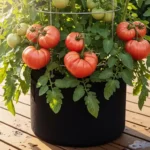
Dark-colored grow bags and thin plastic pots absorb more heat, raising root-zone temperatures well above ambient air temperature. Terrace and balcony gardeners should check container placement, prioritize lighter-colored or fabric containers, and avoid setting pots directly on heat-absorbing surfaces like concrete or dark tile.
Choosing an adequately sized container is just as important as container material – especially for large, vigorous varieties, picking the best container size for large tomato plants
provides enough soil volume to buffer root temperatures and hold moisture through peak afternoon heat.
4. Inconsistent Watering
Alternating between long dry spells and heavy watering creates repeated stress cycles for tomato roots. This swing between drought and saturation is more damaging during hot weather because the plant is already working harder to manage water loss.
Establishing a consistent watering rhythm — rather than reacting only when leaves droop — helps roots maintain steady access to moisture.
5. Poor Drainage and Damaged Roots
Waterlogged soil pushes oxygen away from the root zone, and oxygen-starved roots struggle to absorb water even when plenty is available. Over time, this can damage root tissue directly, compounding the problem.
The key distinguishing sign: if the soil stays consistently wet yet the plant remains wilted, the issue is more likely drainage or root damage than underwatering.
6. Early Symptoms of Tomato Wilt Diseases
This is the cause gardeners most want to rule out. Fusarium and Verticillium wilt interfere with the plant’s vascular system, restricting water movement from roots to leaves even when soil moisture is adequate.
Bacterial wilt can initially produce the same daytime wilting and overnight recovery pattern seen in simple heat stress, which is exactly why it’s so often missed in its early stages. Agricultural extension research on bacterial wilt confirms that this deceptive day-night cycle is a recognized early symptom, not just garden folklore.
Warning signs that should raise suspicion include yellowing that starts on lower leaves and moves upward, wilting that progresses day over day instead of staying stable, one-sided drooping, and discoloration inside the stem.
This symptom pattern should never be dismissed as ordinary heat stress, because vascular and bacterial wilts can kill a plant within days once established.
How to Identify Whether Your Tomato Plant Has Heat Stress or Disease
Use this comparison to narrow down what’s happening:
| What you observe | What to investigate |
|---|---|
| Wilts during peak heat, recovers fully | Heat and water demand |
| Soil is dry several inches below surface | Insufficient moisture |
| Soil stays wet but plant remains wilted | Root damage or disease |
| Lower leaves gradually turn yellow | Possible vascular wilt |
| One-sided wilting or progressive symptoms | Possible disease |
| Sudden permanent wilting while leaves remain green | Possible bacterial wilt |
Check Soil Moisture at Root Depth
Push a finger or a soil probe four to six inches into the ground near the plant’s root zone. Surface moisture is misleading because it evaporates quickly in heat while deeper soil retains a different moisture level entirely. If the surface looks damp but this deeper zone is bone-dry, insufficient watering is the likely culprit.
Inspect Leaves for Unusual Changes
Look closely at leaf color and shape. Yellowing, curling, or symptoms that appear on only one side of the plant point toward disease rather than heat. Compare younger, upper leaves to older, lower ones — vascular wilts often start with the oldest leaves first, since they’re furthest from the plant’s active water supply.
Examine the Lower Stem
Cut a small cross-section near the base of a suspect plant and look inside. Discoloration or browning in the vascular ring (the tissue just beneath the outer stem layer) is a strong indicator of vascular wilt disease. Cankers or dark lesions on the outer stem are another warning sign.
Bacterial streaming — thin, milky strands visible when a cut stem is suspended in water — is a useful preliminary diagnostic clue, but it’s not a definitive home diagnosis. Confirmed cases still require lab testing or extension service input.
How to Fix Tomato Plants That Wilt in the Afternoon
Adjust Your Watering Schedule
Water based on root-zone moisture rather than leaf appearance. Choose X (checking soil moisture before watering) over Y (watering reactively whenever leaves droop) if your goal is preventing both drought stress and overwatering. Morning irrigation is generally preferable, since it gives roots time to absorb water before the heat of the day arrives.
Apply Mulch to Protect Tomato Roots
A two- to three-inch layer of organic mulch — straw, shredded leaves, or compost — reduces surface evaporation and keeps root-zone temperatures more stable. Keep mulch a few inches away from direct contact with the stem to avoid trapping moisture against it, which can encourage rot.
Protect Tomato Plants from Excessive Heat
Temporary shade cloth during the hottest afternoon hours can reduce stress on exposed plants, particularly during heat waves. Container growers should shield grow bags and pots from direct sun exposure on their sides, since this is where root-zone overheating happens fastest. Improving airflow around densely planted tomatoes also helps leaves cool more efficiently.
If extreme heatwaves push temperatures near 100°F and your plants struggle to recover even after sunset, follow a structured recovery plan to revive heat-stressed tomato plants
using shade cloth and deep cooling strategies.
Improve Soil Drainage
Check that containers have adequate drainage holes and that garden soil isn’t compacted. If water pools or drains slowly, address that structural issue before adding more irrigation, since extra water on top of poor drainage compounds root damage rather than solving it.
What to Do If You Suspect Wilt Disease
If stem or leaf symptoms point toward disease, isolate suspicious plants where practical to limit potential spread. Avoid moving contaminated soil or allowing irrigation runoff to travel to healthy plants.
Seek confirmation from a local agricultural diagnostic service before taking drastic action — accurate diagnosis matters because ordinary watering and fertilizer applications cannot cure vascular infections.
Once a plant is confirmed infected, remove it appropriately, including the root system, rather than composting it with healthy garden waste.
How to Prevent Afternoon Wilting in Future Tomato Crops
- Choose growing locations with some afternoon relief from direct sun in extremely hot climates.
- Maintain consistent soil moisture rather than cycling between dry and saturated conditions.
- Select container sizes large enough to buffer against rapid root-zone heating.
- Apply mulch proactively before hot weather arrives, not just in response to wilting.
- Avoid unnecessary root disturbance during transplanting or cultivation.
- Monitor plants during the hottest part of the day to catch early warning signs.
- Maintain good drainage and healthy root systems through proper soil preparation.
A 3-Day Tomato Plant Wilting Observation Test
Before deciding whether you’re dealing with heat stress or disease, track your plant’s behavior over three consecutive days using this observation sheet:
| Observation time | What to record |
|---|---|
| 8 AM | Leaf condition and soil moisture |
| 12 PM | Temperature and early drooping |
| 3 PM | Severity of wilting |
| 6 PM | Recovery after peak heat |
| Next morning | Whether the plant recovered completely |
Consistent, full recovery each evening over three days points toward heat stress. Partial recovery, worsening severity, or symptoms that don’t fully resolve by morning are strong signals to investigate disease.
Final Takeaway
Afternoon wilting in tomato plants is often nothing more than a normal response to heat and transpiration, and most plants recover fully once temperatures ease in the evening.
But nighttime recovery alone isn’t proof of a healthy plant — some of the most serious tomato diseases follow this exact pattern in their early stages.
Before assuming the worst or ignoring the problem entirely, check soil moisture at root depth, watch for yellowing or one-sided symptoms on the leaves, and inspect the lower stem for discoloration.
Running the three-day observation test gives you a clear, practical record to compare against the normal heat-stress pattern.
When in doubt, trust the evidence over the assumption. A plant that recovers completely, every single night, with no spreading symptoms is almost always just dealing with the heat. One that doesn’t deserves a closer look before the growing season gets away from you.
Frequently Asked Questions
Should I Water Tomato Plants When They Wilt in the Afternoon?
Not automatically. Check soil moisture at root depth first. If the deeper soil is dry, watering helps. If it’s already moist, adding more water can worsen root damage instead of solving the wilting.
Can Tomato Plants Wilt Even When the Soil Is Wet?
Yes. Wilting in consistently wet soil usually points to root damage from waterlogging or an early vascular disease, since damaged roots can’t absorb water even when it’s available.
Does Afternoon Wilting Always Mean Heat Stress?
No. While heat stress is the most common cause, afternoon wilting can also be an early symptom of bacterial or fungal vascular wilt diseases, especially when the pattern becomes progressive over several days.
Can Bacterial Wilt Make Tomato Plants Recover at Night?
Yes. Bacterial wilt can initially cause daytime wilting followed by apparent overnight recovery, closely mimicking ordinary heat stress before symptoms become permanent.
How Can I Tell the Difference Between Heat Stress and Fusarium Wilt?
Heat stress typically affects the whole plant evenly and resolves fully once temperatures drop. Fusarium wilt often causes one-sided wilting, yellowing that starts on lower leaves, and vascular discoloration visible in a stem cross-section.
Should I Remove a Tomato Plant That Wilts Every Afternoon?
Not necessarily. If soil moisture checks out and the plant fully recovers each night with no yellowing or stem discoloration, it’s likely just heat stress. Removal is only warranted once disease is confirmed, since healthy plants shouldn’t be discarded unnecessarily.