

If you bought fresh tomatoes from the grocery store in the past few weeks, stop and read this before you take another bite.
On March 12, 2026, the U.S. Food and Drug Administration (FDA) issued an urgent public health alert concerning a multistate outbreak of Salmonella enterica serotype Newport linked to fresh, vine-ripened tomatoes distributed nationwide.
As of April 15, 2026, 142 laboratory-confirmed cases have been reported across 17 states — with 38 hospitalizations and no fatalities.
This isn’t just another small-scale food scare. This is the most geographically concentrated tomato-related recall since the 2008 jalapeño outbreak, and it underscores critical gaps in traceability, supplier vetting, and retail-level verification protocols.
Millions of Americans eat tomatoes daily — in sandwiches, salads, salsas, and sauces. Right now, many families are unknowingly putting contaminated produce on their dinner tables.
Here’s everything you need to know to protect yourself and your family – and why growing your own tomatoes may be the smartest decision you make in 2026.
What Exactly Happened? The 2026 Tomato Recall Explained
The FDA issued an urgent public health alert concerning a multistate outbreak of Salmonella enterica serotype Newport linked to fresh, vine-ripened tomatoes distributed nationwide.
What makes this recall especially dangerous is the complexity behind it. Unlike past recalls tied to specific farms or packing houses, this incident involves multiple co-packing facilities operating under shared brand licensing agreements — a structural complexity that delayed identification by nearly 11 days after the first illness was reported to state health departments.1
This isn’t the first time either. There’s a troubling history:
- More than a dozen wide-scale Salmonella outbreaks related to tomato fruits have been reported since 2001 in the United States.
- Among the 9.4 million episodes of foodborne illnesses identified in the United States, salmonellosis accounts for 1.2 million cases, with approximately 23,000 hospitalizations and 500 deaths, and a cost of $3.6 billion annually.
- A separate foodborne illness outbreak of Salmonella Strathcona linked to tomatoes has sickened more than 300 people in 19 EU/EEA countries, the UK, the U.S., and Canada.
The problem is clearly global, ongoing, and getting worse.
Which States Are Affected?
The FDA recall covers 17 states as of the latest update. The earlier related recalls from 2025 already impacted multiple regions:
- States affected include Illinois, Indiana, Kentucky, Michigan, Missouri, Mississippi, New York, Ohio, Pennsylvania, Tennessee, and Wisconsin.4
- Additional recalled tomatoes were previously distributed in Georgia, North Carolina, and South Carolina.
Importantly, foodservice establishments – including school cafeterias, hospital kitchens, and restaurant chains — are also implicated.
The FDA has issued separate guidance to commercial buyers requiring immediate documentation review of tomato invoices dated February 25–March 10, 2026.1
If you live in any of these states or purchased vine-ripened tomatoes from major grocery chains in the past month, this recall affects you.
What Are the Symptoms of Salmonella from Contaminated Tomatoes?
This particular strain is especially nasty. Salmonella Newport infection typically presents 6 hours to 6 days after ingestion.
Unlike many gastrointestinal pathogens, this strain produces unusually prolonged symptoms — median duration is 9 days, with 22% of cases reporting fever exceeding 102.5°F for more than 72 hours.
According to the CDC, symptoms include:
- Diarrhea that can be bloody, fever, and stomach cramps6
- Nausea and vomiting
- Severe headache, chills, and fatigue
- In rare circumstances, infection with Salmonella can result in the organism getting into the bloodstream and producing more severe illnesses such as arterial infections, endocarditis and arthritis.
Who Is Most at Risk?
People more likely to get a serious Salmonella infection include children who are younger than 5, adults who are 65 and older, and people whose immune systems are weakened from certain medical conditions (such as diabetes, liver or kidney disease, and cancer) or their treatments.
Each year, Salmonella sickens more than 1 million people in the U.S. and claims more than 400 lives, according to the U.S. Department of Agriculture.
⚠️ If you’ve eaten store-bought vine-ripened tomatoes in the past 2–3 weeks and are experiencing these symptoms, contact your healthcare provider immediately and mention the recall.
What Should You Do RIGHT NOW?
Step 1: Check Your Refrigerator & Kitchen
Consumers “are urged to not consume the products and return them to the place of purchase for a full refund, or they may discard the product,” the FDA recall notice said.9
Look for:
- Any vine-ripened tomatoes purchased between late February and mid-March 2026
- Pre-cut tomato products, salsa, or salad kits from this period
- Tomatoes in restaurant-style bulk packaging
Step 2: Know What’s Still Safe
Not everything on your counter needs to go. Here’s a breakdown:
✅ SAFE to eat:
- Safe tomatoes include ones you’ve grown at home, raw cherry tomatoes, grape tomatoes, and tomatoes with the vine still attached.10
- Canned or fire-roasted tomatoes (thermal processing at ≥212°F for ≥15 minutes eliminates Salmonella). Frozen diced tomatoes are also safe — no documented outbreaks linked to frozen tomato products in the last 12 years.1
❌ AVOID for Now:
- Pre-cut tomato products (salsas, bruschetta mixes, salad kits) unless explicitly labeled as processed after March 15, 2026
- Loose vine-ripened tomatoes from unknown distributors
Step 3: Practice Safe Handling
Follow the Clean, Separate, Cook, and Chill guidelines when you prepare food at home. These steps can help keep you and your family safe from Salmonella infection.
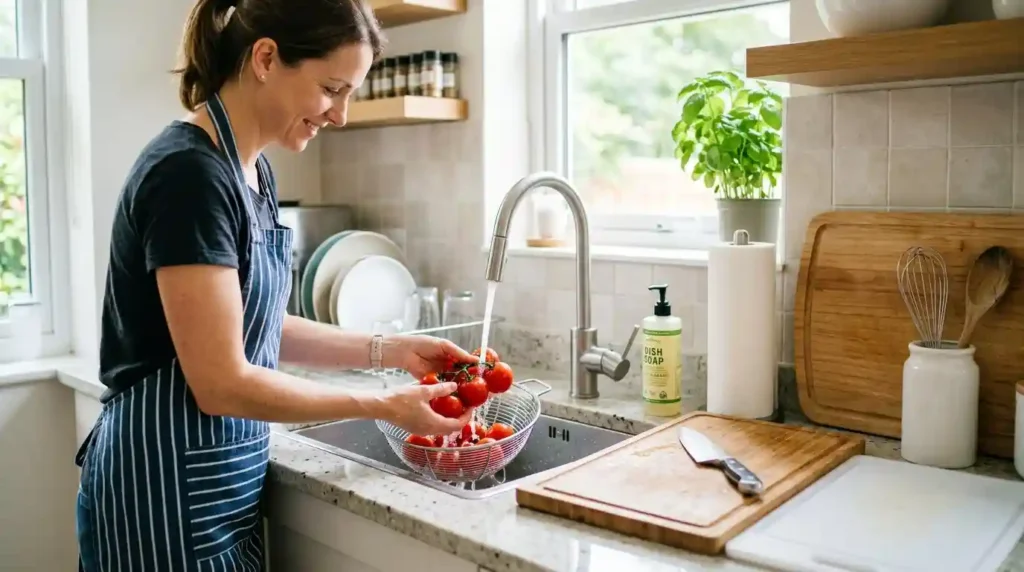
Wash hands with soap and clean, running water for at least 20 seconds before and after handling food.
Additional safety practices from the FDA:
- Use warm water and soap to thoroughly wash all utensils, countertops, and cutting boards before and after handling tomatoes. Wash your hands thoroughly with warm water and soap for at least 20 seconds before and after handling tomatoes.
- Cook thoroughly by heating foods to an internal temperature of at least 165°F (74°C) to kill the bacteria. Avoid cross-contamination by using separate cutting boards and utensils for raw and cooked foods.
- Refrigerate cut or peeled tomatoes and use within three days. Throw away cut or peeled tomatoes that have been left out at room temperature for more than two hours.
Important warning: Once tomatoes are contaminated with Salmonella, it can be difficult to remove all the surface bacteria by washing. Washing alone is NOT a guarantee of safety for recalled products.
How Does Salmonella Actually Get on Tomatoes?
Understanding the “how” helps you see why homegrown tomatoes are inherently safer.
Salmonella is a type of bacteria that can cause food poisoning. It’s often associated with raw meat, eggs, or dairy, but fresh produce like tomatoes can also become contaminated through dirty water, soil, or handling.
According to research from Ohio State University and the University of Georgia, contamination happens at multiple points:
- Irrigation water, manure, soil, water used to prepare fungicides and insecticides, and human handling are potential sources of Salmonella.
- Although Salmonella is a human pathogen, research reveals its ability to survive on or in tomato fruits throughout the course of plant growth, flowering, and fruit development and maturation. Tomato stems and fruits are subject to mechanical injury in the field and during postharvest handling, which make them more susceptible to internalization of bacteria.
- Food safety might be compromised during the growing, harvesting, transportation, cooling, packing and storage of fresh produce, with potential microbiological hazards associated with land history, adjacent land use, water quality, worker hygiene, pesticide and fertilizer use, equipment sanitation and product transportation.
The commercial tomato supply chain is long, complex, and has dozens of potential contamination points between the farm and your fork. That’s the fundamental problem.
Why Growing Your Own Tomatoes Is the Safest Move in 2026
Here’s the empowering part. While this recall shakes consumer confidence in store-bought produce, you have an alternative that is safer, cheaper, tastier, and easier than you might think.
Tomatoes grown at home are not linked to this outbreak – or any previous Salmonella tomato outbreak. The FDA has consistently identified homegrown tomatoes as safe during every major recall.
The Data Is Compelling
More than 7 in 10 Americans admit they started or continued planting food gardens in 2025. That’s up from an already healthy 61% in 2024.
Why? Nearly half of Americans surveyed say they’re worried about the safety of food in grocery stores. At the same time, 54% of 2025 home gardeners say they are explicitly trying to lower their grocery bills.
And the economics make it a no-brainer: For every $1 dollar spent on seeds and fertilizer, home gardeners can grow an average of $25 worth of produce.
USDA’s Economic Research Service projects overall grocery prices will rise 3.1% in 2026. As grocery prices continue to escalate, there’s no better time to grow your own food.
Why Homegrown Tomatoes Are Inherently Safer
Creating your own little tomato haven right in your backyard or balcony has enormous advantages. First and foremost, you have full control over what goes into your soil and onto your plants. No more guessing about chemicals or unsafe irrigation.
When you grow your own:
- You control the water source — always water with clean, potable water and avoid overhead watering as it can splash soil (and bacteria) onto leaves and fruit.
- You control the soil — choose a high-quality, sterile potting mix with peat, perlite, and compost. Avoid using garden soil directly in pots as it may harbor harmful bacteria or pathogens like Salmonella.
- You control hygiene — wash your hands before gardening and sanitize pruning shears or knives regularly to prevent bacterial transfer.
- There’s zero supply chain – no trucks, warehouses, shared packing facilities, or unknown handlers between you and your food.
How to Start Growing Safe Tomatoes at Home (Even With Zero Experience)
It’s late March 2026 – the perfect time to start planning your tomato garden across most of the United States.
Pick the Right Variety for Your Space
Tomatoes are one of the most popular crops among home gardeners, and with good reason: not only are tomatoes delicious and versatile, they are relatively easy to grow and return high value for the space they occupy. No store-bought tomato can compare with the flavor of a vine-ripened tomato picked from the garden at its peak of ripeness.
For backyards & raised beds:
- Selecting resistant varieties like ‘Mountain Magic’, ‘Iron Lady’, or ‘Defiant PhR’ gives you a head start against many common plant diseases that can open the door for bacterial infections.
For patios, balconies & containers:
- For home growers, cherry tomatoes (e.g., ‘Sun Gold’), Roma, or beefsteak types offer a good balance of taste, size, and resilience.
- Tomatoes, peppers, beans, spinach, kale and herbs all adapt well to containers. “You can grow a lot on a small patio or even a balcony.”
Container Gardening: The 2026 Trend Perfectly Suited for Tomatoes
In 2026, gardening blossoms to snack and micro-gardens. As both storage and available ground shrink, more people cultivate snack gardens.
You don’t need a big yard. Bucket gardening — commonly called container gardening — simply means growing plants in something above ground, whether that’s a five-gallon bucket, a grow bag or an old terracotta pot.
Key setup requirements:
- “The key to container gardening is really in the soil and making sure you have a good draining soil and pots that have holes in the bottom of them.
- Use at least a 5-gallon container per plant. Ensure it has drainage holes to prevent waterlogging, which can encourage fungal and bacterial growth.
- Tomatoes thrive in full sun (6–8 hours daily). Space plants 18–24 inches apart and use stakes or cages to improve air circulation and reduce soil contact.
7 Food Safety Rules for Your Home Tomato Garden
Even homegrown tomatoes need basic hygiene. Here’s your checklist based on food safety research:
- Use clean, potable water only — irrigate gardens with potable water to prevent contamination.
- Avoid overhead watering — drip irrigation or base watering prevents splashing soil-borne bacteria onto fruit
- Use quality compost safely — ensure compost reaches temperatures that kill pathogens before applying to gardens.
- Keep animals out — control of vector populations (insects, wild animals, and workers) is very important in protecting tomato plants from Salmonella. Animal and bird intrusion can be controlled by the installation of barriers and nets around and on the structures.
- Sanitize your tools — clean pruning shears, stakes, and cages before each use
- Harvest properly — pick tomatoes when fully ripe and handle with clean hands
- Wash before eating — wash tomatoes under fresh, cool running water. There is no need to use anything other than water. Washing them gently with water is as effective as using produce cleansers.
A Broader Pattern: Why More Americans Are Growing Their Own Food
This recall isn’t happening in a vacuum. It’s part of a larger shift in how Americans think about food safety and self-sufficiency.
“In a moment when so many people are stressed about grocery costs and food safety, a snack garden is one of the few things you can actually do about it without overhauling your entire life.”
The 25th annual Garden Trends Report from the Garden Media Group notes that purpose-driven gardening and intentional living are on Americans’ minds this year. In 2026, there’s a greater focus on edible gardens, small-space food production and pick-and-eat growing.
The message is clear: millions of Americans are choosing to take food safety into their own hands — literally.
What’s Next? How This Recall Could Evolve
New outbreaks are likely to occur in future seasons until the root cause of the contamination has been identified and control measures are implemented.3
The FDA investigation is ongoing. We’ll continue updating this article as new information becomes available. Bookmark this page and follow CropTheTomato for the latest updates.
Key actions to take right now:
- ✅ Check your refrigerator for recalled products
- ✅ Dispose of or return any suspicious vine-ripened tomatoes
- ✅ Switch to canned, frozen, or homegrown tomatoes temporarily
- ✅ Start your own tomato garden this spring — it’s the perfect time
- ✅ Follow the FDA recall page for updates
🔗 More resources on our site:
- Why Tomatoes Crack After Rain (And the 3-Step Fix Most Farmers Miss)
- Best Cherry Tomatoes for South Florida Winter Gardening
- Dry Farm Tomatoes: Expert Secrets For Rich Taste
Frequently Asked Questions
Q: Are all tomatoes in the grocery store unsafe right now?
A: No. The recall specifically targets fresh vine-ripened tomatoes distributed through certain facilities between late February and early March 2026. It is safe to eat tomatoes that are not part of the recall. Cherry tomatoes, grape tomatoes, canned tomatoes, and homegrown tomatoes remain safe.
Q: Can I wash recalled tomatoes and eat them?
A: The FDA advises against it. Once tomatoes are contaminated with Salmonella, it can be difficult to remove all the surface bacteria by washing.13 Discard recalled tomatoes or return them for a refund.
Q: Can cooking kill Salmonella on contaminated tomatoes?
A: Heating foods to an internal temperature of at least 165°F (74°C) can kill the bacteria.12 However, the FDA recommends against trying to salvage recalled products this way due to cross-contamination risks during handling.
Q: How long after eating contaminated tomatoes would symptoms appear?
A: Symptoms usually start 6 hours to 6 days after infection. They include diarrhea that can be bloody, fever, and stomach cramps. Most people recover within 4 to 7 days without antibiotic treatment.
Q: Are homegrown tomatoes safe from Salmonella?
A: Tomatoes grown at home are not linked to this outbreak. With basic hygiene practices — clean water, clean soil, clean hands — homegrown tomatoes are significantly safer than commercially distributed produce.
Q: Is it too late to start growing tomatoes in 2026?
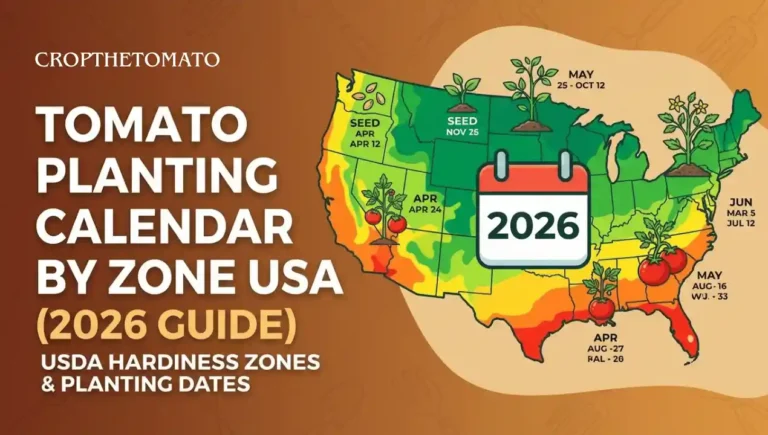
A: No! Late March through May is prime planting season for most US zones. Container-grown tomatoes can be started even later. Visit our planting calendar for zone-specific dates.



Leave a Comment