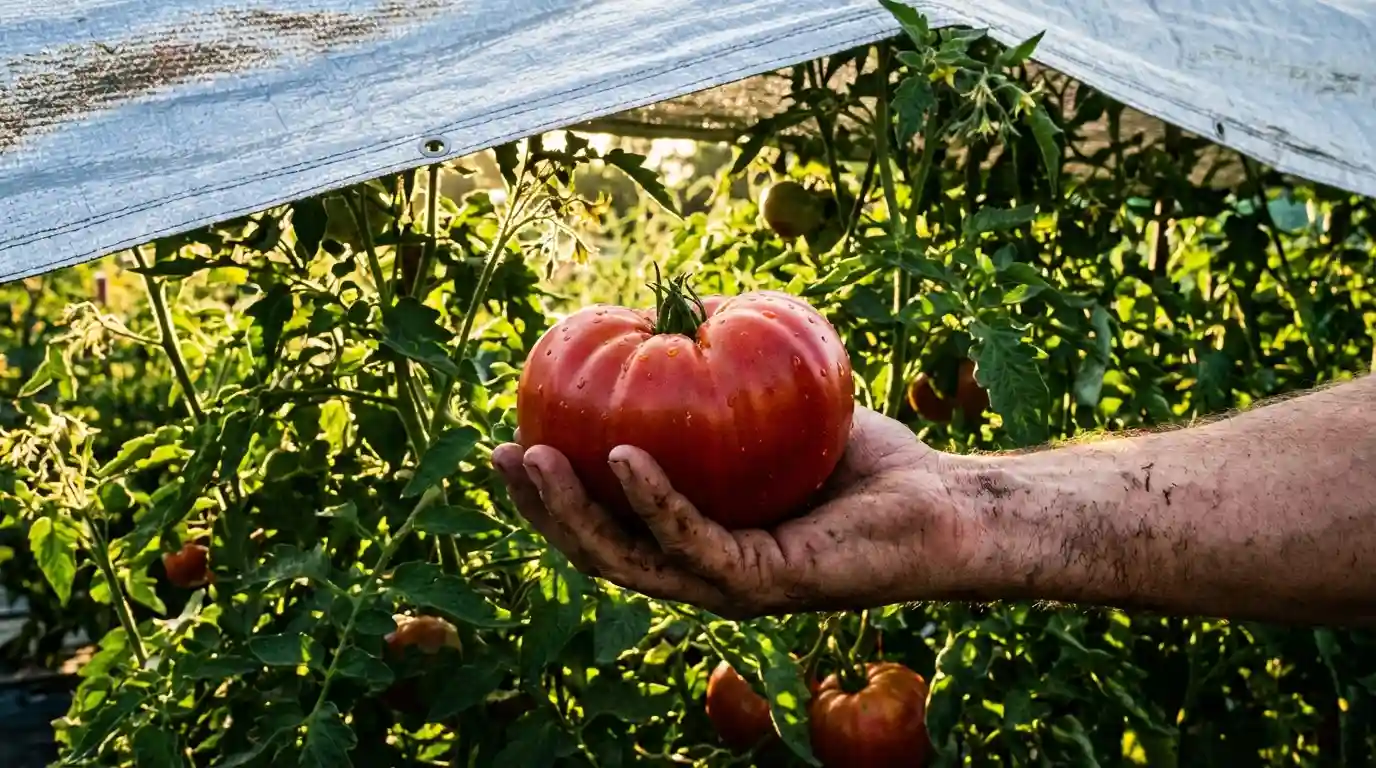
Last month, I stood in my garden at 4:00 PM and felt a pit in my stomach. My heirloom tomatoes—varieties I had meticulously started from seed back in February—looked like they were losing a battle with a blowdryer.
The thermometer on my patio read 103°F (39°C), and the leaves on my prize Oxhearts were curled into tight, brittle straws.
The specific curl pattern here matters: the edges were rolling upward, like a taco shell — a classic sign of heat and moisture stress, not disease or overwatering.
(If you’re unsure which type of curl your plants are showing, our guide on tomato leaf curl – up vs. down diagnosis will help you confirm before you act.
If you are gardening in 2026, you know this feeling. The traditional “water once a day” advice is no longer enough to keep a garden alive during these prolonged heat domes.
I realized that if I didn’t change my strategy immediately, I would lose months of work in a single weekend.
I decided to run a controlled experiment on my 50 tomato plants. I abandoned the standard surface-watering routine and implemented a three-step “Recovery Protocol.”
The results were staggering: within 72 hours, the leaf curl reversed, and the dreaded blossom drop stopped.
Here is exactly how I saved my crop, and how you can revive your heat-stressed tomato plants today.
Step 1: The “Deep-Soak” Delivery (No More Surface Watering)
The biggest mistake I was making—and perhaps you are too—is surface watering. When the ground is 100°F, water applied to the top two inches of soil evaporates almost instantly.
Even worse, it encourages the plant’s roots to stay near the surface, where they essentially “cook” in the hot dirt.
To fix this, I implemented the “Deep-Soak” method. I took recycled 1-liter plastic bottles, cut the bottoms off, and buried them upside down about 6 inches into the soil next to each plant.
The Discovery: By filling these bottles twice a day, I delivered water directly to the root zone, 8 inches below the surface. This kept the roots in a cool, moist “sub-layer” of soil, even when the surface was bone-dry.
Within two days of switching to this method, the “midday wilt” that usually hit my plants at noon disappeared.
The plants had a constant reservoir of deep moisture to draw from, allowing them to maintain internal pressure (turgor) throughout the hottest part of the day.
Step 2: Switching to Aluminized Shade Cloth
Most gardeners reach for standard black 50% shade cloth. I did too, initially. But during my experiment, I noticed that black cloth actually absorbs heat and radiates it downward toward the plants.
I made the switch to 70% Aluminized Shade Cloth (Aluminate). Unlike black mesh, the silver surface reflects the infrared radiation away from the garden entirely.
The Result: I measured the air temperature under the silver cloth vs. the black cloth using a digital probe. The area under the aluminized cloth was a full 12 degrees cooler.
By lowering the ambient temperature from 103°F to 91°F, I brought the plants back into the “safe zone” where their pollen remains viable.
This isn’t just a gardener’s rule of thumb — a peer-reviewed study published in Annals of Botany found that continuous exposure to temperatures of just 32°C (90°F) at night reduced the number of viable tomato pollen grains by two-thirds, with germination falling by a factor of 13 compared to plants kept at 28°C.
That 12°F temperature drop from the aluminized cloth isn’t cosmetic — it’s the difference between a fruit set and a bare vine.
This single change stopped the blossom drop overnight, ensuring that my late-summer harvest wouldn’t be a total loss.
Step 3: The Liquid Seaweed “Internal Shield”
Heat stress causes a chemical reaction inside the plant. It creates “reactive oxygen species” (free radicals) that damage the plant’s cells. To combat this, I used a hack I learned from commercial greenhouse growers: Liquid Seaweed Foliar Spray.
Seaweed is naturally rich in cytokinins—hormones that trigger the plant to continue growing even under stress.
I mixed a highly diluted solution of cold-pressed kelp and sprayed the leaves at dusk (never in the morning, as water droplets can act as magnifying glasses for the sun).
The kelp acts as an internal shield, helping the plant manage the salt levels in its cells and preventing the “crispy” leaf edges commonly seen in heat-stressed tomatoes. Think of it as an electrolyte drink for your garden.
After two applications, the new growth on my plants was lush and deep green, showing zero signs of the yellowing I saw on my neighbor’s untreated vines.
Why You Must Stop Pruning Right Now
One final observation from my “case study” garden: the plants I had aggressively pruned for “better airflow” suffered the most sunscald.
In a 2026 heatwave, foliage is your best friend. The leaves act as biological cooling towers, and they provide vital shade for the fruit. I stopped all “sucker pruning” the moment the heatwave was forecasted.
By allowing the canopy to fill out, the tomatoes themselves were shielded from the direct UV rays that cause leathery, white sunscald patches.
The Recovery Timeline: What to Expect
If your plants are currently dying, do not expect a miracle in one hour. Here is the recovery timeline I observed in my garden after implementing these three steps:
- 24 Hours: Midday wilting reduces. The plant no longer looks “collapsed” in the afternoon.
- 48 Hours: Upward leaf curl begins to relax. New blossoms start to look “sticky” and healthy again.
- 72 Hours: New green growth appears at the terminal buds. The plant has officially exited “survival mode.”
Saving a garden in a changing climate requires us to move past the old rules. By shifting your focus to deep-root hydration, reflective cooling, and hormonal support, you can grow a thriving crop of tomatoes regardless of what the thermometer says.
If you are worried that your pots aren’t holding enough water for this protocol, check out my guide on choosing the right container size to ensure your root systems have the space they need to stay cool.


