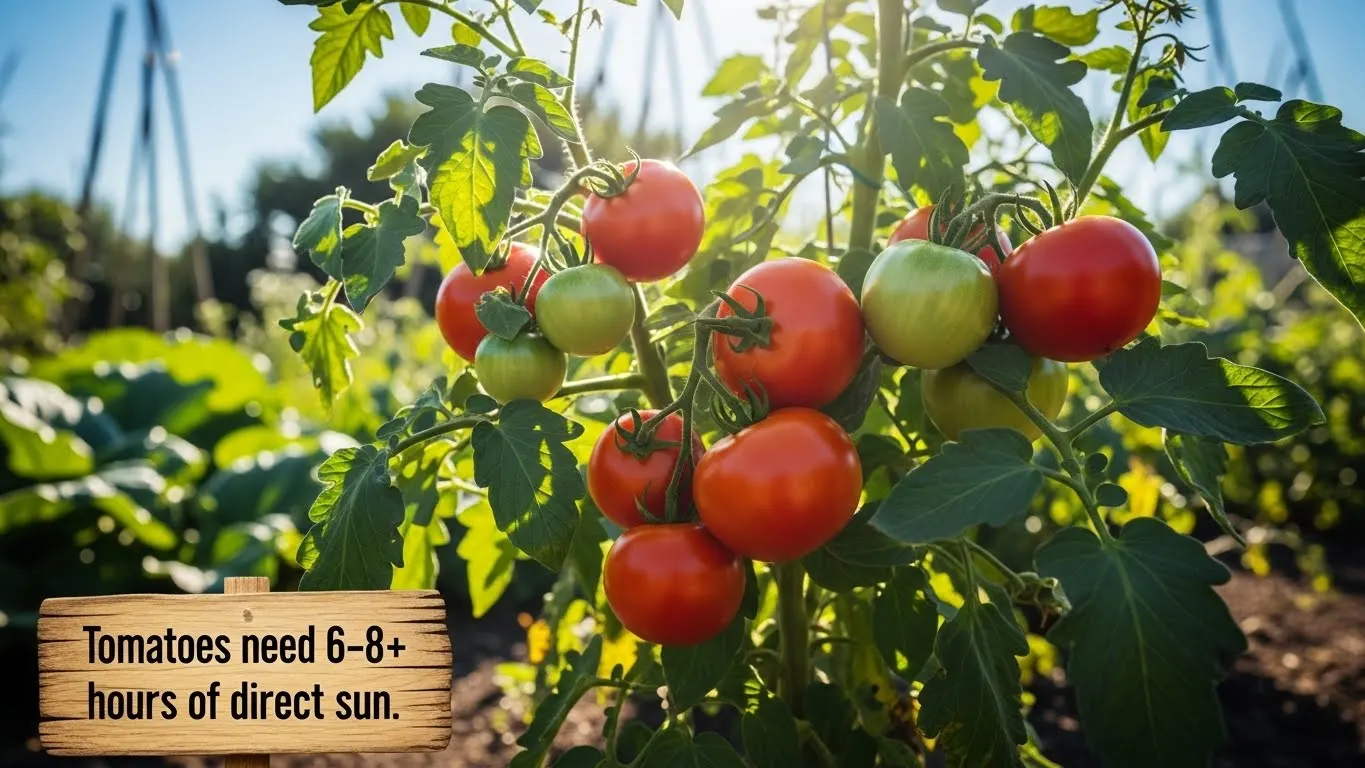
It’s frustrating to see a healthy tomato plant with flowers but no fruit.
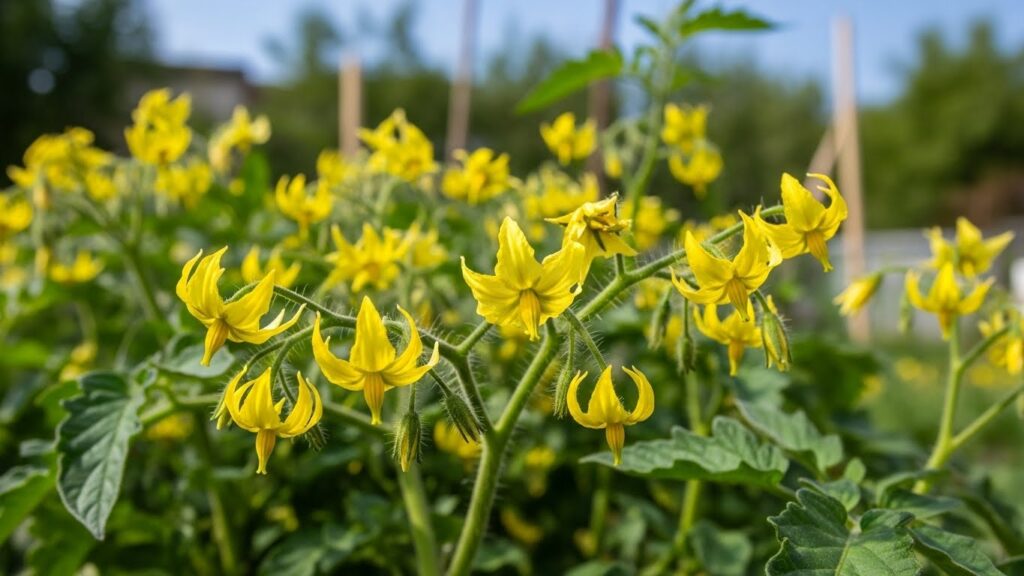
In this guide, I’ll share reasons why this happens and how to fix them so your tomatoes can grow. We’ll focus on practical steps you can take today to encourage fruiting.
I’ve learned from my mistakes, and I’m here to share what worked for me. Key areas to focus on include the right environment (light, temperature, humidity), nutrition, water, and some care habits.
1. Ensure Enough Sunlight
Tomatoes need at least 6–8 hours of sunlight each day, with more being better for lots of fruit.
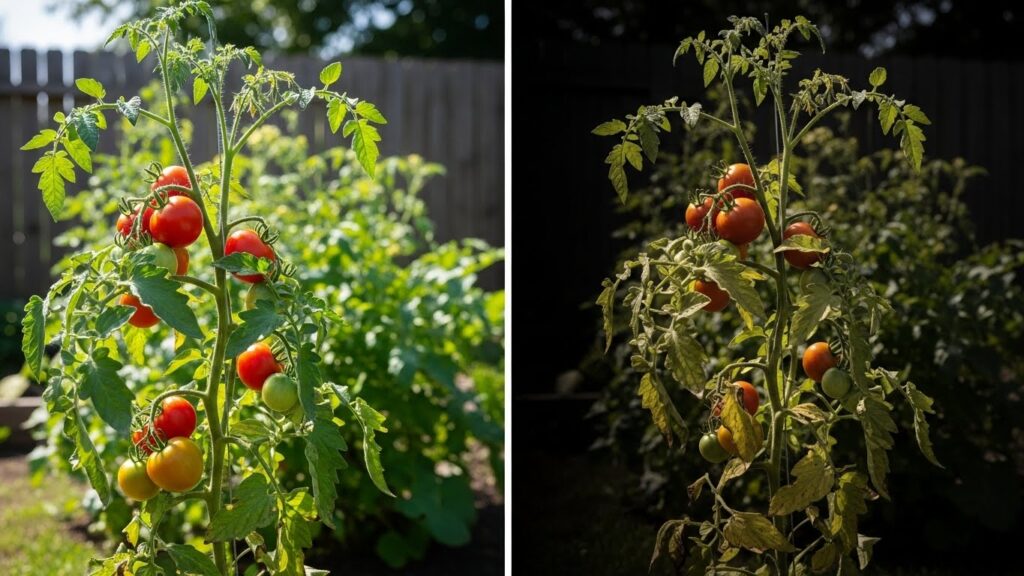
If they don’t get enough light, they might grow lots of leaves but few tomatoes.
How to Check: Stand by the plant at noon. Is it getting sunlight? You can also use your phone camera to check shadows throughout the day.
Immediate Fixes: Move potted plants to sunnier spots, trim branches that block sunlight, or plant them where they’ll get morning to afternoon sun.
When to Expect Results: You’ll see healthier leaves and more flowers in about 1–2 weeks, with fruit likely coming in 2–4 weeks.
2. Watch the Temperature
Tomatoes thrive when daytime temperatures are between 70–85°F (21–29°C) and night temperatures are 55–70°F (13–21°C). Extremes can cause flowers to drop.
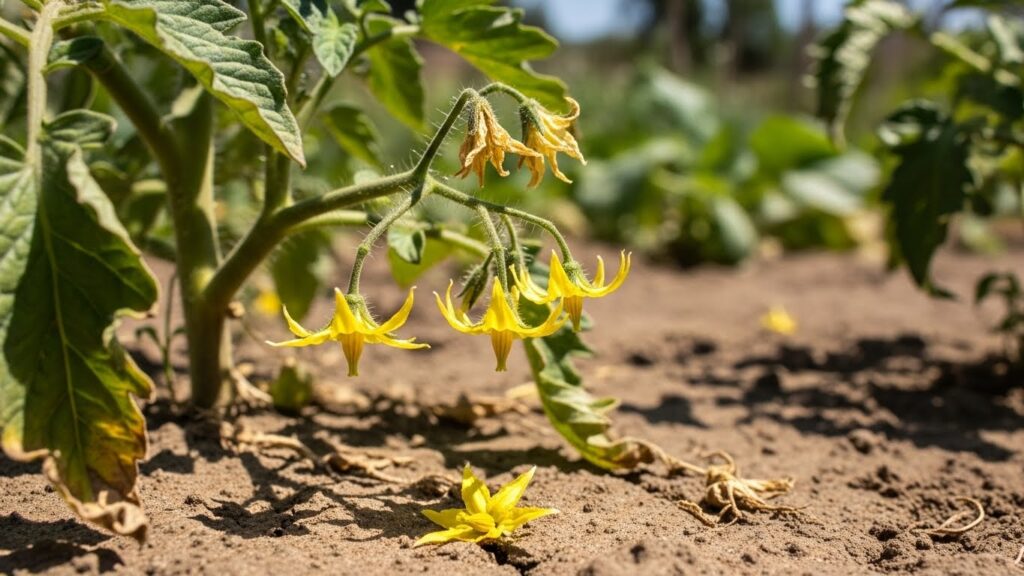
How to Check: Use a thermometer at the leaf level when the flowers are blooming.
Immediate Fixes: For heat, use shade cloth (30–50%). For cool nights, open up the area and use light covers. For pots, bring them to a warmer spot at night.
When to Expect Results: You’ll see better fruit set within days once the temperatures stabilize.
3. Help with Pollination – Support Bees or Do It Yourself
If your flowers open and fall off, they probably didn’t get pollinated. Check a flower: if it has dry yellow pollen and the center looks good, you have pollen. If the flowers don’t get pollinated, you won’t see any fruit.
How to check: Tap a flower. Do you see pollen dust? Are bees visiting?
Quick fixes: Shake the plants gently in the morning, use an electric toothbrush on the stems to mimic a bee’s buzz, or set up a small fan in greenhouses.
If it’s very dry, slightly increase humidity to help the pollen stick. For detailed hand-pollination steps, check the UC Davis tomato pollination guidelines for easy instructions on collecting and applying pollen.
When to expect results: You should see fruit forming in 1–2 weeks after regular hand-pollination.
4. Balance Feeding – Don’t Overdo Nitrogen
Too much nitrogen leads to many leaves but few fruits. Switch to a fertilizer that has more phosphorus and potassium when flowers appear.
How to check: If you see dark green leaves but few flowers or fruits, you have high nitrogen.
Quick fixes: Stop using high-nitrogen fertilizers; switch to bloom formulas (look for N-P-K like 5-10-10) or organic options like wood ash, compost tea, or comfrey tea.
If your plants are already struggling with too much nitrogen, and you notice curled leaf tips or stunted growth, check out our guide on fixing nitrogen burn on tomato plants for recovery steps.
When to expect results: You’ll see reduced leaf growth and better fruit set in 2–3 weeks.
5. Water Consistently and Deeply
Irregular watering can cause blossom end rot and flower drop. Aim for about an inch of water each week (adjust for heat), and water deeply at soil level instead of using frequent shallow sprays.
How to check: Feel the soil about an inch down; it should be moist, not soggy.
Quick fixes: Set a watering schedule, use soaker hoses, and add mulch to retain moisture.
When to expect results: You’ll have fewer cracked fruits and less blossom end rot in 2–4 weeks.
6. Mulch and Soil Care – Keep Moisture, Reduce Disease
Mulch helps keep the soil steady and reduces diseases spread by splashing.
How to check: If bare soil dries quickly after watering, it needs mulch.
Quick fixes: Add 2–3 inches of organic mulch, keeping it a few inches away from plant stems.
When to expect results: You’ll notice steadier soil moisture and fewer disease issues in a few weeks.
7. Prune and Thin to Focus on Fruit
Remove heavy suckers (for indeterminate plants) and lower leaves that touch the soil. Pruning allows light and air to reach the fruit.
How to check: If the inside growth is thick and clusters are shaded, it’s time to prune.
Quick fixes: Pinch or snip suckers down to the first 2–3 stems and remove leaves below the lowest flower cluster.
When to expect results: You’ll see clearer fruiting clusters and fewer diseases in 2–3 weeks.
8. Provide Strong Support and Space
Crowded plants fight for light and air, which can weaken them and cause fruit to drop.
How to check: Look for floppy stems, fruits touching the soil, or poor airflow.
Immediate fixes: Use cages, stakes, or trellises; space plants 18–36 inches apart.
When results show: Healthier plants and more fruit by the next round.
9. Watch for Pests and Disease
Yellow leaves, spots, or slow growth can drain energy from your plants.
How to check: Do a quick daily scan of the leaves, stems, and undersides.
Immediate fixes: Remove sick leaves, use neem or insecticidal soap for bugs, and pull diseased plants out (don’t compost them).
When results show: You can control issues in days, leading to better fruiting over weeks.
10. Choose the Right Varieties
Some tomatoes don’t do well in heat or cool nights. If you struggle every year, pick types suited to your climate.
How to check: Research how varieties handle heat and cold.
Immediate fixes: Try cherry tomatoes or heat-tolerant kinds in hot areas, or early varieties if your season is short.
When results show: You’ll see better results by next season, sometimes even mid-season.
11. Planting Depth and Timing
Tomatoes grow roots along buried stems. Planting deep helps them grow strong.
How to check: If your plants are leggy, they need to be planted deeper.
Immediate fixes: Bury two-thirds of the stem when transplanting; wait until all frost threat is gone.
When results show: Stronger plants that produce fruit more reliably in just a few weeks.
12. Be Patient and Harvest Regularly
Pick fruits often to encourage more growth. Leaving ripe fruit on the vine tells the plant to slow down.
How to check: If ripe fruit is still on the vine, it’s time to harvest.
Immediate fixes: Pick ripe fruits right away, even if they’re slightly underripe.
When results show: You’ll see faster turnover and often more flowers and fruit within days.
Troubleshooting mini-FAQ
Q: Why do my flowers drop after blooming?
A: Check the temperature, pollination, and nitrogen levels. Hand-pollinate, keep flowers cool, and limit high-nitrogen food.
Q: Why do my tomatoes split or have blossom end rot?
A: Splitting happens from rapid watering changes. Blossom end rot is caused by not enough calcium and uneven watering. Water steadily, use mulch, and add calcium if needed.
Q: I have lots of leaves but no fruit. What should I do?
A: You might have too much nitrogen. Stop using high-nitrogen food and switch to a fertilizer with more phosphorus and potassium. Prune to help fruit grow.
Quick printable checklist
- Sun: 6–8+ hours ✓
- Water: Deep and steady (about 1 inch/week) ✓
- Feed: Lower nitrogen after flowering; boost phosphorus/potassium ✓
- Pollination: Check and hand-pollinate if needed ✓
- Support: Use cages or trellises, and space plants ✓
- Prune: Remove suckers and lower leaves ✓
- Mulch: 2–3 inches away from stems ✓
- Inspect: Look for pests or disease weekly ✓
Conclusion
Most issues can be fixed with a few simple changes. Check your light, water regularly, and help with pollination during calm mornings. Make one change at a time, and you should see results in 2–4 weeks.
If you want, try two easy steps today: hand-pollinate your morning flowers and even out your watering schedule. If you’re still having problems, share a photo in the comments or link to your garden post, and I’ll help you troubleshoot!


