
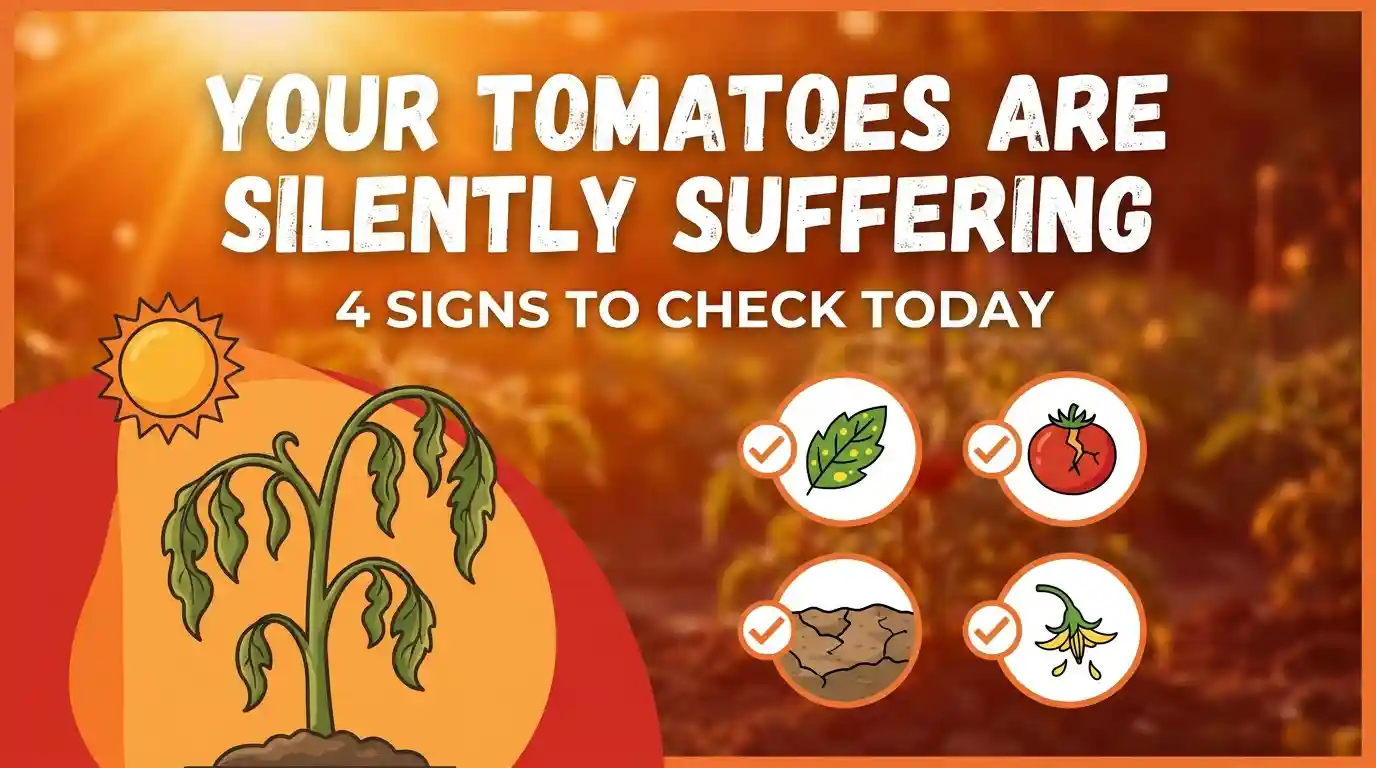
I almost lost my entire tomato bed last July. Not to disease, not to pests. Just heat.
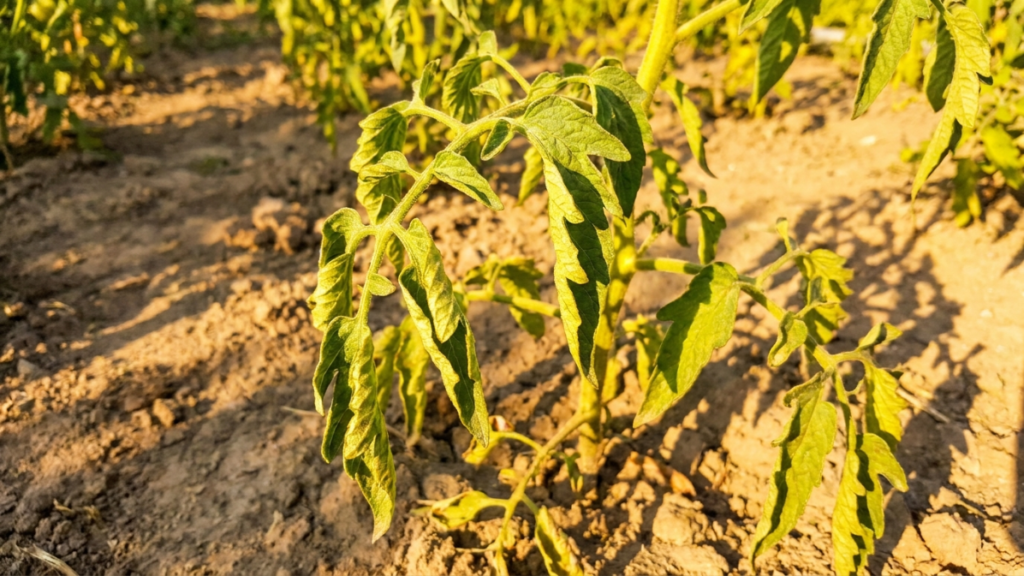
The plants looked fine from the back door. It wasn’t until I walked up and looked closely that I noticed the damage had already been happening for days. By then, two of my best-producing plants had dropped almost every flower they had.
If you’re growing tomatoes through a heat wave, there’s a good chance they’re struggling right now — and not showing it in ways most people recognize.
Here are four signs I now check every single morning when temperatures climb.
Sign 1: They’re Wilting in the Morning, Not Just the Afternoon
Afternoon wilt on a hot day is normal. Tomatoes close their stomata to conserve water when the sun peaks — you’ll see leaves droop and then bounce back by evening.
Morning wilt is different. If your plant looks limp before 9am, before the sun has had a chance to do real damage, that’s your plant telling you it didn’t recover overnight. The root zone is either too dry, or the soil temperature stayed too high all night to allow recovery.
When I see this, I water immediately — deep, slow, at the base. Not a quick splash. And I check whether my mulch layer has thinned out.
Sign 2: Flowers Are Falling Off Before Forming Fruit
This one is heartbreaking. You’re watching flowers appear, you’re excited, and then they just… drop.
Tomatoes stop setting fruit when night temperatures stay above 70–75°F (21–24°C) consistently. The pollen becomes nonviable. The plant isn’t broken — it’s making a calculation. It won’t invest in fruit it doesn’t think it can support.
There’s not much you can do to force fruit set in extreme heat. What you can do is protect new buds until temperatures cool — shade cloth in the afternoon buys real time.
I’ve also started noticing that indeterminate varieties bounce back faster once the heat breaks. Determinate varieties tend to just stall.
Sign 3: Leaves Are Rolling or Curling Upward
This one confused me for years. Curling leaves usually signal a pest problem — but in heat, it’s actually a defense mechanism.
Tomato leaves roll inward to reduce the surface area exposed to the sun. It’s a survival response, not a disease symptom. If the curling is happening on the lower, older leaves and the plant looks otherwise healthy, heat stress is the likely cause.
What to watch for: if the curling moves to the upper leaves and the plant also looks pale or bleached, that’s past stress and into damage.
Check the underside of the leaves before assuming pests. If there are no bugs and no spots, the plant is just hot.
Sign 4: Green Tomatoes Have White or Yellow Patches on the Side Facing the Sun
This catches most gardeners off guard – including me when it first happened.
You expect sun to be good for tomatoes. More sun, more ripening. But skin that gets direct heat above 86°F (30°C) can’t ripen properly. The cells die. You get a hard, pale, slightly sunken patch on the fruit, usually on the shoulder facing the sky or the south side.
It looks like a disease. It’s not. It’s sunscald — and once it’s there, that patch won’t recover. The rest of the fruit is still edible, but the affected area will either stay pale or rot.
The fix is simple but non-obvious: don’t remove leaves that are shading your fruit. I used to prune aggressively for airflow. Now I leave a natural canopy over the clusters.
The Heat Isn’t Over – Act While You Still Can
Heat stress is rarely a single bad day. It’s a week or two of accumulated damage that shows up after the fact.
If your plants are showing even one of these signs, the root zone has probably been struggling longer than the plant is letting on.
Check your mulch depth today — it should be 3 to 4 inches around the base. Water in the early morning, not midday. And if you’re in the middle of a heat wave, afternoon shade cloth is not a sign of failure. It’s just smart growing.
The plant doesn’t know you’re trying. It just responds to what it gets.
Found this useful? Read next: Tomato Container Watering: Avoid Overwatering