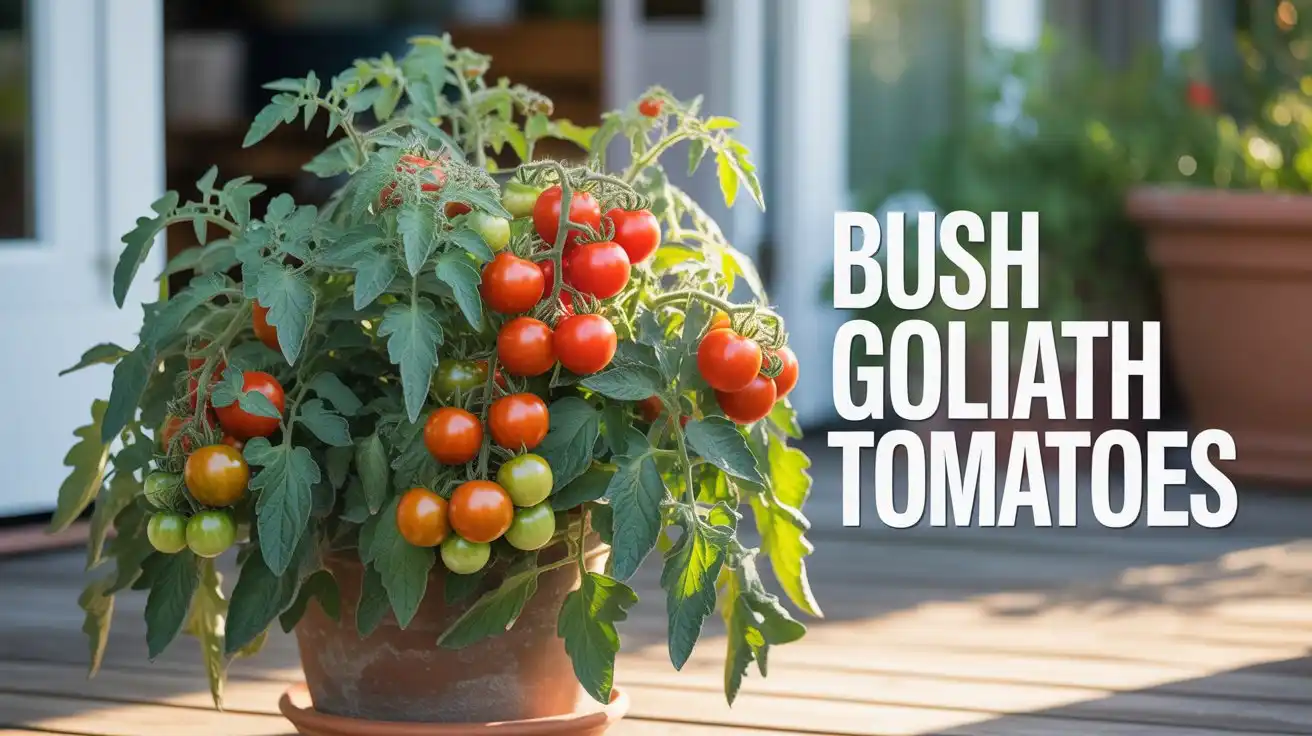
Growing your own tomatoes is a rewarding experience, and finding the right variety can make all the difference. If you’re looking for a plant that delivers big flavor without taking up your entire garden, the Bush Goliath tomato is a fantastic choice.
This variety combines the rich taste of a classic slicing tomato with a compact, manageable size perfect for patios, containers, and small garden beds.
This guide will walk you through everything you need to know to grow Bush Goliath tomatoes successfully.
We will cover the basics of this unique plant, a step-by-step growing guide, and how to tackle common problems. Get ready to enjoy a bountiful harvest of delicious, homegrown tomatoes.
Overview of Bush Goliath Tomatoes
The Bush Goliath tomato is a hybrid variety celebrated for its robust flavor and space-saving growth habit. It’s a determinate, or “bush,” variety, which means it grows to a compact, predetermined height—typically around 3 to 3.5 feet.
Unlike indeterminate tomatoes that vine and spread, Bush Goliath plants are tidy and well-suited for gardeners with limited space.
These plants produce impressive yields of extra-large, bright red fruits that can weigh up to a pound each. The flavor is a perfect balance of sweet and tangy, making them ideal for slicing for sandwiches, salads, or simply eating fresh from the garden.
They are also known for being early producers, with fruit ready for harvest in as little as 60 days after transplanting.
Key Characteristics:
- Plant Type: Determinate (bush)
- Plant Height: Approximately 3 to 3.5 feet
- Fruit Size: Large, 3–4 inches
- Days to Maturity: 60-65 days
- Sun Exposure: Full sun
- Disease Resistance: Strong resistance to common issues like Verticillium Wilt, Fusarium Wilt, and Nematodes.
Benefits of Growing Bush Goliath Tomatoes
Choosing to plant Bush Goliath tomatoes comes with several advantages, making them a popular option for both new and experienced gardeners.
- Perfect for Small Spaces: Their compact, bushy nature makes them an excellent choice for container gardening, patio planters, and small raised beds. You don’t need a large plot of land to get a significant harvest.
- High Yields: Despite their small stature, these plants are incredibly productive. A single, well-cared-for plant can produce dozens of large tomatoes over its harvest period.
- Early Harvest: You won’t have to wait all summer to enjoy your crop. Bush Goliath tomatoes are known for ripening early in the season, giving you a head start on fresh produce.
- Excellent Flavor and Texture: The fruit offers that classic, rich tomato flavor that is often hard to find in store-bought varieties. They are meaty and juicy, perfect for all your culinary needs.
- Strong Disease Resistance: This hybrid is bred to resist several common tomato diseases. This built-in protection means less work for you and a healthier, more reliable crop.
Step-by-Step Growing Guide
Follow these steps to ensure your Bush Goliath tomatoes thrive from seed to harvest. For more tips on growing tomatoes, check out The Old Farmer’s Almanac guide to growing tomatoes
Planting
You can start Bush Goliath tomatoes from seed indoors or purchase seedlings from a nursery.
- Starting Seeds Indoors: Sow seeds about ¼ inch deep in seed-starting mix, approximately 6-8 weeks before the last expected frost date in your area. Keep the soil moist and warm (around 70-75°F) until germination occurs.
- Transplanting Outdoors: Once the seedlings have developed a few sets of true leaves and all danger of frost has passed, it’s time to move them outdoors. Harden them off by gradually exposing them to outdoor conditions over a week. Plant them in a location that receives at least 6-8 hours of direct sunlight per day.
- Spacing: Space your plants about 24 inches apart. This gives them enough room to grow without competing for nutrients, sunlight, and air circulation. If planting in containers, choose a pot that is at least 5 gallons in size to provide adequate root space. For tips on proper watering frequency when growing tomatoes in containers, check out How Often to Water Tomatoes in 5-Gallon Buckets.
Care
Proper care is essential for a healthy and productive plant.
- Watering: Tomatoes need consistent moisture. Water deeply a few times a week, allowing the soil to dry slightly between waterings. Irregular watering can lead to problems like blossom end rot and fruit cracking. Using a mulch of straw or wood chips can help retain soil moisture.
- Fertilizing: Feed your plants with a balanced fertilizer formulated for tomatoes. Start fertilizing a few weeks after transplanting and continue every 3-4 weeks throughout the growing season. Avoid high-nitrogen fertilizers, which can promote leafy growth at the expense of fruit production.
- Support: Although they are bush-type plants, the heavy fruit load can cause branches to bend or break. Providing support with a small tomato cage or a sturdy stake will help keep the fruit off the ground and improve air circulation.
Harvesting
The best part of growing Bush Goliath tomatoes is the harvest.
- When to Pick: Start checking your plants around 60 days after transplanting. The tomatoes are ready when they are fully colored, firm to the touch, and have a slight give.
- How to Pick: Gently twist the fruit until it separates from the stem. For best flavor, allow the tomatoes to ripen fully on the vine. However, if frost threatens, you can pick green tomatoes and let them ripen indoors in a warm, dark place.
Common Issues and Solutions
Even with the best care, you might encounter a few problems. Here’s how to handle them.
Blossom End Rot
This is one of the most common issues affecting tomatoes.
- Symptoms: A dark, sunken, leathery spot appears on the blossom end (bottom) of the fruit.
- Cause: It’s not a disease but a physiological disorder caused by a calcium deficiency in the plant, often triggered by inconsistent watering.
- Solution: Ensure consistent, deep watering to help the plant absorb the calcium it needs from the soil. Apply mulch to help maintain even soil moisture. Avoid over-fertilizing with nitrogen. In severe cases, a calcium spray can be applied directly to the foliage. Remove any affected fruit so the plant can direct its energy to healthy ones.
Pests
Common pests for Bush Goliath tomatoes include hornworms and aphids.
- Tomato Hornworms: These large green caterpillars can quickly defoliate a plant. The best way to control them is to pick them off by hand.
- Aphids: Small insects that cluster on the undersides of leaves. A strong spray of water from a hose can often dislodge them. For larger infestations, insecticidal soap can be effective.
FAQs About Bush Goliath Tomatoes
1. Are Bush Goliath tomatoes determinate or indeterminate?
Bush Goliath tomatoes are determinate. This means they grow to a compact, “bushy” size and produce their fruit all at once over a few weeks, which is ideal for gardeners who want a large harvest for canning or making sauce.
2. Can I grow Bush Goliath tomatoes in a container?
Yes, they are an excellent choice for container gardening. Use a large pot (at least 5 gallons) with good drainage and fill it with high-quality potting mix.
3. Do I need to prune Bush Goliath tomatoes?
It is generally not necessary to prune determinate tomato varieties like the Bush Goliath. The plant’s bushy growth habit is natural, and removing suckers can reduce your overall yield.
4. How many tomatoes can I expect from one plant?
With proper care, a single Bush Goliath plant can produce a very high yield, sometimes over 100 tomatoes in ideal conditions over its harvest period.


