
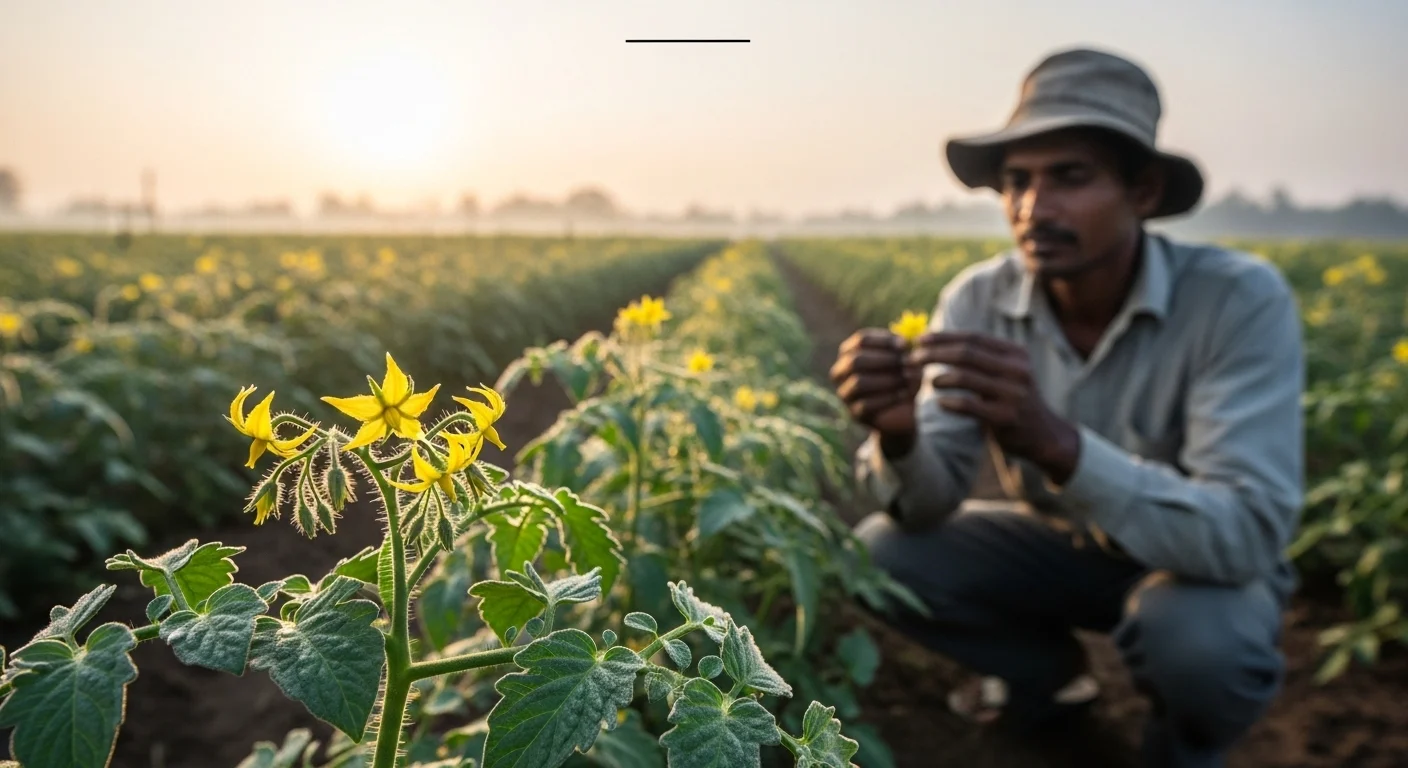
Tomato plants produce small yellow flowers as part of normal growth. These flowers signal that the plant is ready to set fruit. Seeing many yellow flowers alone is not a reason to worry.
When yellow flowers are normal
The yellow blooms are tomato blossoms. The plant forms these blossoms before fruit appears. In many varieties, you will see flowers at 5–7 weeks after transplanting.
After a successful pollination, the flower will wither and a small green fruit will begin to form where the flower was.
When to worry: flowers form, but fruit does not set
You should worry when flowers open and then fall off without forming fruit. This problem is called “blossom drop.” Blossom drop reduces yield. It occurs when pollination fails or when the flower can no longer develop into fruit due to stress.
Extension research shows that temperature, humidity, water, and nutrition commonly cause blossom drop.
Temperature and pollination
High daytime temperatures above about 85°F (29°C) or night temperatures outside the 55–70°F (13–21°C) range can make pollen nonviable or sticky.
Nonviable pollen cannot fertilize the flower. The flower dries and drops. Humidity extremes also interfere with pollen release and transfer.
Water and root stress
Irregular watering or prolonged drought weakens the plant. Weak plants cannot support fruit set. Both too little and too much water can cause problems. Consistent moisture in the root zone helps the plant sustain flowers and young fruit.
Read: Tomato Container Watering: Avoid Overwatering
Nutrition imbalance
Excess nitrogen makes vines leafy and delays or reduces fruit set. Insufficient nitrogen produces weak plants that cannot hold fruit. Balanced nutrition, timed correctly, supports flowering and fruit development.
Pests and diseases
Insect damage, fungal disease, or bacterial problems can kill flowers before they set fruit. Some foliar diseases reduce plant vigor and lead to blossom loss. Inspect plants for pests and disease signs and act quickly.
Practical fixes farmers can apply
Use simple, proven actions. These increase fruit set and reduce worry.
Control temperature and humidity
Provide shade cloth when daytime heat exceeds ideal ranges. Use row covers at night when cold nights threaten pollen viability. Maintain good plant spacing and ventilation to keep humidity in the 40–70% range that favors pollen transfer.
Ensure consistent irrigation
Water on a schedule. Keep the root zone uniformly moist but not waterlogged. Mulch to reduce soil moisture swings. Use drip irrigation or basins to give steady moisture. This practice reduces stress and supports fruit set.
Read: Drip Irrigation For Tomato Plants: Easy DIY Tips
Adjust fertilizer practices
Reduce high-nitrogen fertilizers once the plant has a good leaf structure. Switch to a balanced fertilizer that supports flowering and fruiting. Test soil or follow extension recommendations to avoid over-application.
Improve pollination
Encourage pollinators by planting flowering strips nearby. Use gentle mechanical vibration—shake vines or use an electric toothbrush near clusters—to move pollen on calm days or in protected structures. Hand pollination can help in a pinch for small plantings.
Monitor and treat pests and disease
Scout regularly. Remove and destroy badly infected plants. Use integrated pest management (IPM) tactics first. Apply fungicides or insect controls only when scouting and thresholds justify them. Rotation and resistant varieties reduce recurring disease risk.
Quick checklist for farmers
Check for normal fruit formation before acting. If flowers dry and fall and no tiny fruit forms, then:
- Check temperatures and humidity.
- Check irrigation and mulching.
- Reduce excess nitrogen if present.
- Encourage pollinators or hand-pollinate.
- Scout for pests and diseases.
Conclusion
Yellow flowers alone do not mean trouble. They are the normal step before fruit. Farmers should act when flowers drop or when fruit fails to form. Temperature, water, nutrients, pollination, pests, and disease cause most failures.
Simple fixes—manage heat, water, and fertilizer, and improve pollination—usually restore fruit set and prevent yield loss. For detailed local thresholds and treatment options, follow your local extension service guidance.