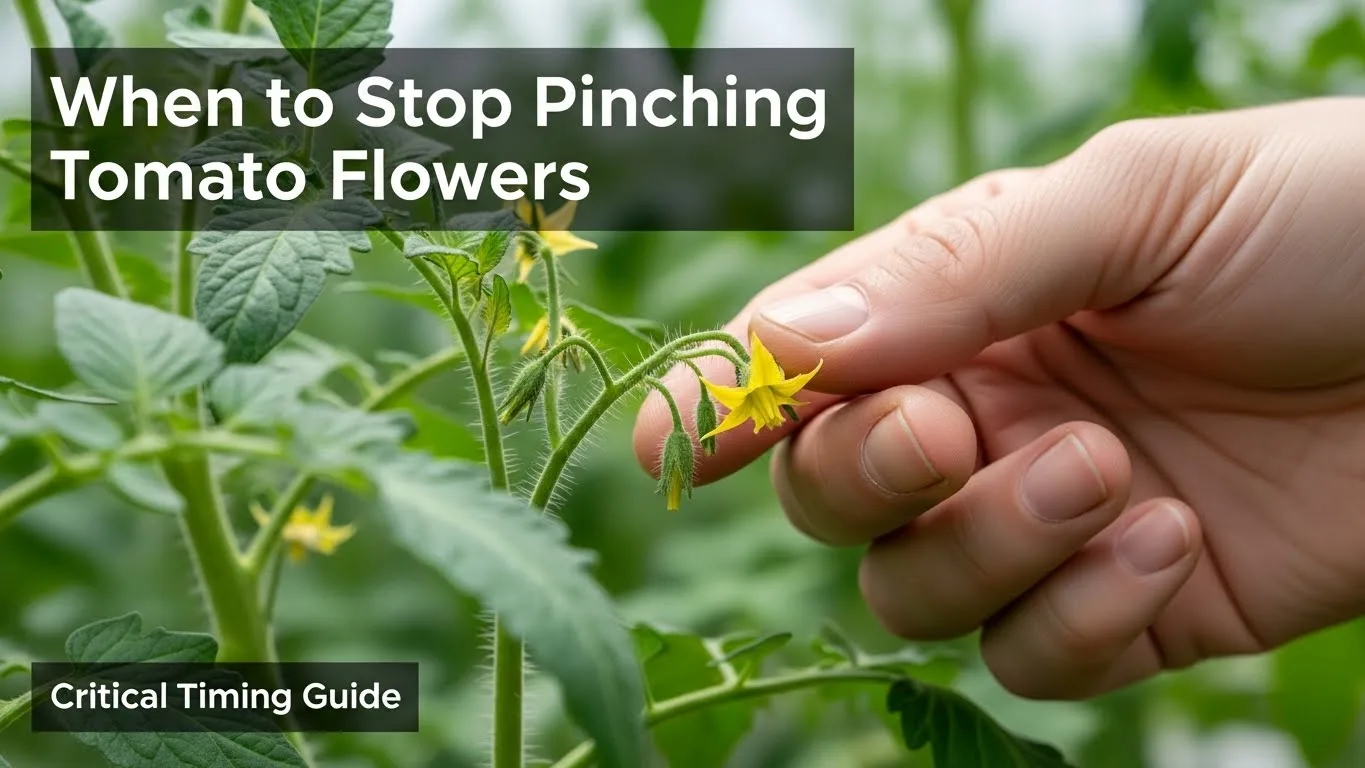
Pinching tomato flowers means removing tiny buds or small flower clusters from young plants. Gardeners do this to help their plants grow better.
By pinching, the plant focuses its energy on growing strong stems and roots instead of wasting it on early flowers. When done right, this leads to stronger plants and tastier fruit. If done poorly, it can delay your harvest.
This guide will explain what pinching is, when to do it, when to stop, signs to look for, and common mistakes. You’ll find clear steps and helpful answers to common questions — no extra fluff, just practical advice!
What Does Pinching Tomato Flowers Actually Mean?
Pinching tomato flowers means gently removing small flower buds or the first few clusters from a young plant. You can do this by pinching them off with your fingers or using clean scissors.
Why Gardeners Do It:
– To help the plant focus on growing strong stems and roots first.
– To make the main stem stronger and encourage more branches.
– To delay the growth of early tomatoes until the plant is healthy enough to handle them.
In simple terms, it’s a small sacrifice now to make a stronger plant later. Use this method wisely, and you’ll see great results!
Why Timing Matters
Pinching affects how a tomato plant allocates energy. Timing determines whether that energy creates a sturdier plant or just delays fruit.
- Plant energy: Young plants have limited resources. Removing flowers redirects sugars to leaf, stem and root growth.
- Fruit set: If you pinch for too long, you postpone flowering and delay harvest. Research from the University of Minnesota Extension also confirms that early flower removal affects how quickly a plant establishes its fruiting pattern:
- Helps vs harms: Pinching helps early on (to build structure). It harms when it removes the plant’s capacity to fruit during the main season. (Growth stress from wrong pinching often shows up first in the leaves. If you notice curling, yellowing, or twisted foliage, check the early warning signs before the problem spreads. I’ve explained these symptoms in detail here: Fix Tomato Leaf Problems Before It’s Too Late.)
- Determinate vs indeterminate:
- Indeterminate tomatoes (vining) respond well to early pinching because they grow and fruit over a long season.
- Determinate tomatoes (bush types) have a set fruiting window — pinching flowers on them often reduces total yield.
When to Stop Pinching Tomato Flowers
General rule of thumb: Stop pinching your plant once it has a strong, thick main stem, is the height you want, and is making flower clusters you’d like to turn into fruit.
Early Season Tips
- Pinch your seedlings in the first few weeks to help thicken the stem and grow strong roots. Stop pinching when you have 3–4 healthy true leaves and the stems are sturdy.
Mid-season Care
- If your plant was pinched early and looks good by mid-season, stop pinching and let the flowers develop. If the plants still look leggy, focus on staking and pruning instead of pinching more flowers.
Region / climate impact
- In Cool Climates: Stop pinching earlier to make the most of the limited warm days. Let flowers set sooner.
- In Warm Climates: You can take a little longer with pinching, but don’t wait too long — it may affect your harvest.
Greenhouse vs. Outdoor Growing
- Greenhouse: Plants usually grow faster and can be pinched a bit longer, thanks to better conditions. However, stop pinching when the stem is solid and flower clusters are reliable.
- Outdoor: Be cautious. Bugs and weather can disrupt growth, so let flowers develop once the plant is sturdy.
Late-season Reminder
- Cut-off: Stop pinching about 6–8 weeks before your first hard frost or the end of your growing season. Late pinching can reduce your final yields.
Signs It’s Time to Let Tomato Flowers Grow Naturally
Watch for these gardener-friendly cues — when you see them, stop pinching and let nature do the work:
- Stem thickening: Main stem feels noticeably firmer and at least pencil-thick.
- Plant height reached: Plant has reached the height you planned (or the stake support system is in place).
- Consistent flower clusters: Flowers form in reliable clusters and new blooms appear regularly.
- Fruit clusters already set: You see small fruit already forming — don’t remove these flowers.
- Plant not stretching: New growth is compact and not excessively leggy between nodes.
How to Pinch Tomato Flowers Correctly (If You Still Need To)
A short, practical step-by-step.
- Assess first: Only pinch if the plant is spindly, or you want stronger branching early.
- Where to pinch: Remove only the tiny flower buds at the leaf axils or the top-most first cluster — not whole side shoots. Pinch at the base of the bud.
- How much to remove: Pinch single buds or the first 1–2 tiny clusters. Never remove more than 10–15% of the plant’s potential blossoms at once.
- When not to touch: If fruit has already set on a truss, don’t touch that truss.
- Greenhouse tip: Plants recover quickly — you can remove a few more early buds, but monitor stem thickness.
- Outdoor tip: Be conservative. Remove fewer buds and stop earlier in the season.
- Aftercare: Water and feed lightly after pinching if growth slows; support with stakes or cages to encourage upright growth.
Once you stop pinching and your flowers begin to develop, your next priority is strong pollination.
Outdoor plants rely on wind and insects, but greenhouse or container plants often need help. If you want to boost fruit set manually, check this guide on How to Hand Pollinate Tomatoes in 5 Different Ways.
Common Mistakes Gardeners Make When Pinching Flowers
Let’s get straight to the point — these mistakes waste time and hurt your harvest.
- Over-pinch and delay fruiting: Removing too many flowers can hold up your harvest.
- Pinching determinate plants: These types bear fruit in a set time. If you pinch flowers, you might end up with less fruit overall.
- Pinching too late in the season: Doing this wastes valuable time for fruiting.
- Removing whole clusters accidentally: Be careful! Only cut or pinch the buds. Don’t snap off entire clusters or stems.
- Using the same method for every plant: Different types need different care. Indeterminate and determinate plants have different needs.
FAQ — Quick Answers
Q: Should I pinch flowers on determinate tomatoes?
No, it’s best to leave them alone. These varieties set fruit in a short period. Cutting flowers can lower your overall harvest.
Q: Does pinching improve fruit size?
Sometimes. Redirecting energy early on can enhance fruit quality, but too much pinching can decrease the total count and delay when you harvest.
Q: Should I stop pinching after fruit sets?
Yes. Once you see fruit forming, stop pinching those shoots and let the plant focus on growing the fruit.
Q: Do greenhouse tomatoes need different care?
Yes, a little. They bounce back faster and can handle some early pinching. But remember the same rules apply — check the thickness of stems and consistent blooms.
Q: Can I pinch again if a plant starts stretching later?
Instead of pinching again, focus on giving your plants enough light and nutrients.
Conclusion
Pinch off tomato flowers early to help your plant grow strong, but stop when the stems are thick and flower clusters form. Once the flowers start to grow, let them be. Getting the timing right is key to a strong plant and an earlier harvest.
You’ll see you did it right when your plant looks balanced, the fruit sets well, and you get more tomatoes. This success comes from smart planning, not forcing the plant. Happy growing!


