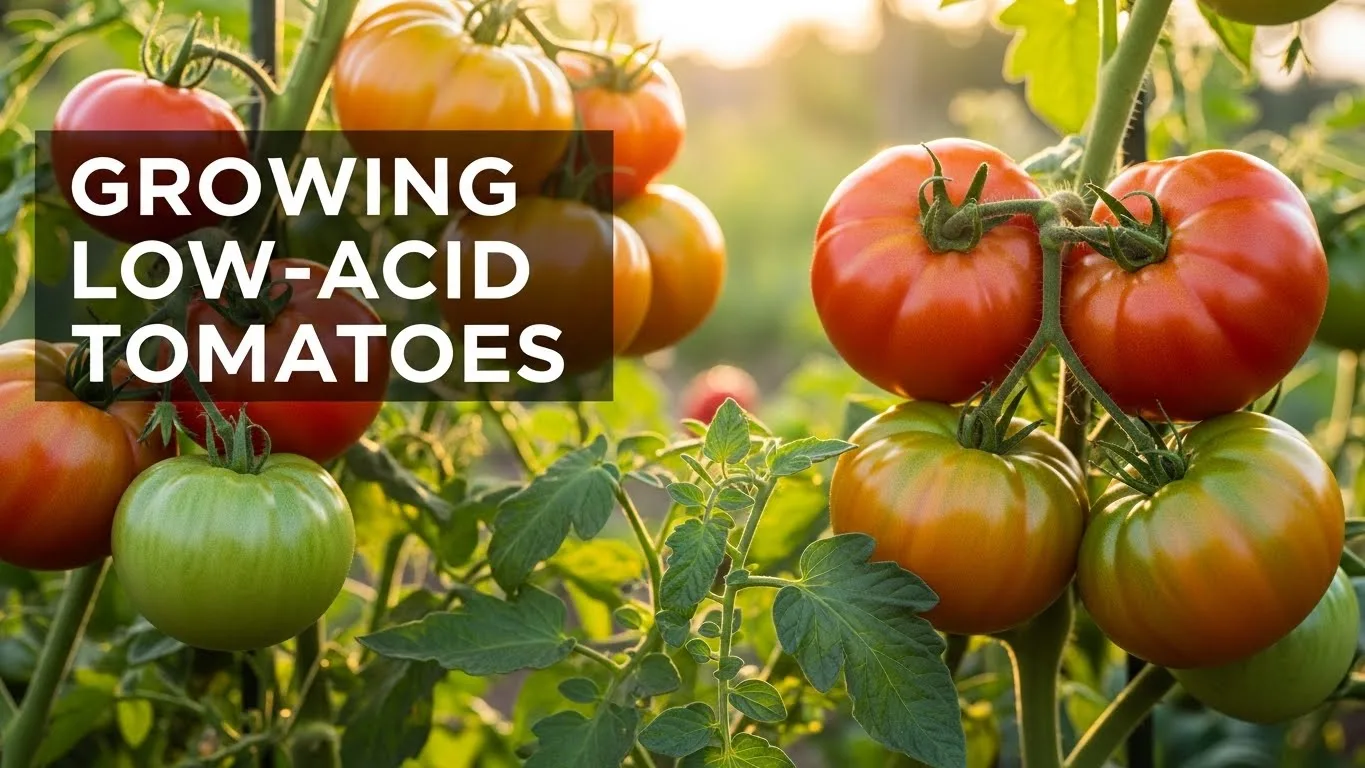
For gardeners with acid reflux or sensitive stomachs, finding low-acid tomatoes can feel impossible — like searching for a mythical creature. You may have looked through seed catalogs that promise “sweet, low-acid” types, only to end up with the same high-acid fruits as before.
The confusion is understandable. The tomato industry often complicates acidity labels, leaving home gardeners puzzled. Here’s the scoop: true low-acid tomatoes do exist, but they are much harder to find than seed companies suggest. You need to know what “low acid” really means.
Understanding Tomato Acidity
Let’s clarify what “low acid” means in the tomato world. The pH scale measures acidity, with lower numbers indicating higher acidity.
Most tomatoes range from pH 4.1 to 4.7, which is definitely acidic. Scientists classify low-acid tomatoes as having a pH above 4.6. This is important for safely canning them without adding more acid.
Now, here’s the tricky part: there’s no such thing as a completely “acid-free” tomato, even if some catalogs say otherwise. All tomatoes have citric and malic acids that give them their tangy taste.
The difference lies in the amount of these acids. Finding varieties with a higher pH takes some research, as most seed companies don’t share pH information.
Separating Fact from Fiction
Let’s clear up a common myth: yellow and orange tomatoes aren’t always low in acid. Many seed catalogs suggest otherwise, but the color doesn’t really tell us about the acid level. These golden tomatoes often have more sugar, which makes them taste sweet and mild. So, they might have the same acid level as red tomatoes, even if they taste different.
The same goes for cherry tomatoes labeled as “low acid.” Small tomatoes often have more acid than larger ones. For example, the sweet Super Sweet 100 is called “low-acid” because of its taste, not its actual acid content. The sweetness tricks our taste buds and our thinking.
Heirloom tomatoes are also wrongly thought to be less acidic than modern hybrids. But research shows that a tomato’s age or type doesn’t really affect its acidity.
In fact, university studies from Wisconsin, North Dakota, and Utah State have found that many heirloom varieties actually test higher in pH (less acidic) than modern hybrids.
Research on heirloom tomato acidity reveals that factors like growing conditions, soil composition, and ripeness have far more impact on acidity than whether a tomato is an heirloom or hybrid variety. It’s more about the specific variety and how it’s grown, not whether it’s old or new.
Top Low Acid Tomato Varieties for Your Garden
If you’re looking for truly low-acid tomatoes, try paste tomatoes. Roma tomatoes are a good choice; they produce bright red fruits that weigh about 50 grams, perfect for sauces, salads, or drying.
San Marzano tomatoes have a rich flavor and elongated shape, prized by Italian cooks. Amish Paste tomatoes can weigh up to 200 grams and have a meaty texture with few seeds, making them great for processing.
Don’t forget the oxheart tomatoes if you want low-acid options. They have large, heart-shaped fruits with thick walls and few seeds.
Black Oxheart adds a striking purple-brown color while keeping that meaty texture. Albenga Oxheart can reach over 300 grams when grown well and carries an Italian legacy.
Also, check out unique varieties. Cream Sausage combines the paste shape with a pale yellow color and a mild flavor with lower acid, not just sugar. Artisan Blush offers a pretty red-and-yellow striped cherry tomato that’s milder than most tiny types.
If you prefer hybrids, Andiamo F1 is a great option, known for disease resistance and lower acidity in classic Roma-style fruits.
Pro Tips for Growing Low Acid Tomatoes
Success with low-acid tomatoes goes beyond just choosing the right seeds. The type of fertilizer you use affects how acidic your harvest is.
Research shows that using nitrate fertilizers leads to lower acidity in tomatoes compared to ammonium fertilizers or plain manure. If you want to reduce acidity, consider using calcium nitrate or potassium nitrate.
However, be careful not to over-fertilize, as excessive nitrogen can cause other problems. Learn how to manage nitrogen levels in your tomato garden to avoid nutrient issues and keep your plants healthy.
Growing conditions also impact fruit acidity. Different climates affect tomato acid levels. In warm areas, tomatoes usually taste milder, while places with big temperature changes often have more acidic fruits. Proper watering helps keep acidity stable, but plants that face drought stress can become more acidic.
For the best results, think about installing a drip irrigation system for your tomatoes. This system gives your plants regular moisture right at the roots, helping them grow well and produce fruits with lower acidity.
When you harvest your tomatoes matters more than many gardeners think. Pick them when they are fully colored but still firm. If you wait too long, overripe tomatoes develop higher acidity and lose their balance of sweetness and tang. Late-season tomatoes often taste more acidic because temperatures drop as they mature.
Why Sweet Doesn’t Always Mean Low Acid
Many gardeners confuse sugar content with acidity. A tomato can taste sweet and still be highly acidic, with sugar hiding the tartness. You can’t judge acidity just by flavor, which is why “sweet” orange tomatoes may have the same pH as tart red ones.
The balance between sugar and acid creates flavor, but only lab tests can tell you the actual acid levels, which are important for canning and digestion.
From Garden to Kitchen
Once you’ve picked your low-acid tomatoes, knowing how to use them will help you enjoy your harvest. These milder tomatoes are perfect for salads and sandwiches, especially for those with GERD or stomach sensitivities. Their thick, meaty texture is also great for making sauce or paste, as they cook down quickly.
For canning, low-acid tomatoes are generally safe, but adding a tablespoon of lemon juice or a quarter teaspoon of citric acid per pint can help. This small amount won’t change the taste but keeps your tomatoes safely below the important pH level of 4.6.
For detailed, research-tested canning procedures and processing times, consult the National Center for Home Food Preservation’s comprehensive tomato canning guide, which provides step-by-step instructions for safely preserving all tomato varieties at home.
Growing Your Own Low-Acid Garden
Low-acid tomatoes are real, mainly found among paste and oxheart types, but they’re less common than catalogs suggest. Instead of chasing a perfect pH, focus on finding varieties that fit your needs — whether for digestion, canning, or simply a milder taste.
This season, try some new varieties. Plant a Roma next to your favorite slicer, or try an oxheart in a sunny spot in your garden. Notice how growing conditions and harvest times impact your results. The best low-acid tomato for you is one that thrives in your soil, produces well throughout the season, and gives you the flavor and texture you want. That’s the key to successful tomato growing!


