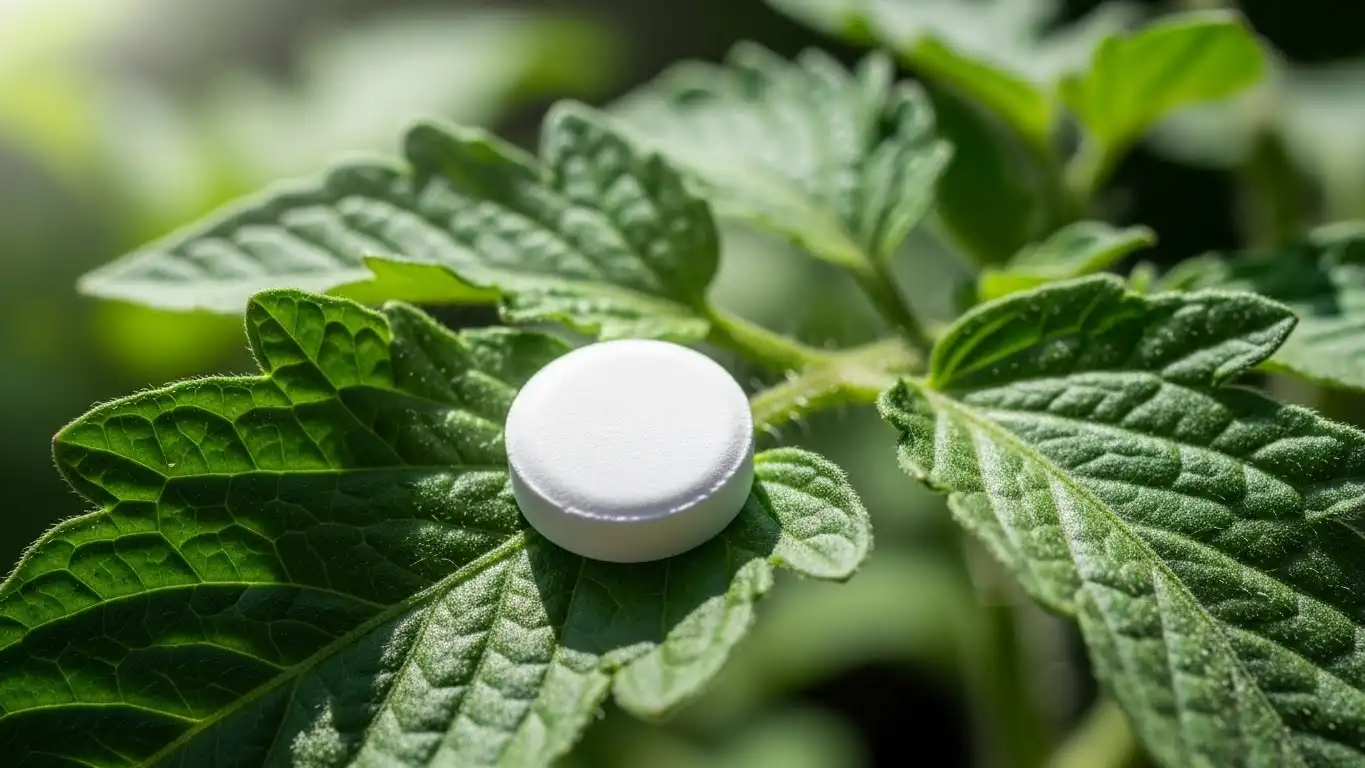
If you look in the tool shed of a master gardener, you might find something unexpected sitting next to the fertilizer: a bottle of Aspirin.
It sounds like a myth, but using aspirin in the vegetable garden is backed by genuine plant science.
It isn’t used to cure a tomato plant’s headache; it is used to trigger a “false alarm” that supercharges the plant’s immune system against deadly diseases like blight.
Here is why this common medicine cabinet staple is the secret weapon for a disease-free harvest, and exactly how to use it safely.
The Science: What is “Systemic Acquired Resistance”?
To understand why aspirin works, you have to understand how plants fight disease.
The active ingredient in aspirin is Acetylsalicylic Acid. This is chemically very similar to Salicylic Acid, a compound naturally found in plants (specifically willow bark).
When a tomato plant is attacked by a bug or a fungus, it naturally produces small amounts of Salicylic Acid. This is a chemical signal—like an air raid siren—that tells the rest of the plant: “We are under attack! Strengthen the cell walls! Produce antibodies!”
This defense mode is called Systemic Acquired Resistance (SAR).
Tricking the Plant for Its Own Good
The problem with nature is that the “air raid siren” often goes off too late. By the time the plant realizes it has Blight, the fungus has already taken over.
By spraying a mild aspirin solution on your plants before they get sick, you are manually triggering that alarm. You are tricking the tomato plant into thinking it is under attack.
The plant responds by ramping up its immune system immediately. It thickens its leaves and produces defensive chemicals, effectively putting up a shield against future diseases, drought, and even pests.
The “Magic Ratio” (Do Not Overdose)
This is the most critical part. Aspirin is a medicine, and the difference between medicine and poison is the dose. If you use too much, you will burn the leaves and kill the plant.
The Safe Recipe:
- 1 Standard Aspirin Tablet (325mg) – Do not use “Extra Strength”
- 1 Gallon of Water
Instructions:
- Crush the tablet into a fine powder.
- Dissolve it in a small cup of warm water first (aspirin dissolves poorly in cold water).
- Pour the mixture into your 1-gallon sprayer or watering can and fill the rest with water.
- Add a few drops of mild dish soap (this acts as a “surfactant” to help it stick to the leaves).
When to Apply for Best Results
Timing matters. You cannot cure a dead plant with aspirin, this is a preventative measure.
- Start Early: Begin treatment when the plants are seedlings or just transplanted into the garden.
- Frequency: Apply the spray once every 2-3 weeks.
- Weather: Spray in the early morning, so the leaves can dry before the hot sun hits them. Do not spray if rain is expected within 24 hours.
Conclusion
Aspirin is one of the cheapest insurance policies you can buy for your garden. By understanding the science of Salicylic Acid, you can boost your tomato plants’ natural defenses without harsh chemicals. It’s a simple “hack” that turns a fragile plant into a survivor.


