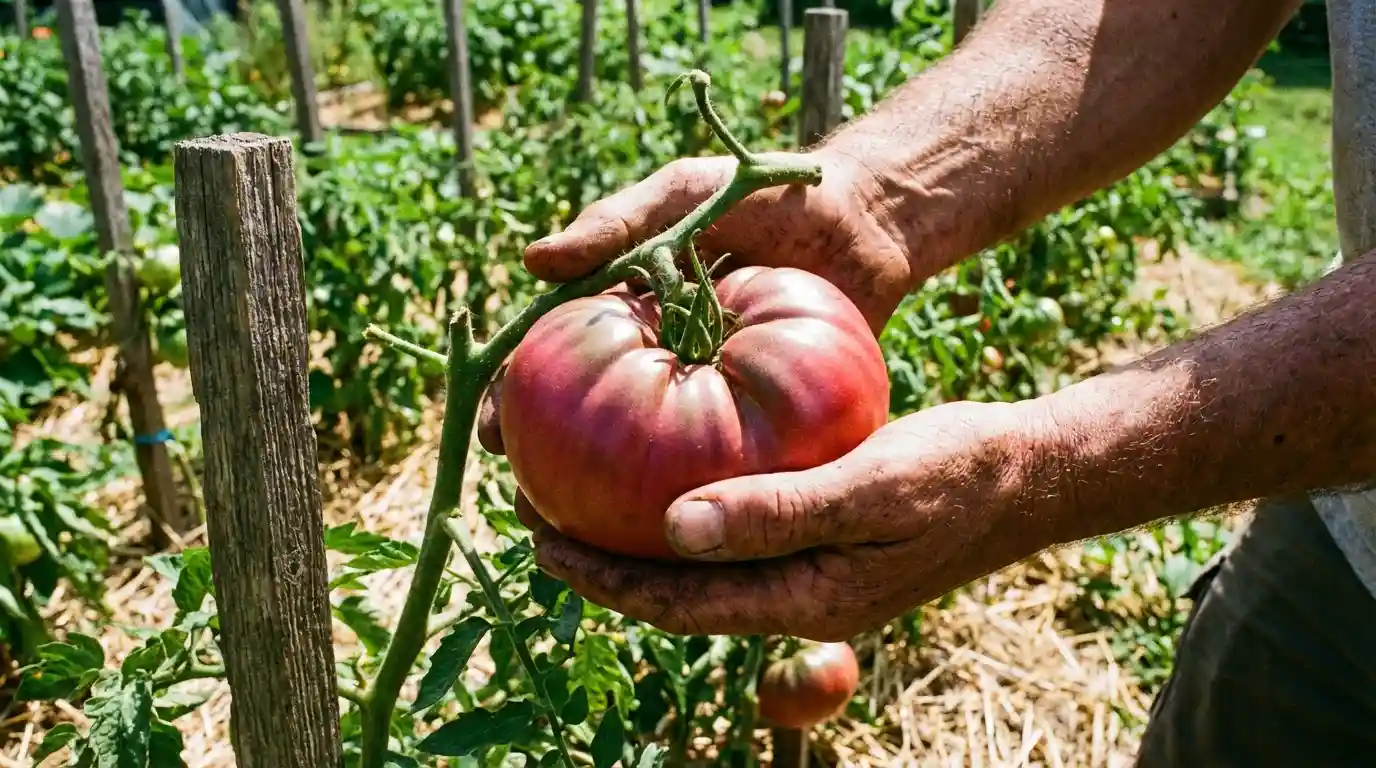
If you are tired of growing standard, golf-ball-sized tomatoes and want to step into the heavyweight division, the Belgium tomato plant (commonly known as the Giant Belgium) is your golden ticket.
Originating in Ohio during the 1930s, this heirloom variety is famous for producing dark pink, meaty beefsteak tomatoes that routinely weigh between 2 to 5 pounds.
However, achieving this massive size requires more than just planting a seed and walking away.
Proper giant belgium tomato plant care requires aggressive pruning, heavy-duty support, and precise watering. Here is exactly how to cultivate these sweet, low-acid giants.
Understanding the Plant: It is an Indeterminate Monster
The first thing to understand about the Giant Belgium is that it is an indeterminate variety. This means the plant will continue to grow, vine, and produce fruit until the first frost kills it. These vines can easily reach 6 to 8 feet in height.
Because the plant puts so much energy into creating massive, heavy fruits, you cannot use cheap, flimsy wire tomato cages.
A 3-pound tomato will snap a standard cage in half. You must use thick wooden stakes (at least 8 feet tall) or a heavy-duty cattle panel trellis to support the weight of the developing fruit.
Crucial Pruning Secrets for Bigger Fruit
If you let a Giant Belgium grow completely wild, you will get a jungle of leaves and dozens of mediocre, medium-sized tomatoes. To get the legendary 2+ pound giants, you have to force the plant to focus its energy.
- Stick to 1 or 2 Main Stems: Prune away the extra “suckers” (the small shoots that grow in the V-joint between the main stem and the branches).
- Fruit Thinning: If you are trying to break a size record, pinch off newly formed flowers so only one or two tomatoes grow per cluster. This funnels all the plant’s nutrients into those specific fruits.
Watering and Feeding the Giant Belgium
Giant tomatoes are highly susceptible to splitting and cracking if their water supply fluctuates. If the soil completely dries out and then you flood it, the inside of the tomato will swell faster than the skin can stretch, ruining your beautiful harvest.
Watering: Install drip irrigation to provide a slow, consistent supply of water at the base of the plant. Aim for 1.5 to 2 inches of water per week. Keep the leaves dry to prevent blight.
Feeding: Avoid high-nitrogen fertilizers early on, or you will end up with a massive green bush and no flowers.
Wait until the first yellow flowers appear, then feed the plant with a phosphorus and potassium-rich fertilizer (like compost tea or a dedicated tomato feed) to support fruit development.
Disease Prevention
Because the foliage on the Giant Belgium gets incredibly dense, airflow can be an issue, making it a target for fungal diseases like powdery mildew. Ensure you space your plants at least 3 feet apart.
For mild, dry-weather fungal prevention, you can use an eco-friendly homemade foliar spray. Check out our guide on using a baking soda spray on tomato plants to keep the leaves clean and healthy without harsh chemicals.
Conclusion
Growing a Giant Belgium tomato plant is a rewarding challenge. By providing heavy-duty staking, pruning aggressively, and maintaining consistent soil moisture, you will be harvesting slice-sized tomatoes so big they cover an entire sandwich.


