

“In the garden, what looks like a disaster is often just nature showing off its survival skills.”
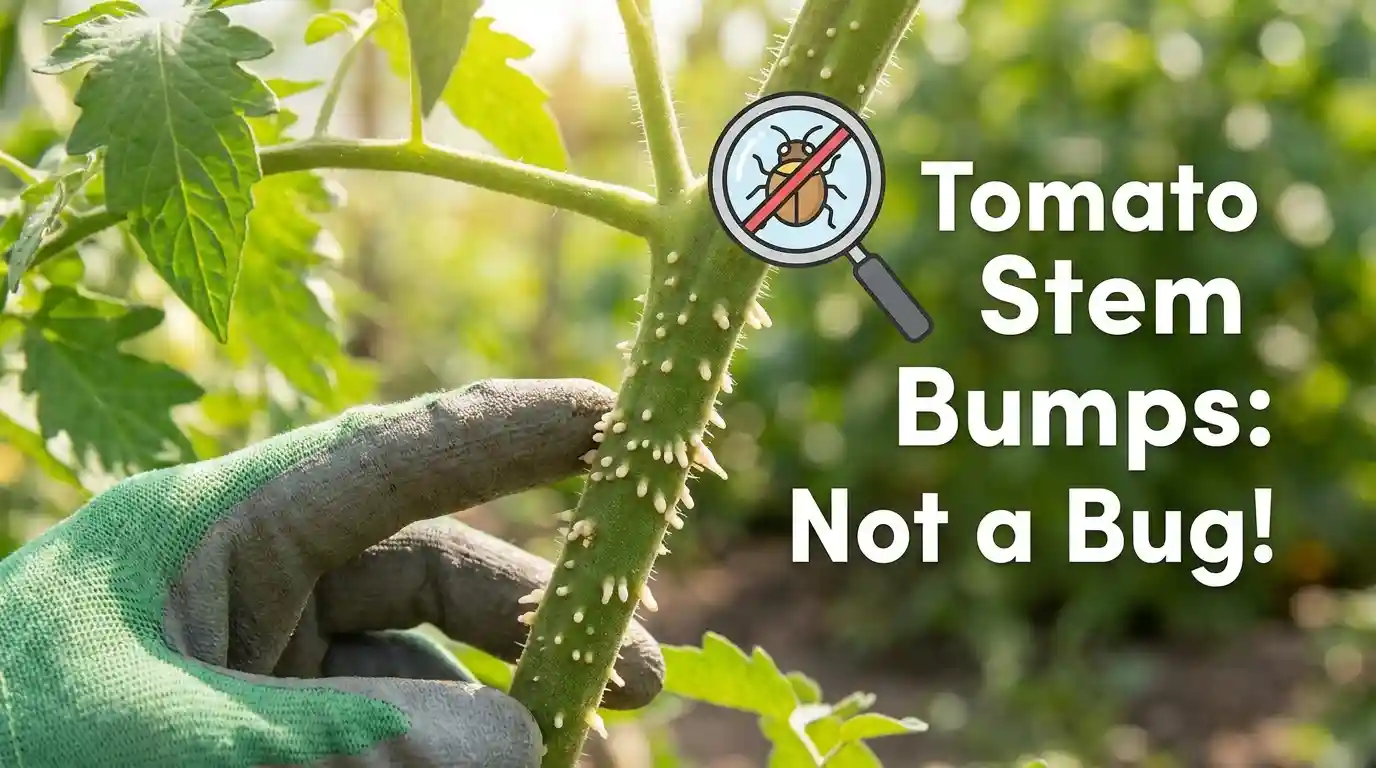
You are doing your daily garden inspection, admiring your growing tomato plants, when you suddenly freeze. Near the bottom of the main stem, you spot them: dozens of tiny, white, pimple-like bumps covering the stalk.
To a beginner gardener, this is a terrifying sight. They look like alien eggs, a bizarre fungal infection, or some kind of plant tumor. You might be tempted to grab the insecticidal soap or, worse, rip the plant out of the soil entirely.
Stop right there. Put the spray bottle down.
Your plant is not under attack by pests, and it is not diseased. Those weird white bumps are entirely natural and actually prove that your tomato plant is incredibly strong.
Below is the complete guide to exactly what these white bumps are, why your plant is growing them right now, and what you should (and shouldn’t) do about them.
What Are These White Bumps? (The Science)
Those white pimples have a scientific name: Root Primordia (also known as adventitious roots).
To understand why they appear, you have to understand how tomatoes grow in the wild. Tomatoes are not upright trees; they are naturally sprawling vines. When a tomato vine falls over and touches the wet ground in nature, it wants to anchor itself and absorb more water.
Because of this, a tomato stem has the genetic ability to sprout roots from anywhere along its stalk. Those white bumps you are seeing are simply baby roots that are trying to push through the skin of the stem.
The University of Maryland Extension confirms this in their resource on bumps and swellings on vegetable stems, noting that these adventitious roots are harmless, and how prominently they appear depends on the variety, weather conditions, and how the plant is being cared for.
The 3 Triggers: Why is Your Plant Doing This Now?
Even though it is natural, root primordia are usually triggered by specific environmental factors in your garden. Here are the three main reasons your stem is looking bumpy:
1. High Humidity (The “Air Root” Effect)
If you have had a week of heavy rain, or if you live in a very muggy, humid climate, the air is thick with moisture.
The tomato stem senses this moisture in the air and gets confused. It thinks, “Wow, it’s so wet here, I must be underground!” and starts pushing out roots to drink the air-water.
2. Overwatering and Root Stress
This is a more serious trigger. If your soil has poor drainage and is constantly soaking wet, the main roots underground begin to suffocate from a lack of oxygen. To survive, the plant desperately tries to grow new roots above the soil line where there is still air.
3. Genetics
Some tomato varieties – especially indeterminate heirlooms like Cherokee Purple or Brandywine – are just genetically prone to producing bumpy stems, even in perfect weather conditions.
The Action Plan: What Should You Do?
For the most part, root primordia are harmless. However, there are a few active steps you should take to ensure your plant stays healthy.
1. DO NOT Scrape Them Off
The biggest mistake beginners make is taking their fingernail and scraping the white bumps off. Do not do this! Scraping them creates open wounds on the stem, which invites real bacterial and fungal diseases to enter the plant. Leave them alone.
2. Check Your Soil Moisture
Since overwatering is a major trigger, stick your finger about two inches deep into the soil. If it feels like a wet sponge, stop watering immediately. Let the topsoil dry out completely before you water again.
3. Prune for Airflow
If high humidity is the issue, you need to improve the air circulation around the base of your plant. Take a clean pair of pruning shears and snip off the lowest branches of the tomato plant (the ones closest to the soil). This allows the wind to blow through the base of the plant, lowering the humidity around the stem.
(Note: If your plant is also showing signs of stress at the top, like the leaves rolling inward, check our complete guide on Fixing Tomato Seedling Leaves Curling.)
The Master Gardener’s Secret: Trench Planting
Did you know you can use these bumps to your advantage?
If you notice root primordia while your plant is still in a small nursery pot, you can use a technique called Deep Planting or Trenching when you move it to the garden.
Simply dig a deep hole (or a long horizontal trench) and bury the plant so that the soil covers all those white bumps. Once they are underground, those bumps will explode into a massive, secondary root system.
A bigger root system means a stronger plant, better drought resistance, and ultimately, a much bigger tomato harvest!
Frequently Asked Questions (FAQs)
Q1: How do I know for sure it’s not insect eggs?
Ans: Insect eggs (like those from the Squash Bug or Aphids) are usually laid on the leaves, not the thick main stem. Furthermore, insect eggs can be easily wiped away with your thumb. Root primordia are hard and physically attached to the plant tissue.
Q2: What happens if I just ignore them?
Ans: If the weather dries up, the white bumps will stop growing. They will harden, turn a light brown or tan color, and just look like small, crusty warts on the stem for the rest of the season. This is completely harmless.
Q3: Are they a sign of White Mold or Blight?
Ans: No. White Mold (Sclerotinia) looks like fluffy, fuzzy cotton candy growing on the stem, and the stem will feel mushy and rotten. Root primordia are distinct, hard, individual bumps on a firm, green stem.
Conclusion: Embrace the Bumps
Seeing strange growths on your prized tomato plants is enough to give any gardener a heart attack.
But the next time you see these white, pimply bumps creeping up your tomato stem, you can smile. It just means your plant is an aggressive survivor, ready to drop roots and grow strong.
Keep your soil well-drained, keep the air flowing, and get ready for a great harvest!

Leave a Comment