⚡ In a Rush? Here’s the 30-Second Fix: If your seedlings are already leggy, don't panic. They are 100% salvageable.

Don't Throw Them Away: Tomatoes can grow roots from their stems.

The "Deep Bury" Trick: Transplant them into a deeper cup and bury the stem all the way up to the top leaves. The buried stem will turn into roots.

Add More Light: Move your grow lights closer (2-4 inches from the top of the plant). A window is rarely enough.

Add a Breeze: Point a gentle fan at them to force the stems to thicken up.
You’ve been eagerly watching your tomato seedlings grow, checking on them daily with the excitement only a gardener knows. Then one morning, you notice they look more like thin, wobbly bean sprouts than the sturdy little plants you expected.
They’re stretching tall and leaning awkwardly toward the window, their stems looking alarmingly fragile. Sound familiar?
Don’t panic! Those “leggy” seedlings are one of the most common challenges indoor tomato growers face, and here’s the good news: they’re completely fixable. Even better, most solutions won’t cost you a penny.
Whether you’re dealing with already-leggy plants or want to prevent the problem altogether, this guide will show you exactly what to do without breaking the bank.
Let’s dive into why this happens and, more importantly, how to rescue those lanky little tomatoes and get them back on track to producing a delicious harvest.
What Does “Leggy” Actually Look Like?
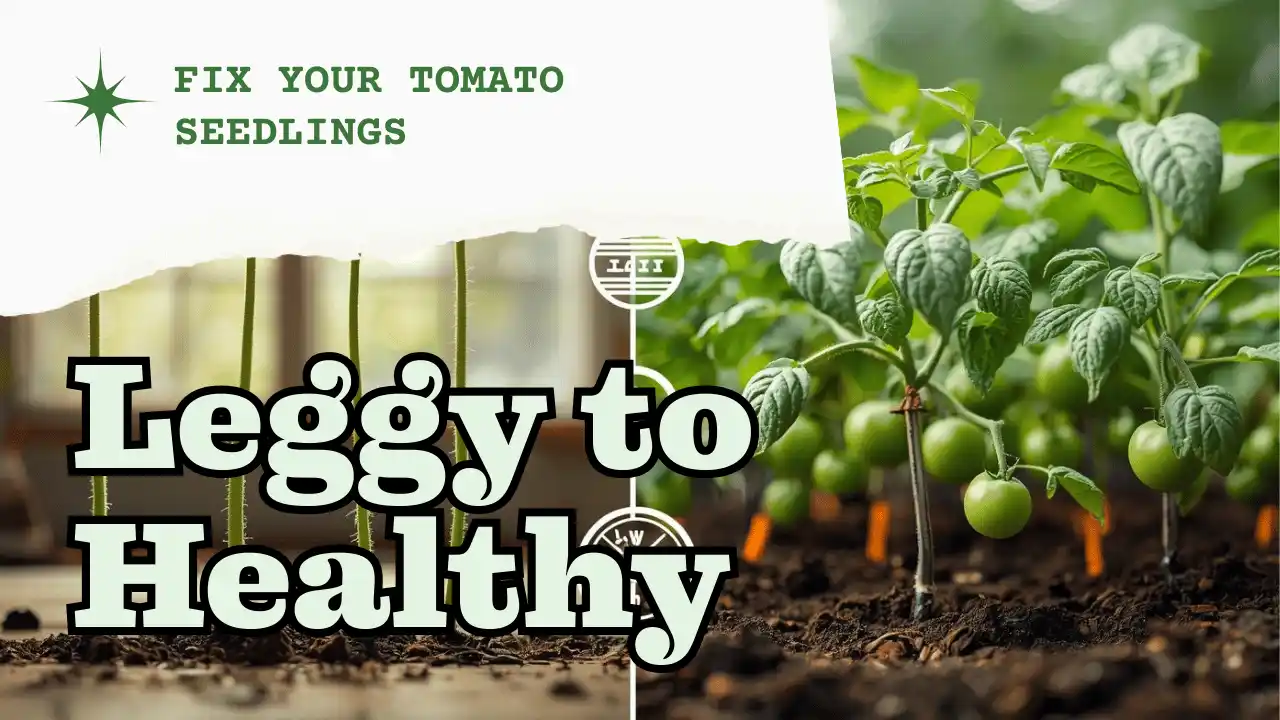
First, let’s make sure we’re talking about the same thing. A healthy tomato seedling should have a relatively thick, sturdy stem that stands upright on its own.
You’ll see fine hairs along the stem, compact growth between leaf sets, and vibrant true leaves emerging. The whole plant should look strong and stable, like it’s ready to take on the world.
Leggy seedlings, on the other hand, tell a different story. They’re tall and thin with long, spindly stems that look more like vines than proper tomato plants.
The distance between leaves is exaggerated, they lean dramatically toward the light source, and they often struggle to support their own weight.
These weak stems are prone to breaking during transplanting, and if left uncorrected, leggy plants typically produce far less fruit than their healthier counterparts.
If your seedlings look like they’re auditioning for a limbo contest rather than standing tall, you’ve got leggy plants on your hands. But don’t worry—we’re about to fix that.
Why Do Tomato Seedlings Become Leggy?
Understanding why seedlings stretch into leggy plants helps you prevent it in the future. Let’s look at the main culprits:
Insufficient Light: The #1 Culprit (According to Science)
It’s not just about “having light”—it’s about intensity.
According to the University of Missouri Extension, tomato seedlings require a minimum light intensity of 1,000 foot-candles (or about 20 watts per square foot) to grow stocky and strong.
Most sunny windowsills only provide 100-500 foot-candles in the winter. That is why your plants are stretching—they are literally starving for energy.
The Golden Rule for Lights:
- LED Grow Lights: Keep them 2-4 inches above the tops of your seedlings.
- Fluorescent (Shop Lights): Keep them 2-3 inches above.
- Window: Even a south-facing window is usually too weak for seedlings. You almost always need supplemental light.
Too Much Competition
When seedlings are crammed together in a tray, they compete for light, nutrients, and space. This triggers them to race upward, trying to outgrow their neighbors to reach the light first. Overcrowding also restricts airflow around plants, which weakens stems and makes them more susceptible to growing long and lanky.
Timing and Container Issues
Starting your seeds too early means they’ll spend more time indoors stretching toward insufficient light. Similarly, keeping seedlings in shallow seed trays for too long forces them to put energy into stem growth rather than developing strong root systems. Their roots become cramped, and the plant compensates by growing taller instead of stronger.
Temperature Problems
Tomato seedlings that stay too warm at night get confused. They think it’s still daytime and continue their upward growth rather than resting and strengthening. Without proper day-night temperature differences, stems grow rapidly but weakly.
Fertilizer Mishaps
Too much nitrogen encourages leafy, leggy growth. Using a general-purpose fertilizer instead of one appropriate for seedlings can throw off the nutrient balance and contribute to excessive stretching.
Prevention: The Best (and Cheapest) Medicine
An ounce of prevention is worth a pound of cure, as they say. Here’s how to grow strong, stocky seedlings from the start without spending a fortune.
Light: Your Most Important Investment (That Doesn’t Have to Be Expensive!)
Tomato seedlings need 12-18 hours of light daily. Yes, that’s more than they’d get naturally outdoors, but indoor growing requires extra compensation.
Budget-Friendly Lighting Solutions:
- Rotate daily: Turn your seed trays 180 degrees every morning. This simple, completely free habit prevents leaning and encourages straight, even growth.
- Use what you have: Before buying anything, try positioning seedlings near your brightest south-facing window and see how they respond. Sometimes that’s enough if you’re diligent about rotating.
- Shop lights are your friend: You don’t need fancy, expensive grow lights marketed to cannabis growers. Basic LED shop lights from the hardware store work beautifully for tomato seedlings and cost a fraction of specialized grow lights. Look for cool or daylight spectrum bulbs.
- Position matters: Keep lights 2-4 inches above your seedlings and adjust height as they grow. Too far away, and you’re back to leggy plants.
Proper Spacing and Airflow
Give your seedlings room to breathe, and they’ll thank you with stocky, strong stems.
Free and Cheap Spacing Tips:
- Thin ruthlessly: Once seedlings develop their first true leaves, use regular kitchen scissors to snip away the weakest ones. Leave only the strongest seedling per cell or space them 2 inches apart in larger trays. Yes, it feels brutal, but it’s necessary.
- Add a fan: A small desktop fan running on low creates gentle air movement that mimics outdoor breezes. This simple trick strengthens stems remarkably well and helps prevent disease. Any fan you already own will work.
- Rotate those trays: We mentioned this for light, but rotation also ensures even air exposure and development on all sides.
Right Containers and Smart Timing
Budget Container Options:
- Raid your recycling bin: Yogurt cups, sour cream containers, milk cartons cut in half, plastic takeout containers—anything can become a seedling pot. Just poke a few drainage holes in the bottom with a heated nail or screwdriver.
- Time it right: Count backward from your last frost date to determine when to start seeds. Most tomato varieties need 6-8 weeks indoors before transplanting. Starting too early means more time for seedlings to get leggy. This costs nothing and solves multiple problems.
- Transplant when needed: Don’t wait too long to move seedlings to larger containers. If roots are circling the bottom or growing through drainage holes, it’s time to upsize.
Temperature Control
Aim for daytime temperatures of 21-27°C (70-80°F) and nighttime temperatures of 15-18°C (60-65°F).
Free Temperature Management:
- Ditch the heat mat: Once seeds germinate and break through the soil, remove heating mats. You’re wasting electricity and encouraging leggy growth.
- Move them at night: Simply relocating trays to a cooler room at night provides the temperature drop seedlings need. This costs absolutely nothing.
- Light schedule: Turn grow lights off at night. Not only does this save electricity, but it also helps create the temperature differential your plants need.
Water and Nutrients on a Budget
Money-Saving Tips:
- Bottom water: Place containers in shallow trays or even disposable aluminum pans, then pour water into the tray rather than onto the soil. Plants drink from below, encouraging deeper root growth. Use whatever trays you have around the house.
- Dilute that fertilizer: Don’t use full-strength fertilizer on seedlings. Quarter-strength is plenty and makes your fertilizer last four times longer.
- Make compost tea: If you compost, steeping finished compost in water creates free, nutrient-rich “tea” for your seedlings.
How to Fix Leggy Seedlings?
Method 1: The “Deep Bury” Method
This is the only “magic trick” in gardening that actually works. Because tomato stems have adventitious roots (tiny hairs that turn into roots), burying the stem doesn’t kill the plant—it supercharges it. Clemson Cooperative Extension confirms that “horizontal planting” or deep planting is an effective way to strengthen leggy plants.
Step 1: Find a Deeper Home: You need a container that is at least 4-6 inches deep. Red Solo cups (with holes poked in the bottom) or tall sour cream containers work perfectly.
Step 2: The Haircut: Gently pinch off the lower leaves of your leggy seedling (the “cotyledons” or seed leaves). Leave only the top “cluster” of true leaves at the very top.
Step 3: Bury the Evidence: Fill your new cup with moist potting mix. Dig a deep hole and gently lower your seedling in. Bury the entire bare stem deep underground. The only thing sticking out of the soil should be those top leaves.
Step 4: Water and Wait: Water it gently. In about 7-10 days, that buried stem will shoot out dozens of new roots, creating a massive, powerful root system that is even stronger than a normal plant!
Method 2: Improve Your Lighting Situation
Sometimes leggy seedlings just need more light, and you don’t have to spend a fortune to provide it.
Immediate Actions:
- Move closer: If you’re using window light, move seedlings right up to the glass. Every inch closer significantly increases light intensity.
- Add supplemental light: Can’t afford grow lights? A regular desk lamp with a daylight LED bulb positioned 2-4 inches above seedlings works surprisingly well. That old clip-on lamp in your garage? Perfect. For full steps on indoor setups that prevent legginess, check our winter indoor tomato guide.
- Budget lighting setup: Basic shop lights from hardware stores (around $15-25) are completely adequate for tomato seedlings. Hang them from chains or adjustable cords so you can raise them as plants grow.
The key is proximity and duration. Closer lights for longer periods (16-18 hours daily) will encourage stockier, healthier growth going forward.
Method 3: Bottom Watering for Stronger Roots
This technique costs essentially nothing but makes a real difference.
Place your seedling containers in any shallow tray or dish—old baking pans, plastic storage container lids, even disposable aluminum trays work great. Pour water into the tray instead of onto the soil surface. The seedlings will wick water upward, and roots will naturally grow downward, chasing the water source.
This encourages deeper, stronger root development, which stabilizes the plant and supports more robust stem growth. It’s a simple shift in technique that uses items you already own.
Method 4: Pinching Back (For Larger Plants)
If your seedlings have already grown quite large and leggy, try this completely free technique: pinch off the growing tip (the top set of leaves). This signals the plant to stop growing taller and instead put energy into growing bushier and stronger from the sides. The plant will develop lateral branches and a thicker stem.
This works best on plants that are at least 6 inches tall. Smaller seedlings should be transplanted deeply instead.
Timeline and Expectations
Let’s be realistic about recovery. After implementing these fixes, you should see visible improvements within 10-14 days. Your seedlings will stand more upright, stems will thicken, and new growth will look healthier and more compact.
Full recovery and return to vigorous growth typically take 3-4 weeks. The good news? Rescued seedlings can still produce abundant harvests. Tomatoes are remarkably forgiving plants. Once they’re in the ground and receiving proper sun, water, and nutrients, they tend to catch up with seedlings that never had leggy issues in the first place.
The Bottom Line
Leggy tomato seedlings happen to everyone—even experienced gardeners who know better but started seeds too early or got caught without adequate lighting.
The difference is that experienced gardeners don’t panic. They know these plants are fixable and that solutions don’t require expensive equipment or complicated techniques.
Most fixes cost absolutely nothing: rotating trays, removing heat sources, transplanting deeply, and adjusting watering methods.
Others require minimal investment: repurposed containers, basic shop lights, and a cheap fan. You don’t need a high-tech indoor growing operation to raise healthy tomato seedlings.
So take a deep breath, assess your situation, and pick the fixes that make sense for your setup and budget. Those spindly seedlings can still become the productive, delicious tomato plants you’re dreaming of.
With just a few simple adjustments and a bit of patience, you’ll be harvesting homegrown tomatoes before you know it.
Your leggy seedlings don’t spell disaster—they’re just asking for a little extra attention. And now you know exactly how to give it to them without emptying your wallet. Happy growing!
Frequently Asked Questions About Leggy Seedlings
Will leggy tomato seedlings survive?
Yes! Unlike beans or peppers, tomatoes are incredibly resilient. If you bury the leggy stem deep in the soil, the plant will not only survive but will often grow a larger root system than a short plant.
Should I throw away leggy seedlings?
Absolutely not. Unless the stem is withered, brown, or snapped, a leggy seedling is just an “ugly duckling.” The “Deep Bury” method fixes them 99% of the time.
Why are my seedlings falling over?
If they are tall and green, they are falling over because they are top-heavy (leggy). If the stem looks shriveled, brown, or pinched at the soil line, they likely have “Damping Off” disease (a fungus). Damping off kills plants; legginess does not.


